
If someone sends you “WTV” in a text, DM, or social media comment, they usually mean “whatever.” The WTV meaning can express no preference, indifference, casual agreement, or even dismissal depending on the conversation.
You may see WTV on Snapchat, TikTok, Instagram, WhatsApp, Discord, Facebook, or regular text messages. The abbreviation itself stays simple, but tone matters. A relaxed “wtv works for me” feels very different from an annoyed “fine, wtv.”
What Does WTV Mean?
Simple Definition of WTV
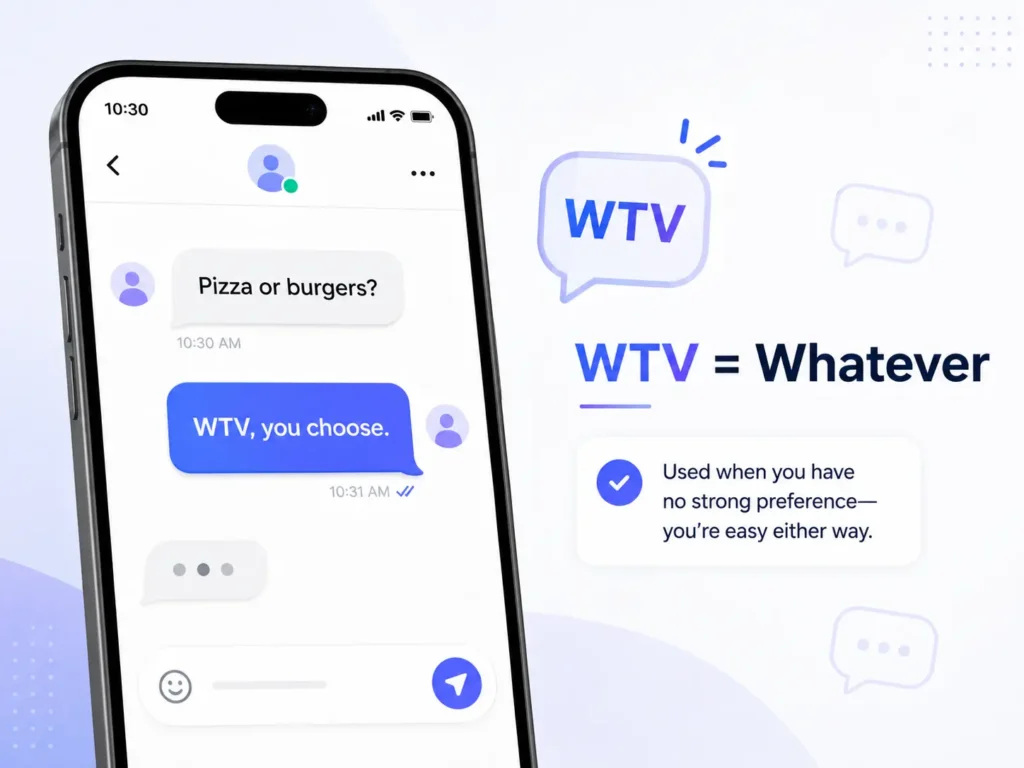
WTV is shorthand for “whatever.” People use it in informal digital communication when they do not have a strong preference, do not care much about the choice, or want to move past a topic.
For example:
“Pizza or burgers?”
“WTV, you choose.”
Here, the sender is flexible rather than rude.
What Does WTV Stand For?
In texting and social media slang, WTV stands for “whatever.” It can carry meanings similar to “it doesn’t matter,” “either is fine,” or, in a more dismissive context, “I don’t care.”
WTV Meaning at a Glance
| Term | Full Form | Common Meaning | Tone | Common Context |
| WTV | Whatever | No preference / It doesn’t matter | Casual, indifferent, sometimes dismissive | Texts, DMs, social media |
What Does WTV Mean in Texting?
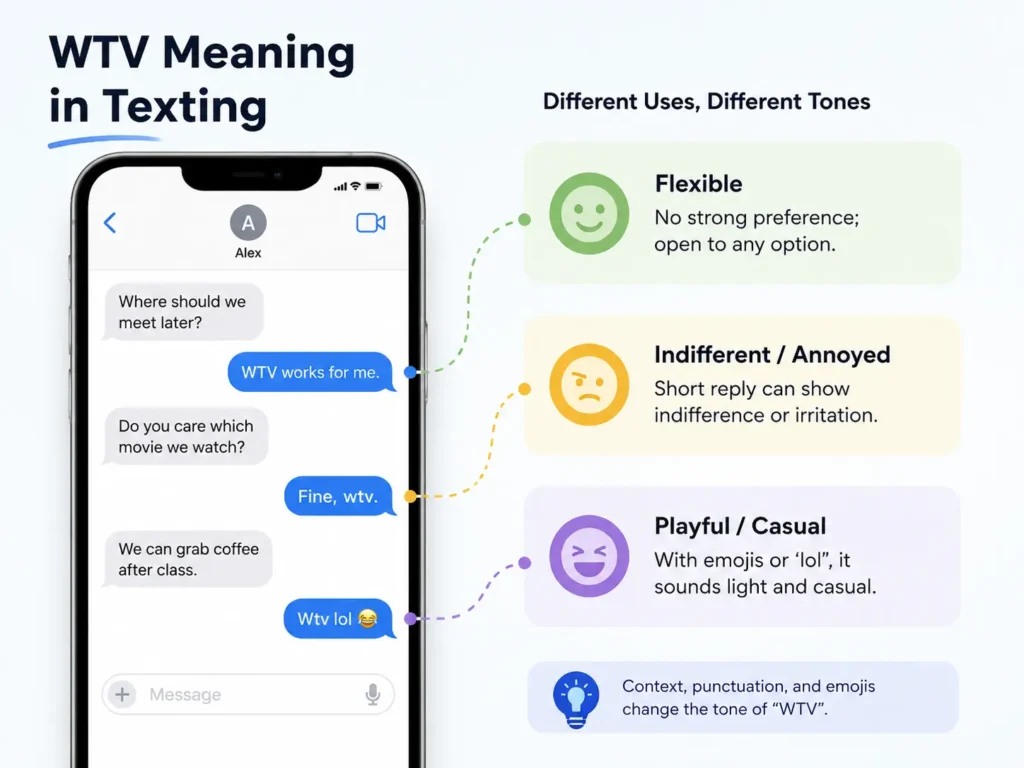
The WTV meaning in texting depends heavily on context.
WTV to Show No Preference
“Where should we eat?”
“WTV works for me.”
This sounds neutral and flexible. The sender is happy with any option.
WTV to Show Indifference
“Do you still care which movie we watch?”
“WTV.”
A short reply like this may suggest the person has little interest in the choice.
WTV to End a Conversation
After an argument, someone might say:
“Wtv, I’m done talking about it.”
Here, WTV sounds dismissive because the sender wants to end the discussion.
WTV as Casual Agreement
You may also see:
“We can meet around 7.”
“Wtv works.”
In this context, it simply means the plan is fine.
What Does WTV Mean on Social Media?
The core WTV meaning usually stays the same across platforms, but the surrounding words, emojis, and conversation can change the tone.
Some abbreviations can have several meanings depending on context. For example, the [YN Meaning] can change between texting, social media, and fanfiction, making context especially important.
WTV Meaning on Snapchat
On Snapchat, WTV may appear in chats, Story replies, or group conversations.
“What do you wanna do tonight?”
“Wtv, you pick.”
That sounds relaxed. By contrast, a standalone “wtv.” after disagreement may feel cold or dismissive.
WTV Meaning on TikTok
On TikTok, WTV can appear in comments, replies, captions, and direct messages. It may communicate an unbothered attitude.
Example:
“People keep complaining, wtv.”
If you regularly use TikTok, understanding the [FYP Meaning] can also help you recognize common platform-specific slang and terms used in comments and captions.
WTV Meaning on Instagram
On Instagram, WTV may appear in DMs, comments, Reels, or Story replies. The abbreviation still normally means “whatever.”
WTV on WhatsApp and Discord
In WhatsApp group chats or Discord conversations, WTV often works as a quick informal reply. Context remains the best clue to the sender’s intent.
What Tone Does WTV Have?
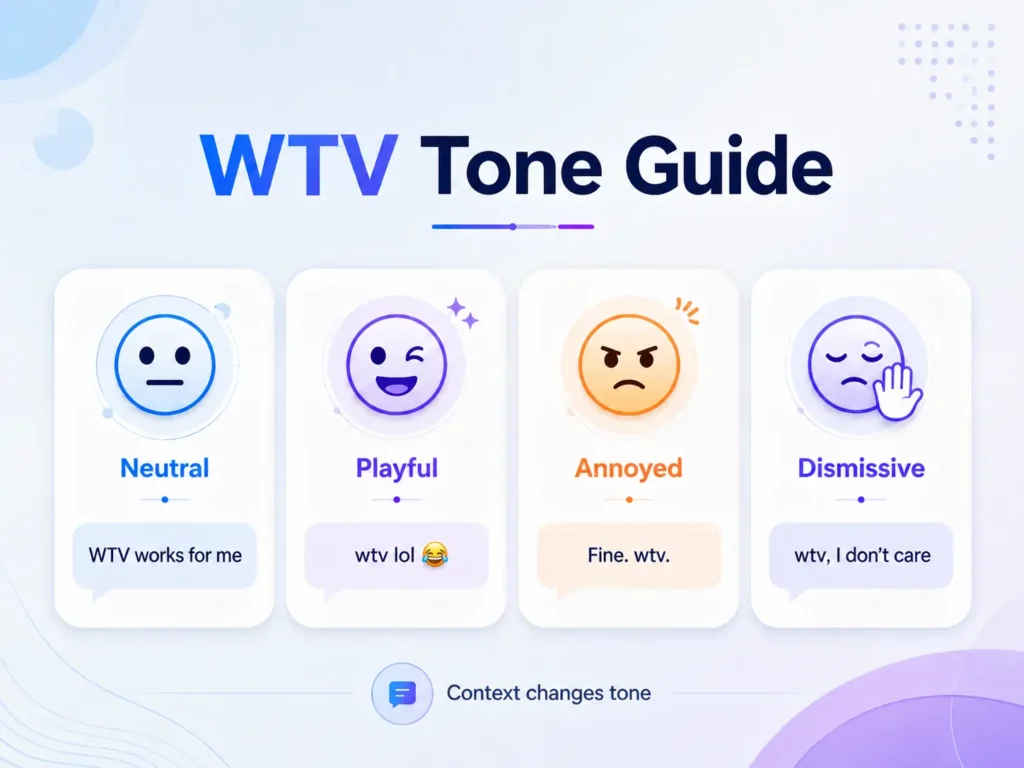
WTV can sound neutral, playful, annoyed, or dismissive.
Neutral or Flexible
“WTV you want is fine.”
This means the sender has no strong preference.
Playful
“Wtv lol 😂”
Words like “lol” and emojis can soften the message and make it sound more lighthearted.
Annoyed
“Fine. Wtv.”
The short sentences and punctuation can suggest frustration.
Dismissive
“Wtv, I don’t care anymore.”
This clearly sounds more negative because the surrounding words show indifference.
Is WTV Rude?
WTV is not automatically rude.
It can sound perfectly normal when someone is choosing food, making casual plans, or telling a friend they have no preference.
However, it may sound rude when used:
- During an argument
- In response to a serious message
- To dismiss someone’s opinion
- With blunt punctuation or an annoyed emoji
To understand the tone, look at the previous messages, punctuation, emojis, relationship, and conversation topic.
Uppercase WTV vs Lowercase wtv
Uppercase WTV and lowercase wtv usually mean the same thing.
Lowercase is common in casual online communication because people often type quickly. Capitalization and punctuation may add emotional emphasis:
- wtv — relaxed or neutral
- WTV — stronger emphasis
- WTV! — more forceful
- wtv lol — playful
- wtv 🙄 — annoyed or dismissive
What Does WTV Mean From Someone You Like?
WTV itself is not inherently flirty.
For example:
“Wtv you wanna do 😉”
This may feel playful or flirty because of the wink emoji and the relationship between the two people.
But:
“Wtv.”
may simply sound uninterested.
Whether a guy, girl, or crush sends WTV does not change its basic definition. Context and sender intent matter more than gender.
How Do You Respond to WTV?
Your reply should match the tone.
If WTV means “I don’t mind,” you can say:
- “Cool, I’ll choose.”
- “Let’s do pizza then.”
- “Sounds good.”
If it sounds annoyed, you could reply:
- “Everything okay?”
- “We can talk about it later.”
If WTV clearly ends the conversation, you may not need to respond at all.
WTV vs Similar Texting Slang
Several abbreviations can look similar in meaning but serve different purposes.
If you often see short slang terms in chats, you may also want to learn the [FS Meaning], another common abbreviation used in texting and online conversations.
| Slang | Meaning | Main Purpose |
| WTV | Whatever | No preference or indifference |
| IDC | I Don’t Care | Direct lack of concern |
| IDK | I Don’t Know | Lack of knowledge |
| NVM | Never Mind | Drop a topic |
| WTVR | Whatever | Alternative shorthand |
WTV vs IDC
WTV can simply mean “either option is fine.” IDC is usually more direct and can sound stronger because it literally means “I don’t care.”
WTV vs IDK
WTV expresses no preference or indifference. IDK means the person does not know the answer.
Common WTV Phrases
“WTV you want” usually shows flexibility.
“Fine wtv” may show reluctant acceptance or frustration.
“WTV bro” can sound casual, joking, or dismissive depending on the relationship.
“WTV lol” often softens the tone.
“WTV 🙄” usually suggests annoyance because of the eye-roll emoji.
When Should You Use WTV?
WTV works best in informal situations such as:
- Texting friends
- Social-media DMs
- Group chats
- Casual comments
- Online conversations
Avoid it in formal emails, academic writing, job applications, client communication, or sensitive conversations where “whatever” could sound disrespectful.
Frequently Asked Questions About WTV Meaning
What does WTV mean in text?
WTV means “whatever.” It can show no preference, indifference, or dismissal.
What does WTV mean on Snapchat?
On Snapchat, WTV normally means “whatever” and may appear in casual chats, Story replies, or plans.
What does WTV mean on TikTok?
On TikTok, WTV often appears in comments, captions, replies, or DMs to express indifference or an unbothered attitude.
Is WTV rude?
Sometimes. It can sound rude during an argument, but it can also be completely neutral when someone has no preference.
Does WTV mean “I don’t care”?
It can, but not always. Sometimes it simply means “either option is fine.”
Is WTV passive-aggressive?
Not automatically. The situation, punctuation, previous messages, and tone determine whether it feels passive-aggressive.
What is the difference between WTV and IDC?
WTV means “whatever,” while IDC means “I don’t care.” IDC usually sounds more direct.
Final Thoughts on WTV Meaning
The WTV meaning is usually “whatever.” People use it in texting, online chats, Snapchat, TikTok, Instagram, and other social media platforms to show flexibility, indifference, casual agreement, or dismissal.
The most important clue is context. A message like “wtv works for me” sounds relaxed, while “fine, wtv 🙄” can sound annoyed. Look at punctuation, emojis, conversation history, and the sender’s intent before deciding what the message means.