
If you see “LOL” in a text, comment, or direct message, you may wonder what the sender means. The LOL meaning is usually “Laugh Out Loud” or “Laughing Out Loud.” People use it to show amusement, make a message feel lighter, or react casually to something funny. However, LOL does not always mean someone is literally laughing. Its tone can change with context, capitalization, punctuation, and the relationship between people chatting.
What Does LOL Mean?
LOL is an informal internet abbreviation that usually means “Laugh Out Loud” or “Laughing Out Loud.” It is common in texting, social media, group chats, comments, and online conversations.
Example: “I just walked into the wrong classroom LOL.”
Here, LOL shows amusement and makes the message sound playful. People may pronounce it as “L-O-L” or say it like the word “lol.”
LOL Meaning at a Glance
| Form | Meaning or Tone | Typical Use |
| LOL | Clear amusement | Jokes and reactions |
| lol | Mild amusement | Casual texting |
| lolll | Playful emphasis | Friends and social media |
| lol? | Confusion or disbelief | Informal chats |
| lol. | Dry or awkward tone | Context-dependent |
What Does LOL Mean in Texting?
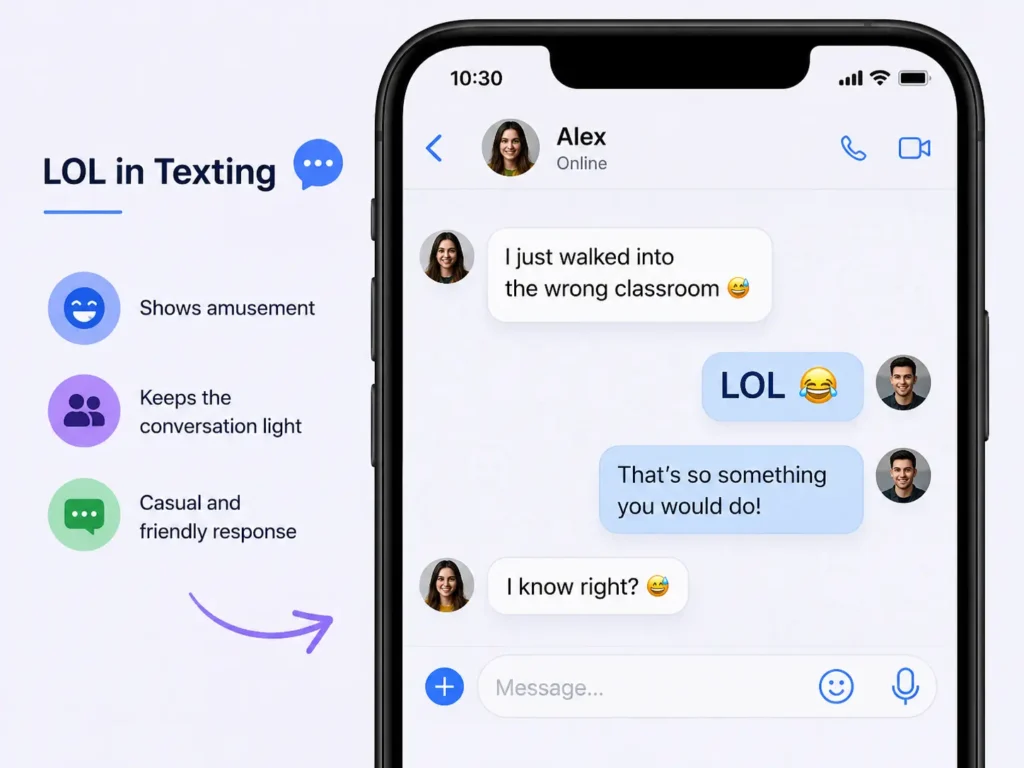
In texting, LOL can show genuine laughter, friendliness, or a desire to make a sentence sound less serious.
Reaction to Something Funny
Person A: “I sent the voice note to the wrong group.”
Person B: “LOL, that is painful.”
People often mix LOL with other casual abbreviations. For example, WTV Meaning explains how “WTV” usually means “whatever” and can also change tone depending on the conversation.
Friendly Response or Tone-Softener
People also use lol as a quick acknowledgment. They may not be laughing, but they want to keep the conversation relaxed.
Example: “Yeah lol, I forgot about that.”
It can also soften an apology or awkward comment. “I forgot to reply lol” sounds lighter than the same sentence without lol.
Can LOL Be Sarcastic?
Yes. A reply such as “LOL okay” may show amusement, disbelief, annoyance, or irony. The surrounding conversation matters more than the abbreviation alone.
What Does LOL Mean on Social Media?
LOL usually keeps the same basic meaning across Snapchat, Instagram, TikTok, WhatsApp, and Messenger. People use it in DMs, comments, story replies, group chats, and reactions.
Someone might write “LOL” under a funny TikTok or Instagram video, react to a Snapchat message, or use it in a WhatsApp group chat. The platform changes the setting, but context decides the tone.
What Does It Mean When Someone Sends Just “LOL”?
A standalone “LOL” can be a genuine laugh, polite reaction, conversation filler, awkward response, or sarcastic reply.
If you share something funny and receive “LOL,” the meaning is probably positive. If the conversation is tense, the same response may sound dismissive. Check the previous message and the sender’s usual style before deciding.
LOL vs lol: Does Capitalization Matter?
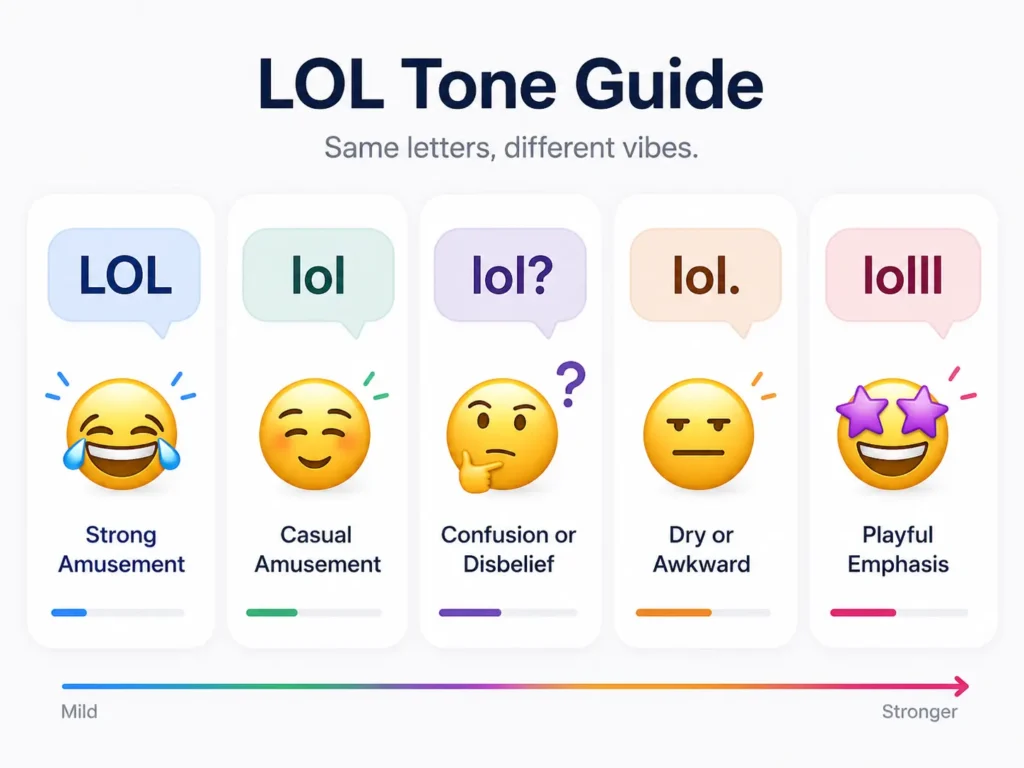
Uppercase LOL often feels stronger or more energetic. Lowercase lol usually feels more casual and may signal mild amusement.
Compare:
“LOL that was hilarious.”
“lol yeah.”
Forms such as “lolll,” “LOLOL,” and “loooool” add emphasis. Repeated letters can make the reaction more playful or exaggerated.
How Tone Changes the Meaning of LOL
Position and punctuation can change how LOL feels.
“LOL I cannot believe you did that” sounds like an immediate reaction.
“I sent it to the wrong person lol” uses lol to soften embarrassment.
A standalone “lol” may end the conversation, while “lol?” can show confusion. “LOL!” feels enthusiastic, while “lol.” can sound dry. “LOL 😂” usually strengthens the sense of laughter.
Examples of LOL in Real Conversations
Friendly teasing: “You really wore that to the party? LOL.”
Awkward moment: “I called my teacher ‘Mom’ lol.”
Sarcasm: “LOL sure, because that plan worked perfectly.”
Self-deprecating humor: “I forgot my own password again lol.”
These examples show why context is essential when interpreting internet slang.
How to Use LOL Naturally
LOL works best in casual communication with friends, family, familiar coworkers, and social media contacts. It can make messages warmer and less formal.
Avoid it in condolences, serious arguments, formal emails, professional complaints, or situations where laughter could seem insensitive.
At work, LOL may be fine in an informal chat with familiar coworkers, but formal business communication usually needs a clearer tone.
How to Reply When Someone Says LOL
If someone uses LOL because something is funny, continue the joke or reply with “haha,” an emoji, or another casual message.
Context is especially important with abbreviations that have multiple interpretations. For example, YN Meaning can refer to “Your Name,” “Yes or No,” or other context-dependent meanings online.
If LOL is only an acknowledgment, continue naturally. If it sounds sarcastic, read the previous messages before assuming intent. You do not always need to reply to a standalone LOL; sometimes it simply closes the conversation.
Other Meanings of LOL
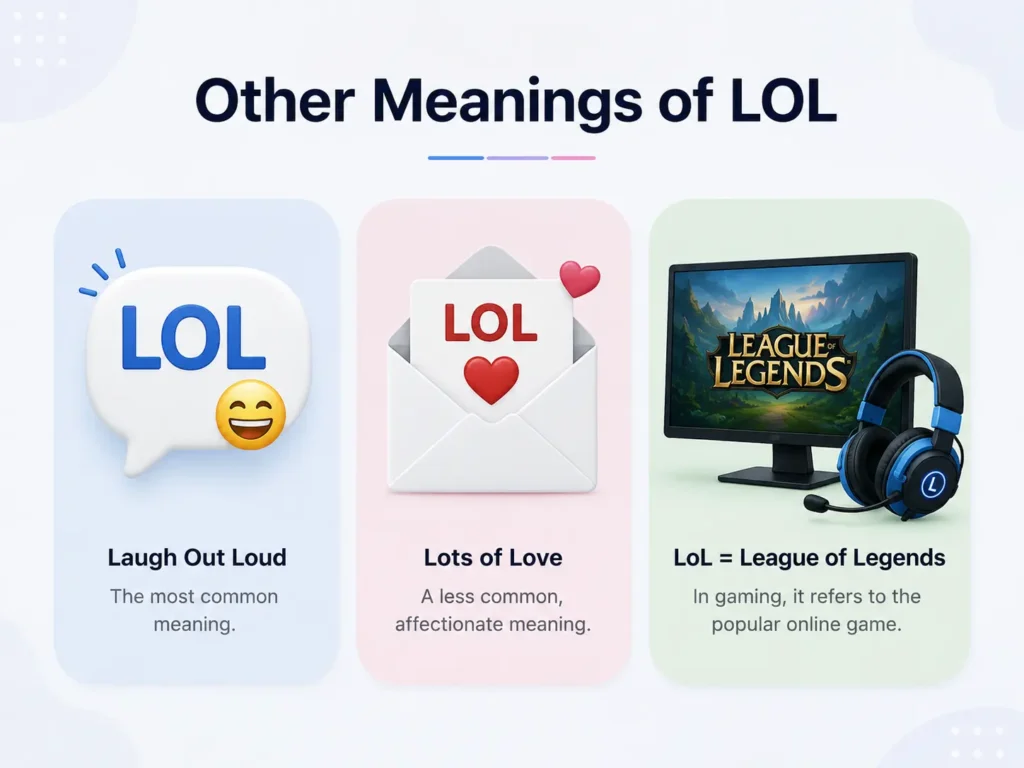
Although “Laugh Out Loud” is the primary modern meaning, LOL can have other meanings.
“Lots of Love” is an older or less common interpretation, while “Lots of Luck” appears occasionally.
In gaming, “LoL” often refers to League of Legends, the multiplayer online battle arena game by Riot Games. Topic and capitalization usually make this meaning clear.
LOL vs Similar Internet Slang
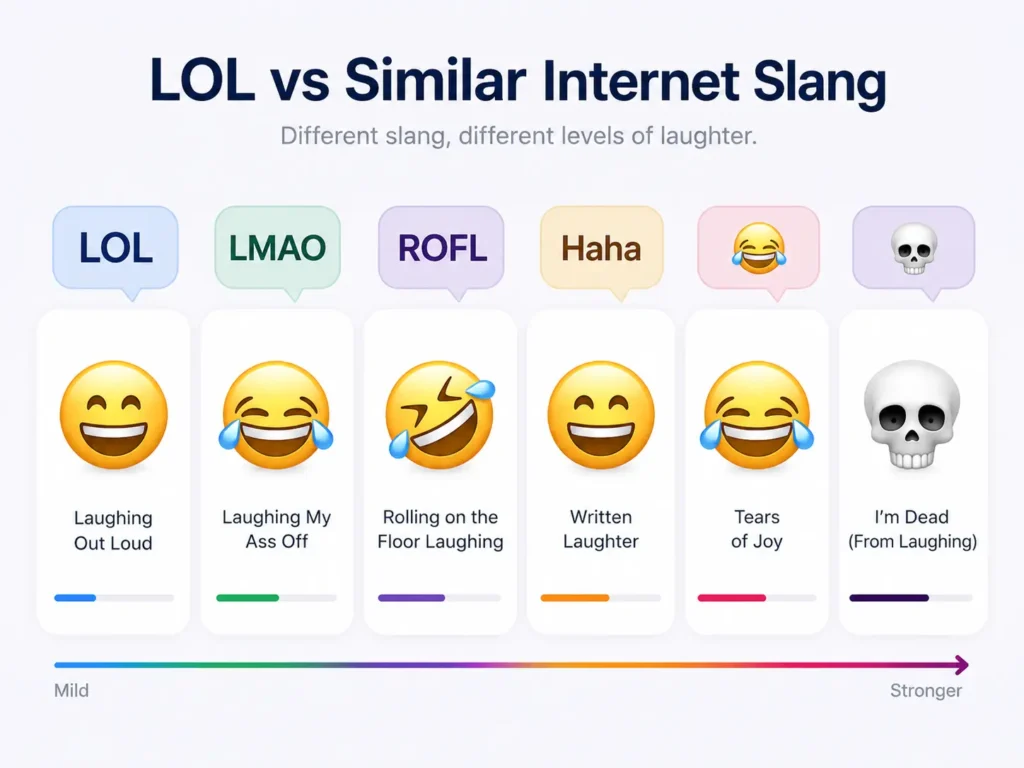
| Slang | Meaning | Typical Intensity |
| LOL | Laughing Out Loud | Mild to moderate |
| LMAO | Laughing My Ass Off | Strong |
| ROFL | Rolling on the Floor Laughing | Very strong |
| Haha | Written laughter | Mild to strong |
| 😂 | Tears of joy | Moderate to strong |
| 💀 | “I’m dead” from laughing | Strong |
LMAO and ROFL usually suggest a stronger reaction than LOL. Haha often sounds conversational, while emojis add visual emotion.
LOL is only one of many common texting abbreviations. You may also see “FS” used to show agreement or certainty; our FS Meaning guide explains its most common uses in texts, chats, and social media.
Is LOL Still Popular?
Yes. LOL remains widely understood in digital communication. People now use it for more than literal laughter. It can show friendliness, soften a statement, acknowledge a message, or signal irony.
Personal texting style and conversation context often matter more than age or platform.
Where Did LOL Come From?
LOL became associated with early internet culture, online chat, bulletin board systems, and later instant messaging and SMS. As digital communication expanded, it became a recognizable form of internet slang.
FAQs About LOL Meaning
What does LOL mean in text?
LOL usually means “Laugh Out Loud” or “Laughing Out Loud.” It can show amusement, friendliness, or a lighthearted tone.
What does lowercase lol mean?
Lowercase lol often signals mild amusement or softens a casual message.
Can LOL be sarcastic?
Yes. Context can make LOL sound sarcastic, ironic, dry, or dismissive.
What is the difference between LOL and LMAO?
LOL usually expresses mild to moderate amusement, while LMAO suggests stronger laughter.
What does LoL mean in gaming?
In gaming conversations, LoL commonly means League of Legends.
Final Takeaway
The LOL meaning is mainly “Laugh Out Loud” or “Laughing Out Loud.” People use it in texting and social media to express amusement, friendliness, sarcasm, awkwardness, or tone-softening.
To understand what someone means, look beyond the abbreviation. The surrounding words, punctuation, platform, relationship, and conversation tone provide the clearest answer.