
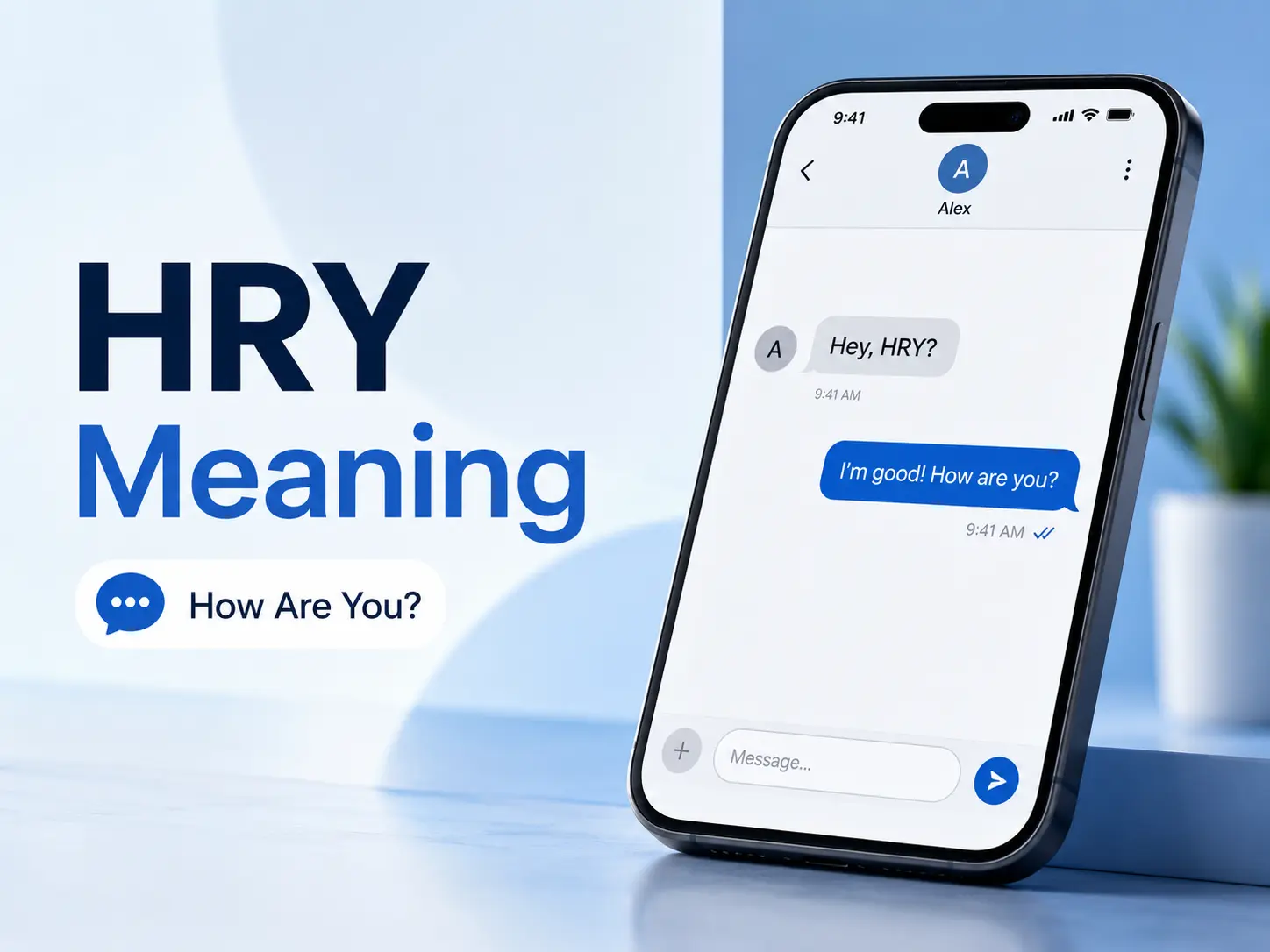
You open a message, see three letters, and pause: “HRY?” The sender may be a friend, classmate, dating match, or someone you have not spoken to in months. Is it a friendly greeting, a casual check-in, or a rushed conversation starter?
In most cases, HRY means “How Are You?” It is a text shortcut used to ask about someone’s mood, condition, or well-being. People use it because it is fast, informal, and easy to type. However, the intention can depend on the sender, platform, punctuation, and surrounding conversation.
This guide explains HRY meaning in text, chat examples, platform usage, tone, and context clues. By the end, you will know how to interpret it naturally.
Quick Answer: What Does HRY Mean?
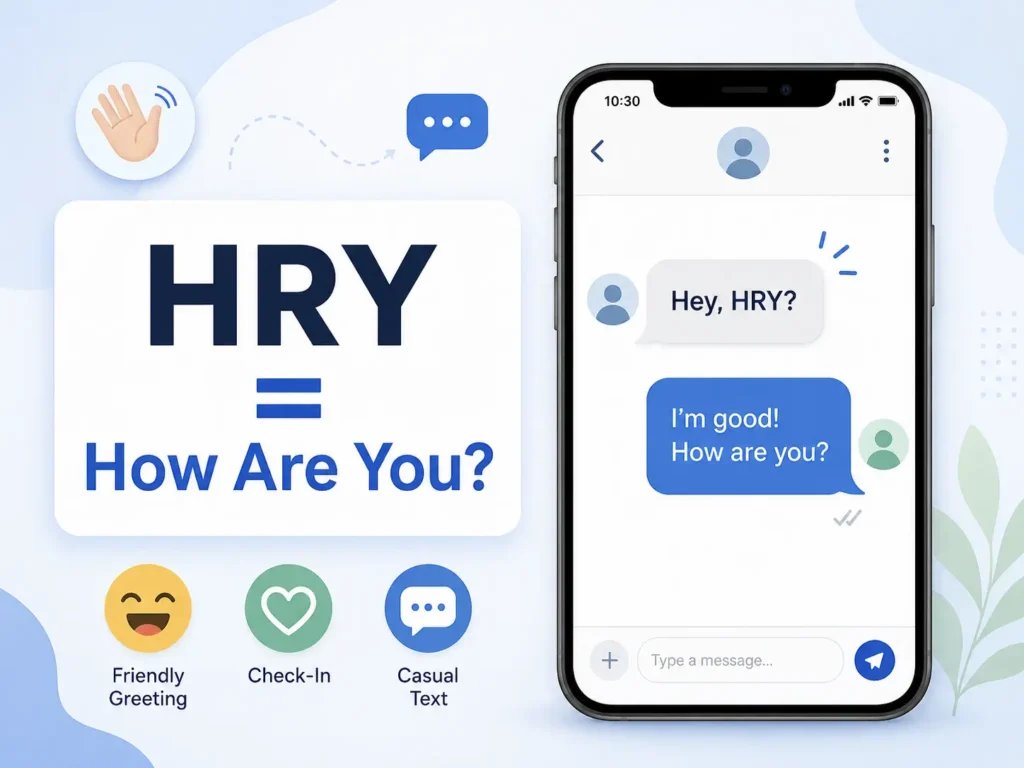
HRY stands for “How Are You?” It works as a casual greeting in text messages, direct messages, social media chats, and dating apps.
For example:
Sam: Hey, HRY?
Alex: I’m good, thanks. How are you?
The sender is checking on Alex and inviting a reply. HRY often appears at the beginning of a conversation or after a greeting such as “hey.”
Although “How Are You?” is the most common HRY meaning, context matters. In rare situations, HRY may be a shortened spelling of “hurry” or a typing mistake for “hey.” Read the previous message before deciding.
What Does HRY Mean in Text Messages?
HRY as “How Are You?”
In everyday texting, HRY is a shortened form of “How are you?” It asks how someone feels, what their day is like, or whether everything is going well.
The message may be caring, friendly, neutral, or flirty. Its meaning stays the same, but the conversational tone can change.
Mia: Haven’t heard from you today. HRY?
Noah: A little tired, but I’m okay.
Here, HRY sounds caring because Mia mentions that she has not heard from Noah. In another chat, someone may send only “hry” as a quick opener. That version can feel neutral or low-effort.
Why People Shorten “How Are You” to HRY
Digital communication often rewards speed. People shorten common phrases to save time, reduce typing, and keep casual conversations moving. HRY removes letters while preserving the original question.
Similar internet abbreviations include HRU for “How are you?” and HBU for “How about you?” “and WSP for “What’s up?”
Another useful shortcut is DK meaning “don’t know,” which people use when they are uncertain or do not have an answer.
These forms are common in informal communication because readers understand them from context.
HRY is useful when someone wants a quick check-in without writing a complete sentence. It may appear in SMS texting, messaging apps, online games, or private messages.
Is HRY an Acronym, Abbreviation, or Text Shortcut?
HRY is best described as a texting abbreviation or text shortcut. Each letter represents part of “How Are You,” although R is read phonetically as “are.”
Some people may call it an acronym, but users normally do not pronounce HRY as one word. They read it as the full phrase or recognize it as online slang.
The label matters less than the function. HRY makes communication faster while keeping the intended meaning clear in casual settings.
How to Identify the Correct HRY Meaning
Check the Previous Message
The surrounding conversation usually provides the strongest clue. If someone says “Hey” and then writes “HRY?” the phrase almost certainly means “How are you?”
If the message says “HRY up, we’re late,” HRY probably represents a shortened or misspelled form of “hurry.” Reading the sentence prevents confusion.
Consider the Sender and Your Relationship
Relationship context affects how the message feels. A close friend may use HRY as a caring check-in. A classmate may use it as a simple greeting. A dating match may use it to start a conversation.
The abbreviation alone does not reveal feelings. Consider how often the person messages, whether they ask follow-up questions, and how personal the conversation becomes.
Look at the Platform and Conversation Topic
Platform-specific messaging can influence interpretation. On Snapchat or Instagram, HRY often appears as a casual opener. In gaming chat, it may be a quick check-in between matches. In a workplace email, it would look unusually informal.
The topic also matters. A message about someone’s difficult day makes HRY sound caring. A message with no context may feel neutral.
Notice Capitalization, Punctuation, and Emojis
Small details can change the tone:
- hry often feels casual.
- HRY? sounds direct.
- hry 😊 feels friendly.
- hryyy may feel playful.
- HRY… can suggest concern or hesitation.
Capitalization does not change the definition, but punctuation and emojis help show the sender’s intention.
Replace “HRY” with “How Are You?” to Test the Meaning
Replace HRY with the full phrase. If the sentence still sounds natural, you have probably found the correct interpretation.
“Hey, HRY today?” becomes “Hey, how are you today?” The meaning fits.
However, “HRY, the bus is leaving!” becomes “How are you, the bus is leaving!” That sounds wrong, so HRY may mean “hurry.”
Examples of HRY in Real Conversations
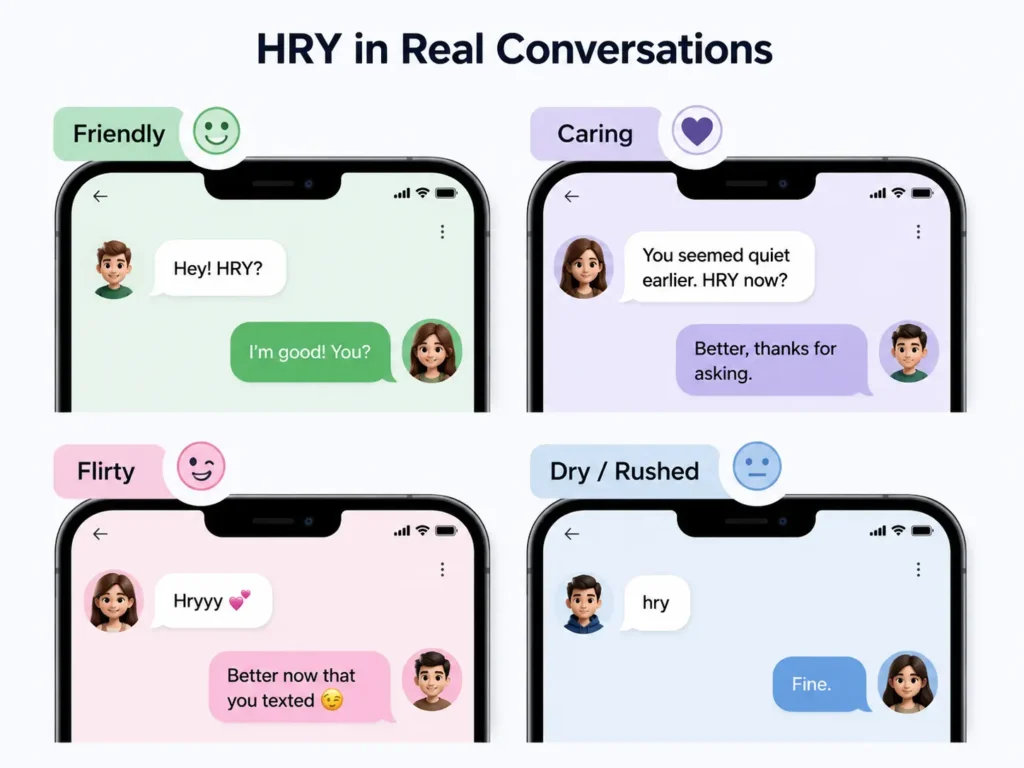
HRY as a Friendly Greeting
Ava: Hey! HRY?
Liam: I’m doing well. What about you?
This is a friendly exchange. The reciprocal question keeps the conversation going.
HRY After a Long Time Without Talking
Ethan: Long time no see. HRY?
Sofia: I’m good! It has been a busy month.
Here, HRY helps two people reconnect without making the opening complicated.
HRY in a Casual Check-In
Zara: You seemed quiet earlier. HRY now?
Adam: Better, thanks for asking.
This message shows concern because the sender refers to something that happened earlier.
HRY in a Flirty Conversation
Nora: Hryyy 😊
Ryan: Better now that you texted.
The extra letters and emoji create a playful tone, but context still determines whether the exchange is flirty.
HRY as a Short or Dry Message
Ben: hry
Ella: Fine.
A lowercase message without punctuation may feel rushed or low-effort. Still, it does not automatically mean the sender is rude. They may simply be busy.
What Does HRY Mean on Different Platforms?
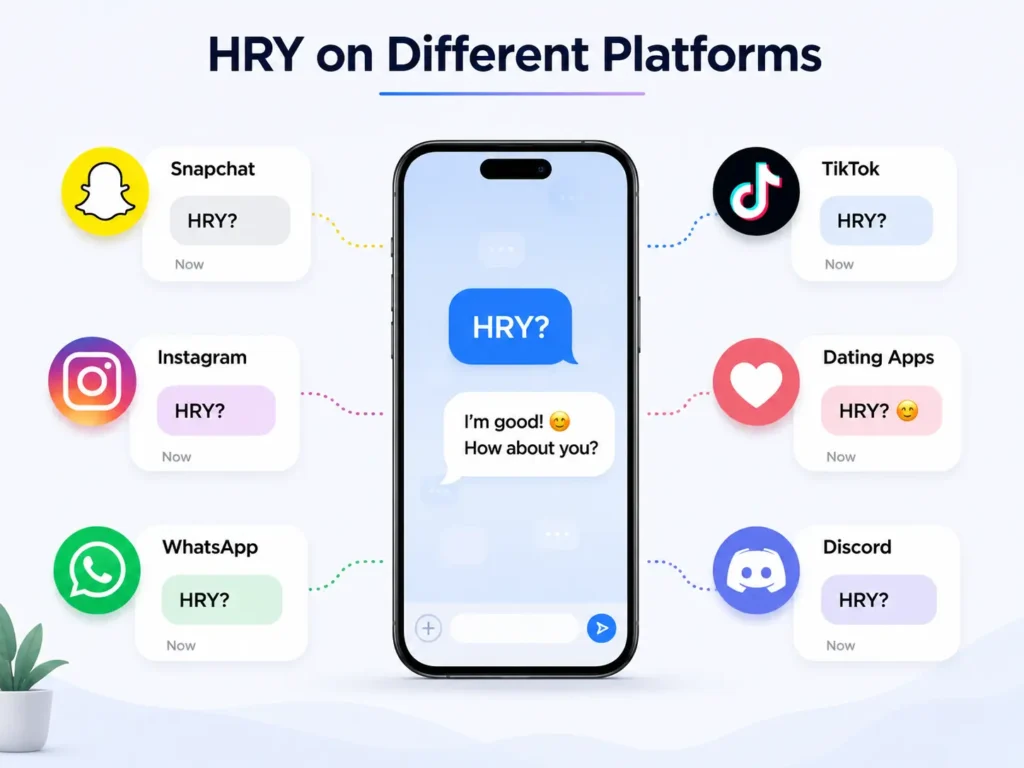
The core HRY meaning usually remains “How Are You?” across social media and messaging platforms. What changes is the surrounding tone.
HRY Meaning on Snapchat
On Snapchat, HRY commonly appears in private chats or as a reply to a snap. Friends may use it to begin a streak conversation, check in, or reconnect.
HRY Meaning on Instagram
On Instagram, people may send HRY in DMs after reacting to a story, following someone new, or restarting an old conversation. It can be friendly, casual, or flirty.
HRY Meaning on TikTok
On TikTok, HRY may appear in direct messages or comments. In public comments, it may be part of a casual exchange. In private messages, it usually opens a conversation.
HRY Meaning on WhatsApp and Messenger
On WhatsApp and Messenger, HRY is common in one-on-one chats with friends, relatives, classmates, or acquaintances. It serves as a quick friendly check-in.
HRY Meaning on Dating Apps
On dating apps, HRY usually means “How are you?” and works as an opening message. It can show interest, but it may feel generic alone. A personalized follow-up creates a better conversation.
HRY Meaning in Gaming and Discord Chats
In gaming and Discord chats, HRY may appear between matches, in direct messages, or in community conversations. It still asks about someone’s well-being, although the exchange may be brief.
What Does HRY Mean From a Girl or Guy?
HRY From a Girl
When a girl sends “HRY,” she usually means “How are you?” It may be a friendly check-in or a way to start talking. Her intention depends on timing and your relationship.
If she asks personal questions or keeps talking, she may be interested. However, HRY alone does not prove romantic interest.
HRY From a Guy
When a guy sends HRY, the meaning is usually the same. He may be checking on you or reopening a conversation.
A “hry” feels neutral, while “hry 😊” sounds warmer.
Does HRY Show Romantic Interest?
HRY can appear in a flirty conversation, but it is not automatically romantic. A dating match may use it as an opening message, while a friend may use it only to check in.
Better signs include thoughtful questions, quick replies, compliments, and efforts to continue talking.
What Tone Does HRY Convey?
Friendly or Caring
HRY can sound caring when the sender refers to your day, mood, health, or a recent problem.
“You seemed upset earlier. HRY now?”
Casual and Neutral
A simple “HRY?” often works as a neutral conversation starter between friends, classmates, and acquaintances.
Flirty or Interested
Extra letters, emojis, compliments, or playful follow-up messages can make HRY feel flirty.
“Hryyy 😊 I was hoping you’d text.”
Dry, Rushed, or Low-Effort
A plain “hry” without punctuation can feel dry. It may suggest the sender is busy, unsure what to say, or making little effort.
Do not assume rudeness. Some people naturally send short messages.
How to Respond When Someone Texts HRY
Your reply should match your mood and relationship.
Simple and Casual Replies
Use a short response when you want to be polite:
- “I’m good, thanks. How are you?”
- “Doing well! What about you?”
- “Not bad, just relaxing.”
- “I’m okay. You?”
A reciprocal question keeps the chat moving.
Friendly Replies That Continue the Conversation
A detailed reply gives the sender more to answer:
- “I’m doing well. How was your day?”
- “Pretty good! I’ve been busy with classes. What are you doing?”
- “I’m great. It’s nice hearing from you again.”
These sound more natural than one-word answers.
Flirty Replies
If the conversation is playful, respond with light humor or warmth:
- “Better now that you texted.”
- “I’m good, but I could use some company.”
- “Doing great. Were you thinking about me?”
Use a flirty reply only when it feels appropriate.
Professional or Polite Replies
If someone uses HRY in a semi-professional chat, answer politely:
- “I’m doing well, thank you. How are you?”
- “I’m well, thanks for checking in.”
- “Doing well. I hope you are too.”
In formal workplace communication, use the complete phrase.
Replies When You Are Not Doing Well
You do not need to pretend everything is fine:
- “It has been a difficult day, but I’m okay.”
- “I’m not feeling my best today.”
- “I’ve had a rough week, but thanks for asking.”
- “Not great, honestly. Can we talk later?”
Can HRY Have Other Meanings?
HRY as a Misspelling of “Hurry”
In rare messages, HRY may be a shortened or misspelled form of “hurry.”
“HRY, we’re going to miss the train.”
“How are you” does not fit, so “hurry” is likely.
HRY as a Typo for “Hey”
Someone may type HRY instead of “hey.” If the next sentence begins a new topic, a typo is possible.
Rare Technical or Organization-Specific Meanings
HRY may be an internal code, a username, a project label, or an organization-specific abbreviation. These meanings require clear context.
Other short forms can also have technical and conversational definitions; for example, the FM meaning may refer to frequency modulation, radio, or a different meaning in online messages.
HRY vs Similar Texting Abbreviations
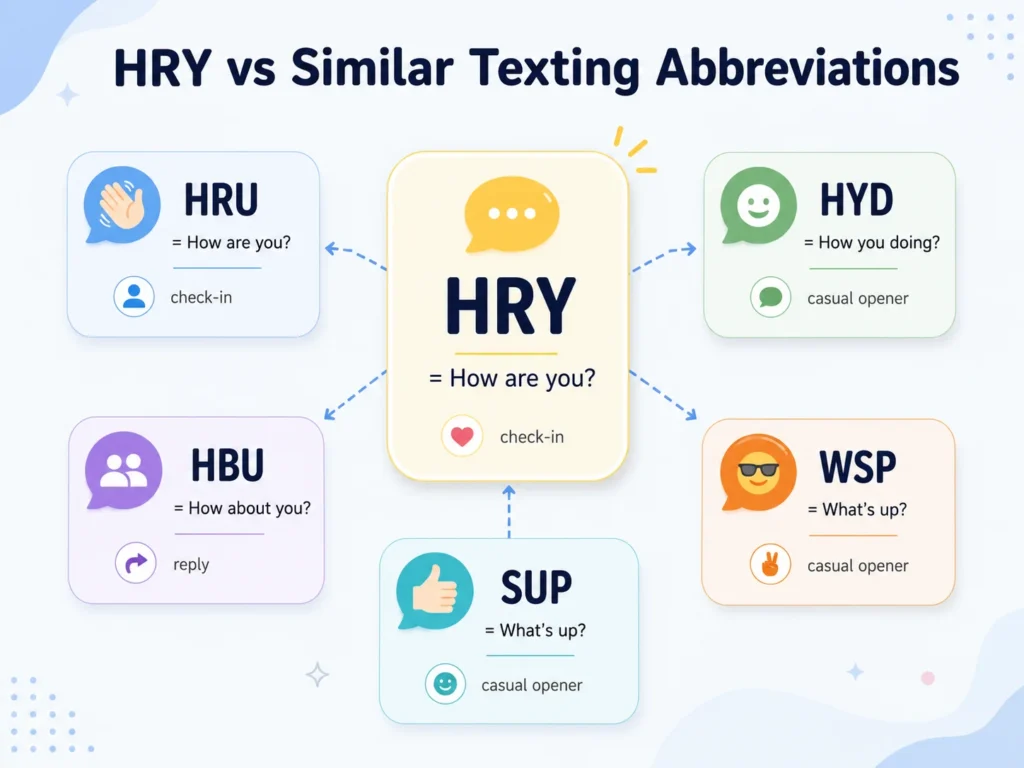
| Term | Full form | Purpose | Tone | Example |
| HRY | How are you? | Ask about someone | Casual | “Hey, HRY?” |
| HRU | How are you? | Ask the same question | Casual | “HRU today?” |
| HYD | How you doing? | Ask how someone feels | Relaxed | “HYD lately?” |
| HBU | How about you? | Return a question | Friendly | “I’m good, HBU?” |
| WSP | What’s up? | Ask what is happening | Informal | “WSP tonight?” |
| SUP | What’s up? | Start a chat | Informal | “Sup?” |
HRY vs HRU
HRY and HRU usually mean the same thing. HRU uses “U” for “you,” while HRY keeps Y.
HRY vs HYD
HRY asks “How are you?” “HYD” means “How you doing?” Both check on someone, but HYD sounds more conversational.
HRY vs HBU
HBU means “How about you?” People usually send it after answering a question.
HRY vs WSP and SUP
WSP and SUP ask what someone is doing or what is happening. HRY focuses more on mood or well-being.
Similarly, the WFY meaning can change between “Waiting for You” and “What’s Up for You?” depending on the surrounding conversation.
Is HRY Appropriate in Formal Communication?
When HRY Is Acceptable
HRY works in casual texts, private chats, gaming messages, and relaxed conversations.
When You Should Write “How Are You?” Instead
Use the complete phrase in professional emails, formal writing, customer messages, job applications, and conversations where clarity matters.
Better Alternatives for Work and Professional Messages
Try “How are you?” “I hope you’re doing well,” or “How have you been?” These sound polished and respectful.
Common Mistakes When Using HRY
Avoid using HRY without context, assuming it always signals attraction, or sending it in formal emails. Do not confuse it with HRU, “hurry,” or a typing error.
Another mistake is replying only “fine” when you want to continue. Add a question or detail.
Frequently Asked Questions About HRY Meaning
What is the full form of HRY?
The HRY full form is “How Are You?”
Does HRY mean “How are you?”
Yes. That is the most common HRY meaning in text and social media chats.
Is HRY the same as HRU?
Yes. Both usually ask how someone is doing.
What does HRY mean on Snapchat?
It normally means “How are you?” and works as a casual greeting.
What does HRY mean in dating?
It starts a conversation and may be friendly or flirty depending on the follow-up.
Is HRY flirty?
It can be, but the abbreviation alone does not prove attraction.
Can HRY mean “hurry”?
Rarely, yes. The sentence must support that meaning.
How should I reply to HRY?
Answer honestly and ask a reciprocal question, such as “I’m good. How are you?”
Is HRY rude or disrespectful?
No. It is informal and brief, but tone depends on context.
Should HRY be uppercase or lowercase?
Either form is acceptable in casual communication. Capitalization does not change the definition.
Final Takeaway
HRY usually means “How Are You?” It is a quick, informal greeting used in text messages, social media, dating apps, and online conversations. To identify the correct meaning, check the sender’s tone, your relationship, platform, punctuation, emojis, and surrounding conversation.
Use HRY in casual settings, but choose the complete phrase in professional communication. Add detail or a question when replying if you want the conversation to continue naturally.