
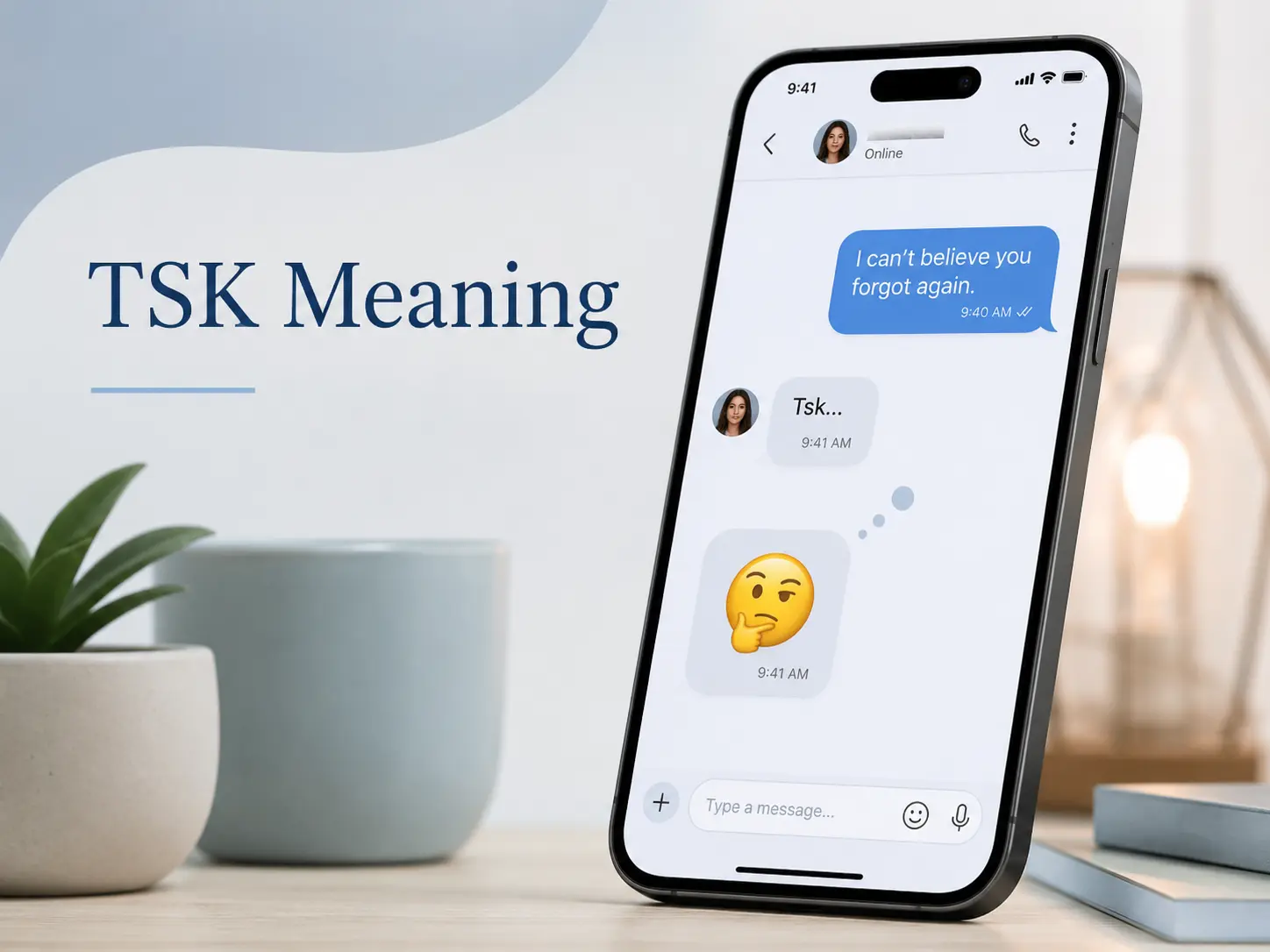
Have you ever received a message that says “tsk” or “tsk tsk” and wondered what the person really means? You are not alone. TSK can feel confusing because it is not a normal word, acronym, or abbreviation. It is a written sound that replaces a real-life reaction.
In most text messages, TSK represents the tongue-click sound people make when they are disappointed, annoyed, impatient, or judging something lightly. In real life, someone might click their tongue, shake their head, or raise an eyebrow after hearing about a bad choice. In texting, “tsk” creates the same feeling.
For example:
Friend: “I skipped class again.”
You: “Tsk, that was not a smart choice.”
Here, TSK shows mild disapproval. The sender is not necessarily angry, but they are reacting to something they think was wrong.
However, TSK can also be playful, sarcastic, teasing, or even flirty depending on the message. That is why the correct TSK meaning depends on tone, punctuation, emojis, platform, and your relationship with the sender.
What Does TSK Mean?
TSK means a written tongue-click sound. It is usually used to show mild disapproval, annoyance, disappointment, impatience, sarcasm, or playful judgment.
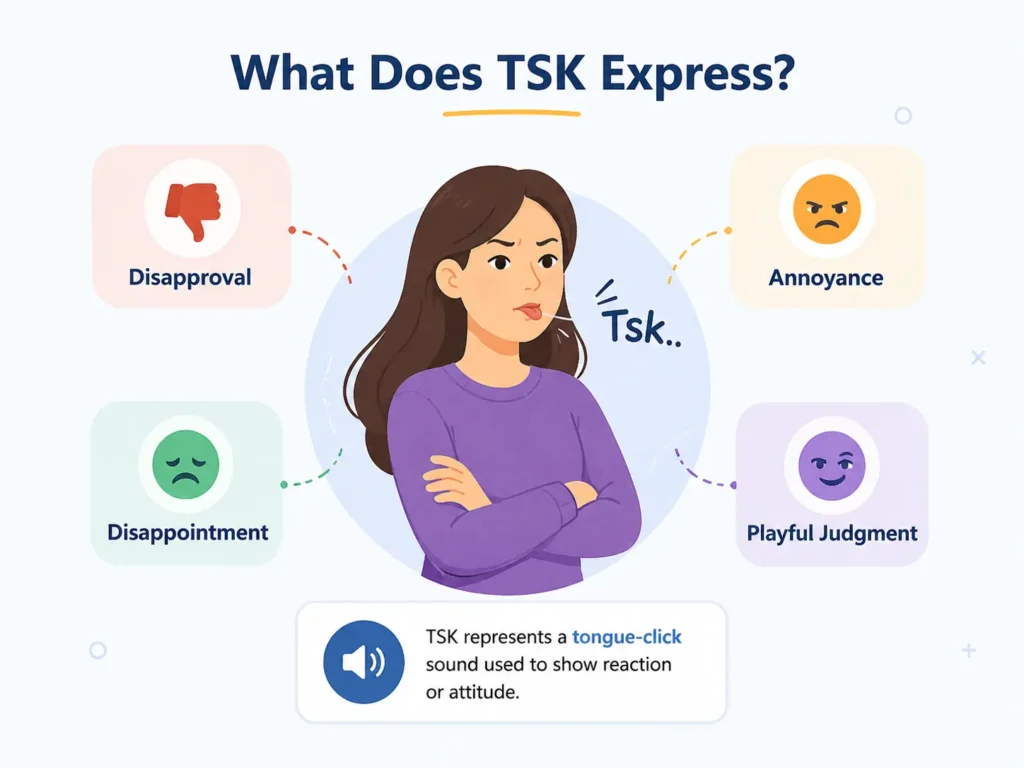
It can communicate ideas like:
“Oh, come on.”
“You should know better.”
“That was not a good idea.”
“I am disappointed.”
“Look what you did.”
TSK is not usually an acronym. It does not have a standard full form in everyday texting. It is better understood as an interjection, like “ugh,” “hmm,” “sigh,” or “tut.”
Example:
Person 1: “I forgot your book again.”
Person 2: “Tsk…”
The dots make the reply sound disappointed. The person may not be shouting or arguing, but they clearly are not happy.
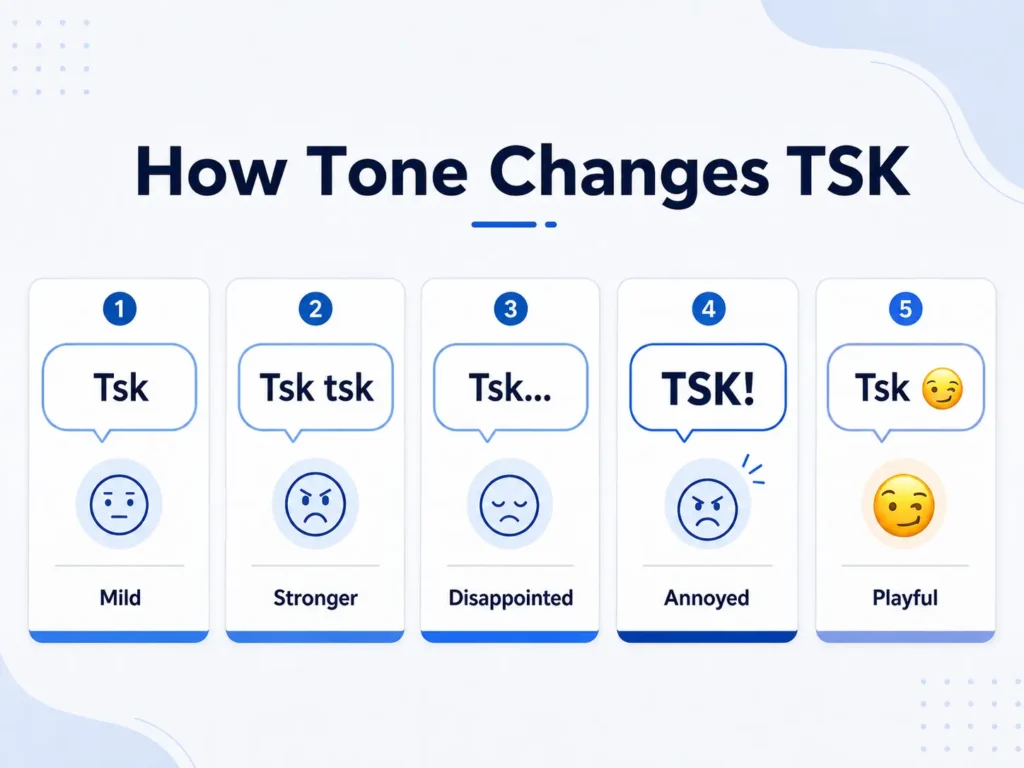
A single “tsk” often feels mild. “Tsk tsk” can feel stronger or more dramatic. “Tsk tsk tsk” can sound like someone is seriously judging you or joking in an exaggerated way.
What Does TSK Mean in Text Messages?
In text messages, TSK usually works as a reaction. People use it when they want to show emotion without writing a full sentence.
TSK Showing Mild Disapproval
TSK often appears when someone makes a poor choice, ignores advice, or does something questionable.
Example:
Friend: “I spent all my money already.”
You: “Tsk, you should have saved some.”
This does not sound extremely harsh, but it does show that the sender does not approve.
TSK Showing Annoyance
TSK can also show irritation or impatience.
Example:
Friend: “I will be thirty minutes late.”
You: “Tsk, you are always late.”
Here, TSK sounds annoyed because the follow-up sentence is direct.
TSK Showing Disappointment
When TSK appears with dots, it can sound disappointed or frustrated.
Example:
Friend: “I forgot our plan tonight.”
You: “Tsk…I was looking forward to it.”
The ellipsis makes the message feel more serious.
TSK Used Playfully
Close friends, siblings, and partners may use TSK as playful teasing.
Example:
Friend: “I ate the last piece of cake.”
You: “Tsk tsk, unbelievable 😂”
The laughing emoji makes the message friendly instead of angry.
TSK Meaning on Social Media
TSK can appear on Snapchat, TikTok, Instagram, WhatsApp, Messenger, Discord, dating apps, and comment sections. The basic meaning stays similar, but the tone can change depending on the platform.

TSK Meaning on Snapchat
On Snapchat, TSK may appear in snaps, captions, streak replies, or private chats. Since Snapchat messages are often quick and casual, TSK may sound playful or teasing.
Example:
“You watched the episode without me? Tsk tsk 😂”
Here, the sender is likely joking.
TSK Meaning on TikTok
On TikTok, TSK often appears in comments when someone is reacting with mock judgment, sarcasm, or mild disapproval.
Example:
“You bought another pair of shoes? Tsk.”
This may be serious, playful, or sarcastic depending on the video and comment tone.
TSK Meaning on Instagram
On Instagram, TSK can appear in DMs, story replies, captions, and comments. A friend may use it jokingly, while a stranger may sound judgmental.
Example:
“Tsk, posting without telling me?”
This may sound like playful teasing between friends.
TSK Meaning on WhatsApp and Messenger
On WhatsApp and Messenger, TSK usually appears in personal chats or group conversations. It may show disappointment, annoyance, or teasing depending on the relationship.
Example:
“You forgot again? Tsk.”
This can sound mild or serious depending on the conversation.
TSK Meaning in Online Chats and Gaming
In online chats and gaming conversations, TSK can show frustration, disappointment, or playful criticism. Gamers may use it after a missed chance, a poor decision, or a lost match.
Example:
Player 1: “I missed the final shot.”
Player 2: “Tsk, we almost won.”
Here, TSK shows frustration, but it may not be deeply angry.
In Discord chats, group chats, and gaming servers, TSK can also be used jokingly. Friends may write “tsk tsk” when someone makes a funny mistake.
Example:
“You used the wrong weapon again? Tsk tsk.”
The meaning depends on whether the group is joking or arguing.
On dating apps, TSK can feel teasing or flirty if it comes with playful wording or emojis.
Example:
“You ignored my message? Tsk 😏”
Here, the emoji makes it sound more playful. Without the emoji, it could sound annoyed.
Different Meanings of TSK Depending on Context
TSK can express different emotions depending on how it is used.
Context is also important when interpreting abbreviations such as ONM Meaning, because the same letters may communicate different ideas depending on the sentence, tone, and situation.
The most common meaning is mild disapproval.
Example:
“Tsk, you knew better.”
It can also mean annoyance.
Example:
“Tsk, I have been waiting for so long.”
It may show disappointment.
Example:
“Tsk…I expected better.”
It can be playful teasing.
Example:
“Tsk tsk, fake friend 😂”
It can sound sarcastic.
Example:
“Tsk, what a shocking surprise.”
It can also sound flirty when used with teasing language or emojis.
Example:
“Tsk, maybe I missed you 😏”
TSK can become rude when it appears during an argument or when the sender uses harsh wording.
Example:
“Tsk. You never listen.”
The simple rule is this: do not judge TSK alone. Read the full message, check the punctuation, notice the emojis, and think about your relationship with the sender.
TSK vs Similar Texting Expressions
TSK is not the only short expression people use to show emotion in text. It is often compared with SMH, ugh, sigh, tut, hmm, and the eye-roll emoji. These expressions may look similar because they all show reaction or attitude, but they do not mean exactly the same thing.
Not every abbreviation used online is slang. For example, GB Meaning refers to a digital measurement used for storage, mobile data, and file sizes rather than an emotional reaction in a conversation.
TSK vs SMH
SMH means “shaking my head.” People use it when they are disappointed, annoyed, or surprised by someone’s action.
Example:
“You forgot again? SMH.”
TSK and SMH can both show disapproval, but they work differently. TSK imitates a tongue-click sound, while SMH describes a head-shaking action. TSK may feel softer, teasing, or more sarcastic depending on the message.
TSK vs Ugh
“Ugh” usually shows frustration, disgust, or emotional tiredness.
Example:
“Ugh, this is so annoying.”
TSK is more about judging or reacting to someone’s action. Ugh focuses more on the sender’s frustration.
TSK vs Sigh
“Sigh” shows tiredness, disappointment, or resignation.
Example:
“Sigh, I thought this would be easier.”
“Tsk” can sound more judgmental, while “sigh” usually sounds more tired or emotionally drained.
TSK vs Tut
“Tut” or “tut-tut” is very close to TSK. Both imitate a disapproving sound. Tut-tut is often connected with British English and can sound like someone is gently scolding another person.
Example:
“Tut-tut, you should know better.”
TSK vs Hmm
“Hmm” usually shows thinking, doubt, suspicion, or uncertainty. It does not always show disapproval.
Example:
“Hmm, I am not sure about that.”
TSK is more clearly connected with disapproval, annoyance, teasing, or judgment.
Is TSK Formal or Informal?
TSK is informal. It is best used in casual chats, personal texts, social media comments, gaming chats, and friendly conversations.
You can use TSK with friends, siblings, partners, or people who understand your humor. It works well for light teasing, playful judgment, small mistakes, or casual reactions.
Example:
“You ate my fries? Tsk tsk.”
However, TSK is not suitable for formal writing. Avoid using it in professional emails, business messages, customer-service replies, school assignments, official notices, or serious apologies.
For example, instead of writing:
“Tsk, you missed the deadline.”
A better formal message would be
“I noticed the deadline was missed. Please send an update when possible.”
TSK can also sound rude if it appears during a serious argument, after an insult, or in a sensitive conversation. Since text messages do not show voice tone or facial expression, the receiver may misunderstand it.
How to Reply When Someone Says TSK
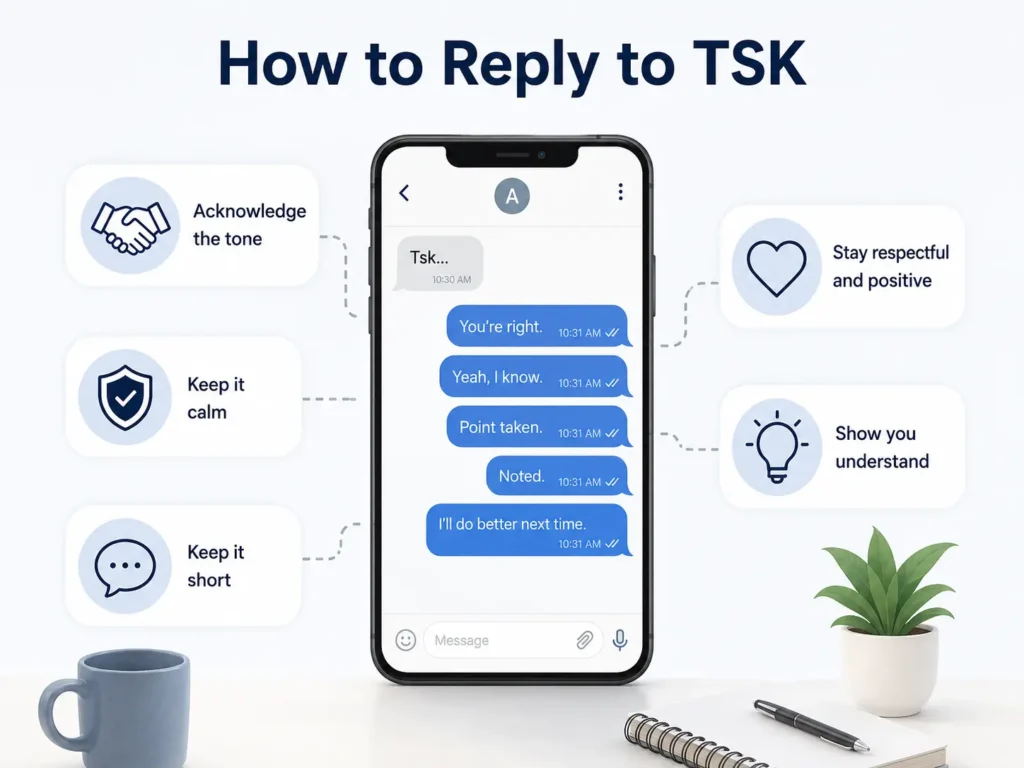
Your reply should match the tone of the conversation. Before responding, check whether the person is joking, annoyed, disappointed, or teasing.
If the person is joking, you can reply:
“I know, I know 😂”
“Do not judge me!”
“You would have done the same.”
If the person is teasing, you can reply:
“Tsk tsk right back at you.”
“Are you judging me now?”
“You still like me, though.”
If you made a mistake, a simple honest reply is better:
“You are right. That was my fault.”
“Sorry, I will fix it.”
“I should have listened.”
If you do not understand the tone, ask directly:
“Are you joking or actually annoyed?”
“Was that a serious tsk?”
“What did I do?”
If it feels rude, you can set a boundary:
“Please tell me directly what is bothering you.”
“I am not sure what you mean by that.”
“Can we talk about this clearly?”
Origin and Evolution of TSK
The spelling “tsk” comes from the tongue-click sound people make when showing disapproval, impatience, or disappointment. It works like a written version of a real-life reaction.
In face-to-face communication, people may click their tongue, shake their head, raise an eyebrow, or make a short sound when they disapprove of something. In digital communication, typing “tsk” creates a similar effect.
The repeated form “tsk-tsk” or “tsk tsk” makes the reaction stronger. It can feel like someone is shaking their head or pretending to scold you.
Over time, TSK became common in online slang, text messages, social media comments, and chat conversations. People now use it not only for real disapproval but also for humor, sarcasm, mock judgment, and playful teasing.
Popular Texting Expressions Related to TSK
Another common online expression worth learning is OOP Meaning, which can appear in texts, comments, and social media conversations with different tones and uses.
Several texting expressions are related to TSK because they also show emotion, reaction, or tone.
SMH
SMH means “shaking my head.” It shows disappointment, disbelief, or criticism.
Ugh
Ugh shows frustration, irritation, or disgust.
Sigh
Sigh shows tiredness, disappointment, or emotional exhaustion.
Tut
Tut is similar to TSK and shows mild disapproval.
Hmm
“Hmm” shows thinking, doubt, or uncertainty.
Eye-Roll Emoji 🙄
The eye-roll emoji often shows annoyance, sarcasm, or dismissal.
Facepalm Emoji 🤦
The facepalm emoji shows embarrassment, frustration, or disbelief after a mistake.
These expressions are useful because they help replace tone of voice in online communication.
Other Meanings of TSK
In normal texting, TSK usually means the tongue-click sound. However, uppercase TSK may sometimes stand for something else in a specific topic.
For example, TSK may appear as an abbreviation for an organization, institution, sports team, technical term, entertainment title, or academic phrase.
Still, in everyday chat, “tsk” almost always means a reaction sound, not a full form. Context is the easiest way to understand the correct meaning.
Final Thoughts
The TSK meaning is usually simple: it represents a written tongue-click sound. People use it to show mild disapproval, annoyance, impatience, disappointment, sarcasm, mock judgment, or playful teasing.
The real meaning depends on context. A single “tsk” may feel mild. “Tsk tsk” may sound more dramatic. “Tsk…” may show disappointment. “TSK!” may feel stronger or more annoyed.
Emojis, punctuation, relationship, platform, and the previous message all matter. A close friend may use TSK as a joke, while a stranger may sound rude or judgmental.
If the tone is unclear, do not guess too quickly. Read the full conversation or ask the sender what they meant.
Frequently Asked Questions
What does TSK mean in text?
TSK usually represents a tongue-click sound used to show mild disapproval, annoyance, disappointment, impatience, or teasing.
Is TSK an acronym?
No. In everyday texting, TSK is not usually an acronym. It is a written sound or interjection.
What does TSK TSK mean?
TSK TSK is a repeated form of TSK. It makes the reaction stronger, more dramatic, or more playful.
Is TSK rude?
TSK is not always rude. It can be playful between friends, but it may sound rude in serious, formal, or tense conversations.
Can TSK be flirty?
Yes, TSK can sound flirty when it appears with teasing words, playful emojis, compliments, or romantic context.
What does TSK mean on Snapchat?
On Snapchat, TSK usually means teasing, mild disapproval, mock judgment, or annoyance, depending on the snap or chat.
What does TSK mean on TikTok?
On TikTok, TSK is often used in comments to show sarcasm, mock judgment, disagreement, or playful criticism.
How should I reply to TSK?
Reply based on the tone. You can joke back, apologize, explain yourself, or ask if the sender is serious.
What is the difference between TSK and SMH?
TSK imitates a tongue-click sound. SMH means “shaking my head.” Both can show disappointment, but they are different reactions.
Should I use TSK in formal messages?
No. TSK is informal and should be avoided in professional emails, work chats, customer-service messages, and serious discussions.