
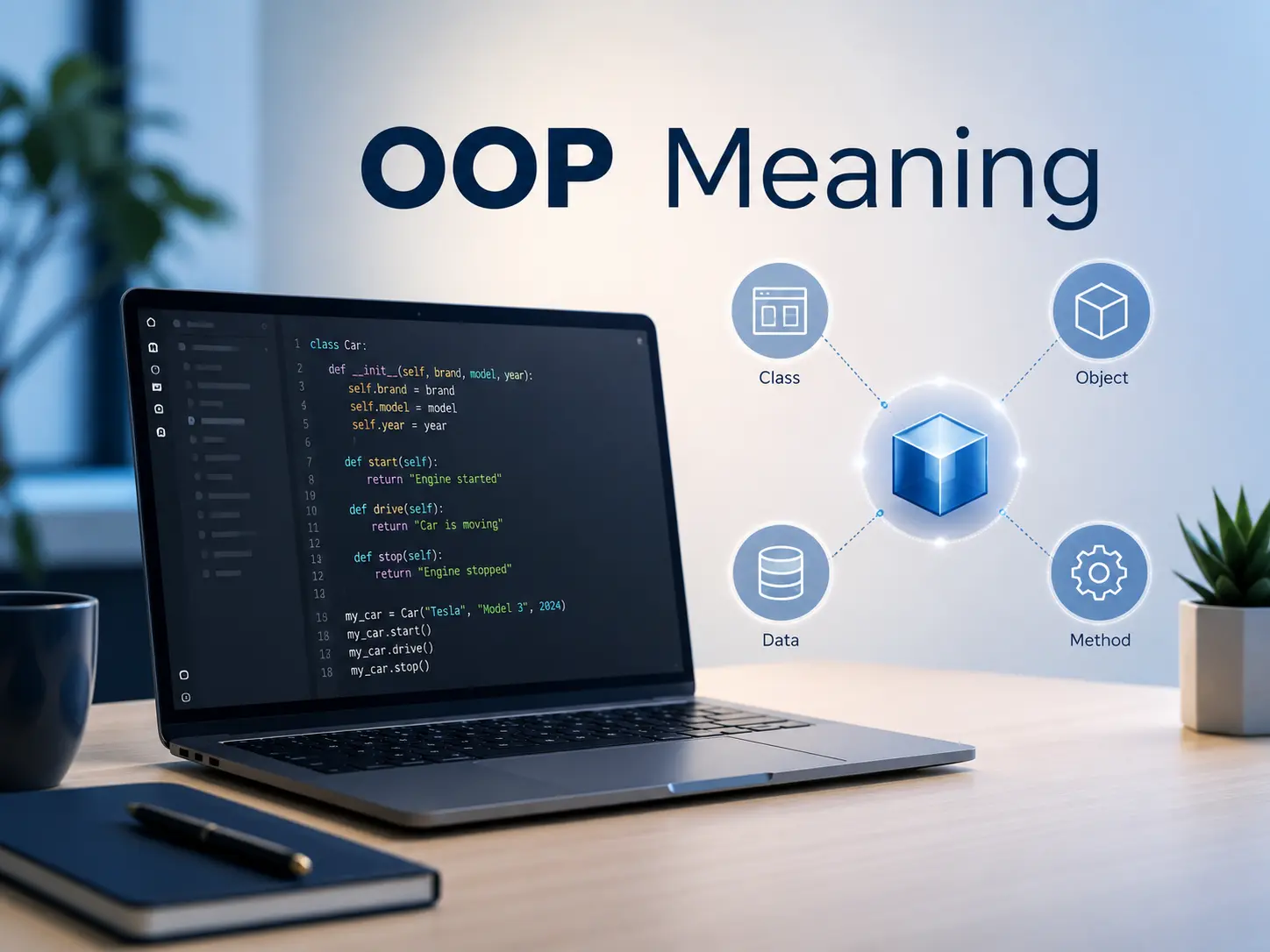
If you are learning coding, you may see the term “OOP” and wonder what it actually means. At first, it can sound difficult because people often use technical words like class, object, method, property, inheritance, encapsulation, and polymorphism.
Abbreviations can have completely different meanings depending on where they appear. For example, MF Meaning usually relates to texting and social media rather than programming.
The OOP meaning is easier to understand when you break it into simple parts. OOP stands for Object-Oriented Programming. It is a way of writing code by organizing software around objects. These objects can store information and perform actions.
For example, in a shopping app, a product can be an object. It may have data like name, price, color, and size. It may also have actions like add to cart, apply discount, or update stock.
Developers use object-oriented programming because it helps make code cleaner, easier to reuse, easier to update, and better for large projects. OOP is used in many popular programming languages, including Java, Python, C++, C#, JavaScript, PHP, Ruby, Kotlin, Swift, and TypeScript.
This guide explains OOP in simple English, with easy examples for beginners.
What Does OOP Mean?
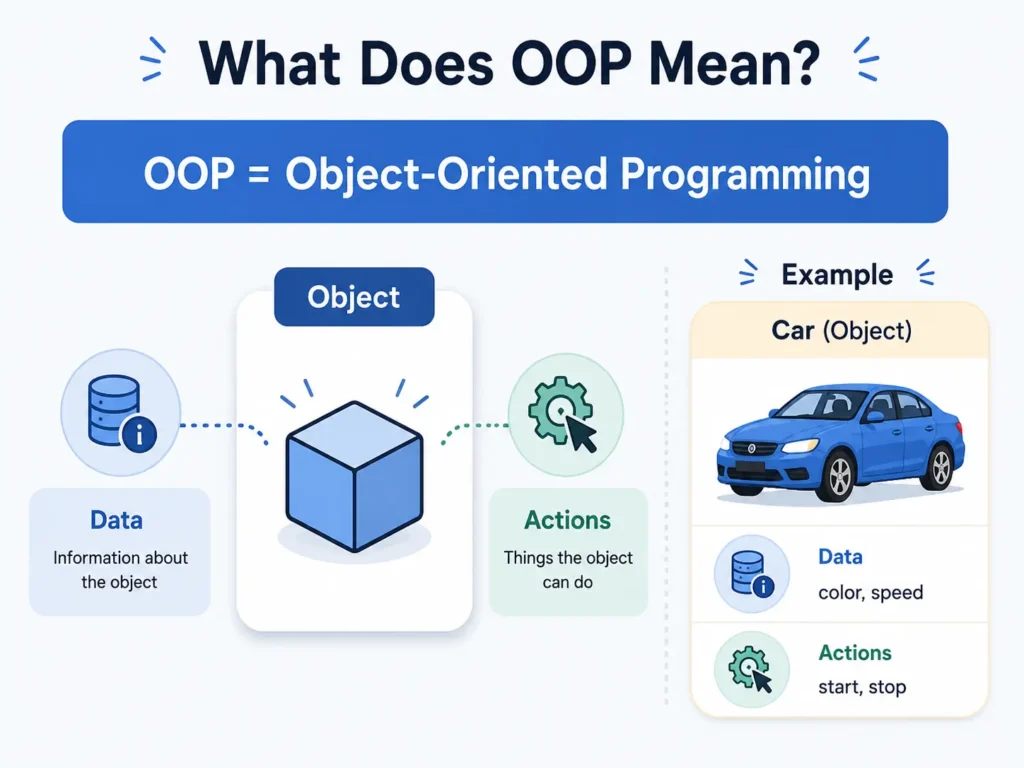
OOP means Object-Oriented Programming. It is a programming style where developers organize code using objects instead of writing everything as one long list of instructions.
Context is important when understanding any abbreviation. While OOP is a programming term, expressions covered in guides such as YWW Meaning are commonly used in text messages and online conversations.
An object can contain two main things:
Data
Actions
The data describes the object. The actions describe what the object can do.
For example, think about a user account in an app. The user object may have data like name, email, username, and password. It may also have actions like login, logout, update profile, and change password.
This makes the code easier to manage because related information and behavior stay together. Instead of writing user-related code in many different places, developers can keep it inside a User class or User object.
In simple words, OOP is a way to write code by creating objects that store information and perform actions.
What Does OOP Mean in Programming?
In programming, OOP helps developers build software in a more organized way. It is especially useful when a project has many related parts, such as users, products, orders, payments, messages, reports, or settings.
Without structure, a large program can become messy. Developers may repeat the same code in many places. Errors may become harder to find. Updates may become risky because changing one part of the program can affect another part.
OOP solves this by grouping related data and actions together.
For example, in a banking system, developers may create different objects for customers, accounts, transactions, loans, and payments. Each object has its own data and its own actions.
A bank account object may have:
Account number
Balance
Account type
It may also have actions like:
Deposit money
Withdraw money
Check balance
Transfer funds
This structure makes the program easier to understand because every object has a clear purpose.
OOP Meaning With Simple Examples
The easiest way to understand object-oriented programming is through real-life examples.
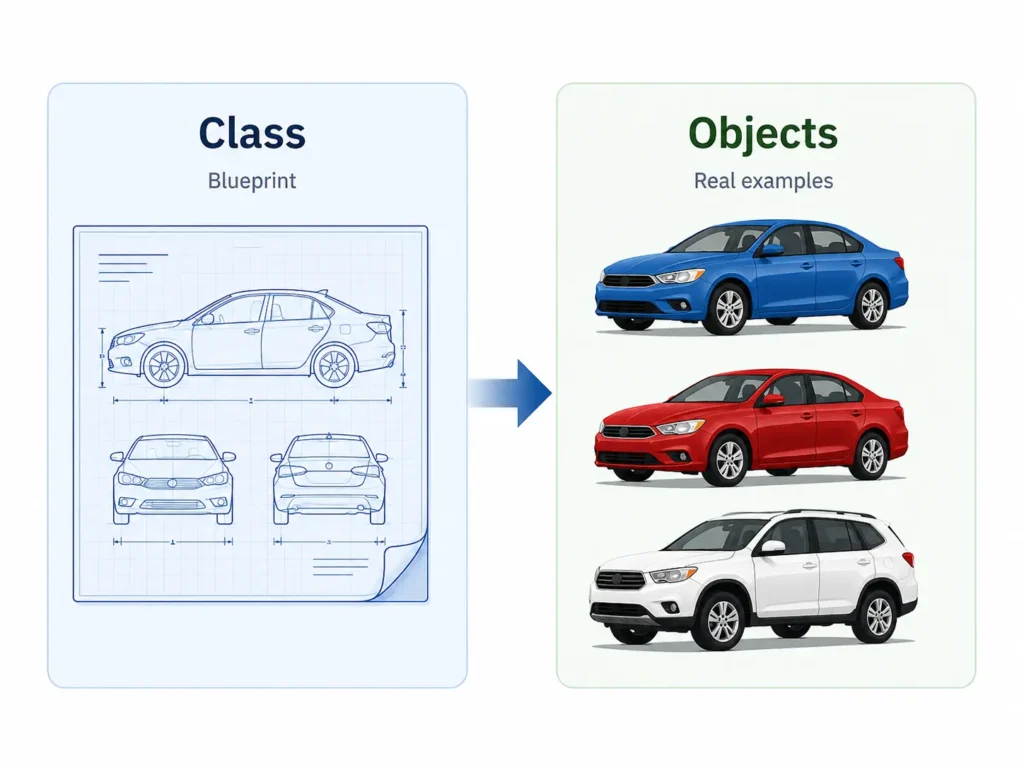
Think about a car. A car has data, such as color, brand, model, and speed. A car also has actions, such as start, stop, drive, and brake.
In OOP, a car can become an object. Its data explains what the car is. Its actions explain what the car can do.
Now think about a class as a blueprint. A class is not the real car. It is the plan for creating cars.
For example:
Class: Car
Objects: Toyota Corolla, Honda Civic, Ford Mustang
Each object comes from the same Car class, but each one can have different details. One car may be red. Another may be black. One may be fast. Another may be slow.
Here is another simple example.
Class: Dog
Objects: Bella, Max, Rocky
A dog object may have properties like name, color, age, and breed. It may have methods like bark, eat, sleep, and run.
The class says what every dog should have. The object is the real dog created from that class.
This is why OOP is useful. It lets programmers model real-world things in code, such as students, cars, products, users, bank accounts, dogs, messages, and orders.
Basic Structure of Object-Oriented Programming
To understand OOP clearly, you need to know its basic building blocks. The most important terms are class, object, property, attribute, and method.
What Is a Class?
A class is a blueprint for creating objects. It defines what kind of data and actions an object should have.
For example, a student class may define that every student should have a name, age, grade, and email. It may also define actions like submit homework, check result, or update profile.
The class is only the plan. It does not become a real student until an object is created from it.
What Is an Object?
An object is a real item created from a class. If the class is the blueprint, the object is the actual thing made from that blueprint.
For example:
Class: Student
Objects: Ali, Sara, Ahmed
Each student object can have its own data. Ali may be 12 years old. Sara may be 13. Ahmed may be in a different grade. They all come from the same student class, but their details are different.
What Are Properties or Attributes?
Properties, also called attributes, store data inside an object. They describe the object.
For example, a product object may have these properties:
Title
Price
Color
Size
Stock
A user object may have:
Name
Email
Password
Profile picture
Properties help the program remember information about each object.
What Are Methods?
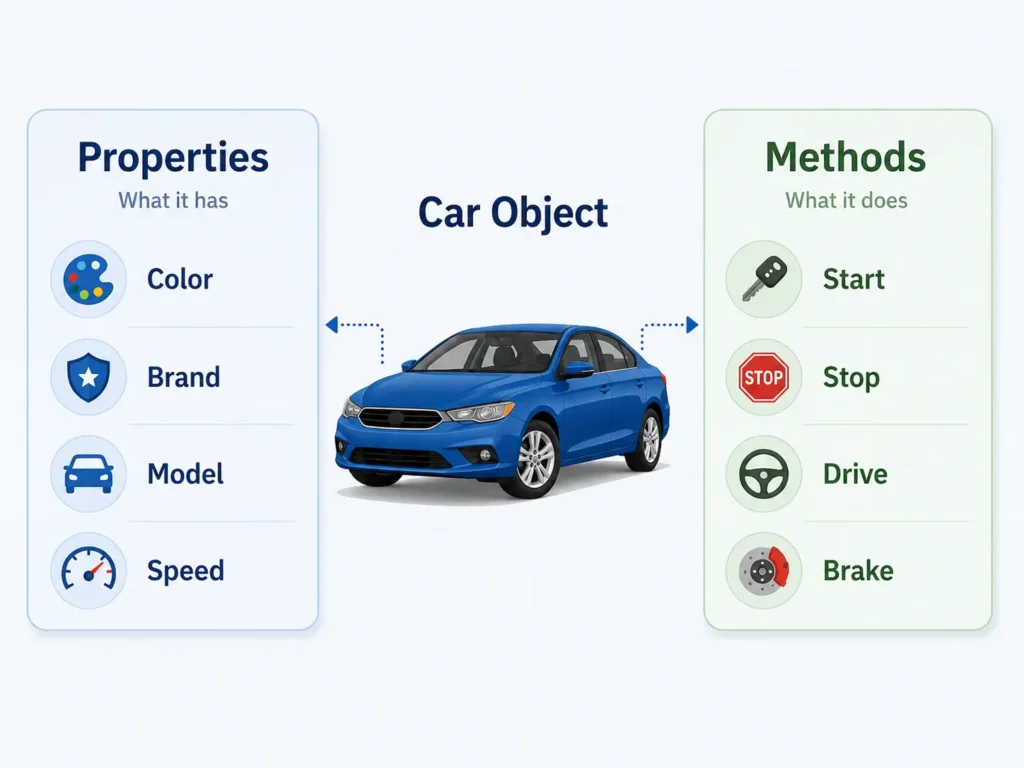
Methods are actions that an object can perform. They are like functions that belong to a class or object.
For example, a User object may have methods like login, logout, send message, or change password.
A Car object may have methods like start, stop, drive, and brake.
Methods make objects useful because they allow them to do something, not just store information.
Step 1 Summary
So far, the OOP meaning is simple: OOP stands for Object-Oriented Programming. It is a way to organize code using objects.
Objects contain data and actions. A class works like a blueprint. Properties store information, and methods perform actions.
Once you understand classes, objects, properties, and methods, the rest of object-oriented programming becomes much easier to learn.
Main Principles of OOP
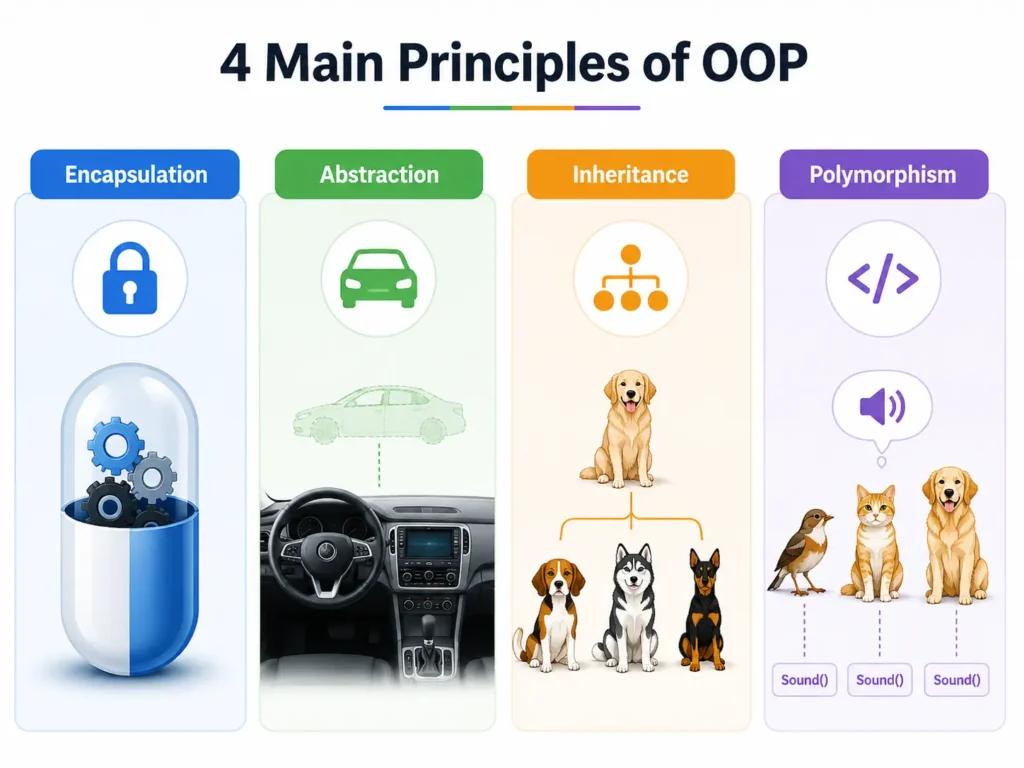
To understand object-oriented programming better, you need to know its four main principles. These principles help developers write code that is organized, reusable, and easier to maintain.
Encapsulation
Encapsulation means keeping data and methods together inside an object. It also helps protect data from being changed in the wrong way.
For example, think about a bank account. A bank account has a balance, but users should not directly change the balance however they want. Instead, they should use methods like deposit, withdraw, or check balance.
This keeps the data safer and makes the code easier to control.
Abstraction
Abstraction means hiding complex details and showing only what is needed.
A simple example is a car. When you drive, you use the steering wheel, pedals, and gear. You do not need to understand every engine part to drive the car.
Programming works the same way. A method may do many things behind the scenes, but the user only sees the simple action.
Inheritance
Inheritance allows one class to use features from another class. This helps reduce repeated code.
For example, a class called Animal may have methods like eat and sleep. Then classes like Dog, Cat, and Cow can inherit those methods from Animal.
This means developers do not need to write the same code again for every animal class.
Polymorphism
Polymorphism means the same action can work in different ways.
For example, different animals can have the same method called makeSound. A dog may bark, a cat may meow, and a cow may moo.
The method name is the same, but the result changes based on the object. This makes code more flexible.
OOP vs Similar Programming Styles
OOP is only one programming style. Other common styles include procedural programming and functional programming.
OOP vs Procedural Programming
Procedural programming focuses on steps and functions. It tells the computer what to do in order.
For example, a simple program may run one function to collect data, another function to process it, and another function to show the result.
OOP is different because it focuses on objects. These objects hold both data and actions. OOP works well when a program has many related parts, such as users, products, orders, accounts, messages, or payments.
OOP vs Functional Programming
Functional programming focuses on functions and data transformation. It tries to avoid changing data directly.
OOP focuses on objects that store data and perform actions. Functional programming focuses more on pure functions and predictable results.
Many modern programming languages support more than one style. For example, Python and JavaScript can be used with object-oriented programming, functional programming, or a mix of both.
Is OOP Easy or Hard for Beginners?
OOP can feel hard at first because it introduces new terms like class, object, method, property, inheritance, encapsulation, abstraction, and polymorphism.
However, OOP becomes easier when you connect it to real-life examples. A class is like a blueprint. An object is the real thing made from that blueprint. Properties are details, and methods are actions.
Beginners should first learn basic programming concepts like variables, conditions, loops, and functions. After that, learning OOP becomes much easier.
The best way to learn object-oriented programming is by creating small examples. You can make a Student class, a Car class, a BankAccount class, or a Product class. These simple projects help you understand how objects work in real code.
Origin and Evolution of OOP
Object-oriented programming was created to help developers manage larger and more complex software projects. As programs became bigger, writing everything as one long list of instructions became difficult.
Developers needed a better way to organize code, avoid repetition, and model real-world things. OOP solved this problem by grouping related data and actions into objects.
Over time, OOP became popular in many programming languages. Java, C++, C#, Python, JavaScript, PHP, Ruby, Kotlin, Swift, and TypeScript all support object-oriented ideas.
Today, developers use OOP in mobile apps, web applications, video games, banking systems, shopping websites, business software, desktop applications, and enterprise software.
Popular Programming Terms Related to OOP
Here are some important terms related to OOP.
Class
A class is a blueprint for creating objects.
Example:
Car, Student, User, Product
Object
An object is a real item created from a class.
Example:
A Toyota Corolla can be an object of the Car class.
Property
A property stores data about an object.
Example:
Name, price, color, email, speed
Method
A method is an action an object can perform.
Example:
Login, drive, send message, update profile
Constructor
A constructor is a special method that creates and sets up an object.
Instance
An instance is another word for an object created from a class.
Interface
An interface defines how different parts of code can communicate with each other.
Code Reusability
Code reusability means using the same class or method again instead of writing duplicate code.
Final Thoughts
The OOP meaning is simple once you understand the basics. OOP stands for Object-Oriented Programming. It is a way to organize code using classes and objects.
Objects contain data and actions. Classes work like blueprints. Properties store information, and methods perform actions.
The four main principles of OOP are encapsulation, abstraction, inheritance, and polymorphism. These ideas help developers write code that is cleaner, safer, reusable, scalable, and easier to maintain.
OOP is especially useful for large projects, such as apps, games, banking systems, shopping websites, and business software. However, it is not always needed for very small scripts or simple one-time programs.
If you are a beginner, do not try to memorize every term at once.
You can also explore FG Meaning to learn how another short abbreviation may change meaning depending on the conversation, platform, and context.
Start with simple examples like “car,” “dog,” “student,” “user,” or “product.” Once you understand how classes and objects work, OOP becomes much easier.
Frequently Asked Questions
What does OOP mean in programming?
OOP means Object-Oriented Programming. It is a way to organize code using objects, classes, data, and methods.
What is object-oriented programming in simple words?
Object-oriented programming is a coding style where developers create objects that store information and perform actions.
What is an object in OOP?
An object is a single item created from a class. It can represent a user, car, product, student, bank account, or message.
What is a class in OOP?
A class is a blueprint for creating objects. It defines what data and methods the objects should have.
What are the four principles of OOP?
The four main principles are encapsulation, abstraction, inheritance, and polymorphism.
Is Python object-oriented?
Yes. Python supports object-oriented programming, but it also supports other programming styles.
Is JavaScript object-oriented?
Yes. JavaScript supports OOP through objects, prototypes, and modern class syntax.
Is OOP hard to learn?
OOP can feel hard at first, but simple examples make it much easier to understand.
Why is OOP important?
OOP helps developers organize code, reuse code, maintain large projects, and model real-world things in software.
What is the difference between a class and an object?
A class is the blueprint. An object is the actual item created from that blueprint.
When should I use OOP?
Use OOP when your project has many related objects, repeated logic, or features that need structure and reuse.
What are the disadvantages of OOP?
OOP can add complexity, feel difficult for beginners, and become confusing if developers overuse inheritance.