
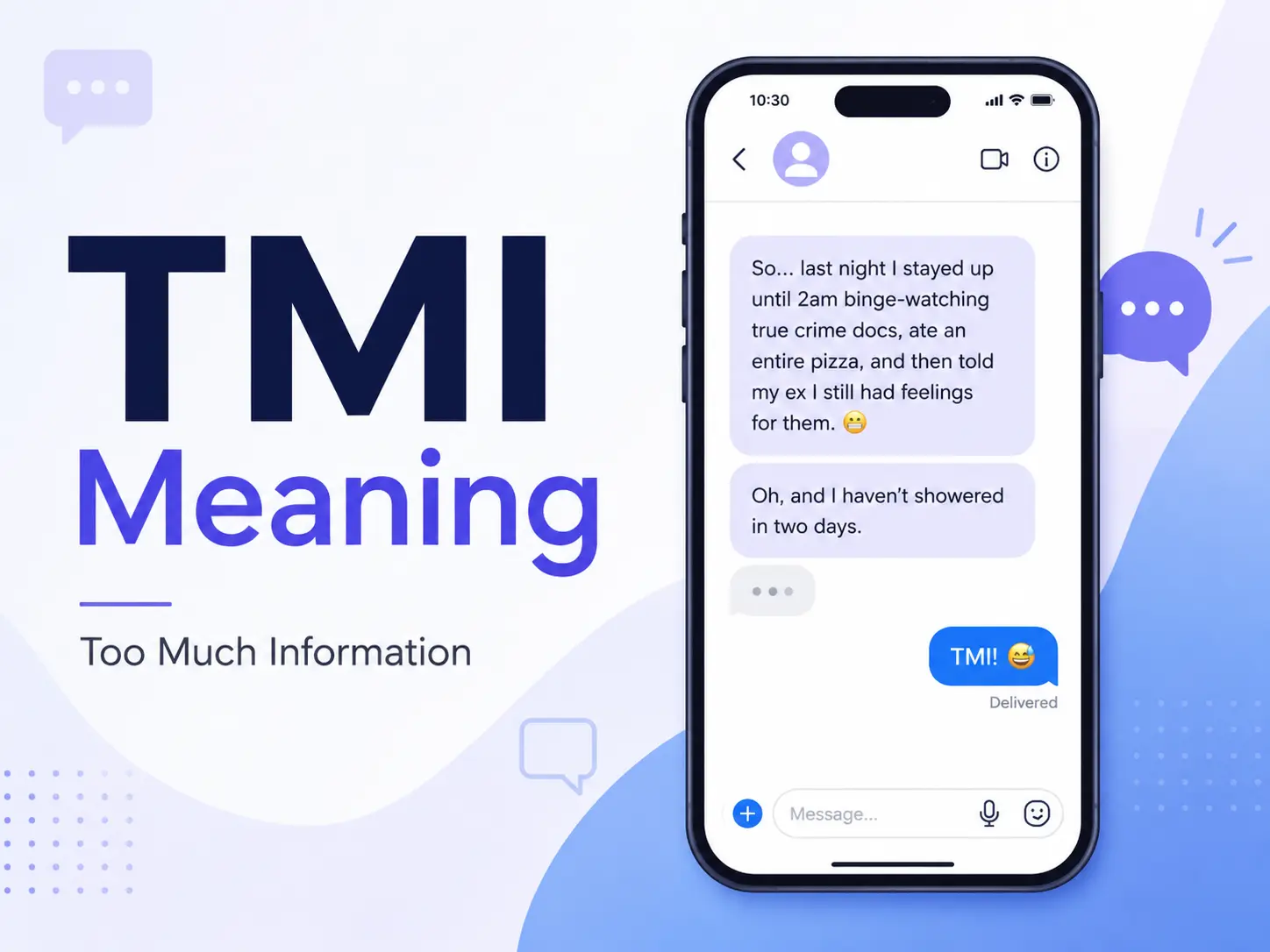
If someone replies “TMI” to a message, they usually mean you shared more detail than they wanted. The TMI Meaning is “Too Much Information.” People use it in texts, chats, social media, and everyday speech when a story feels too personal, awkward, graphic, or unnecessary.
TMI can sound playful or serious. Tone depends on context. This guide explains how people use it and what counts as oversharing.
What Does TMI Mean?
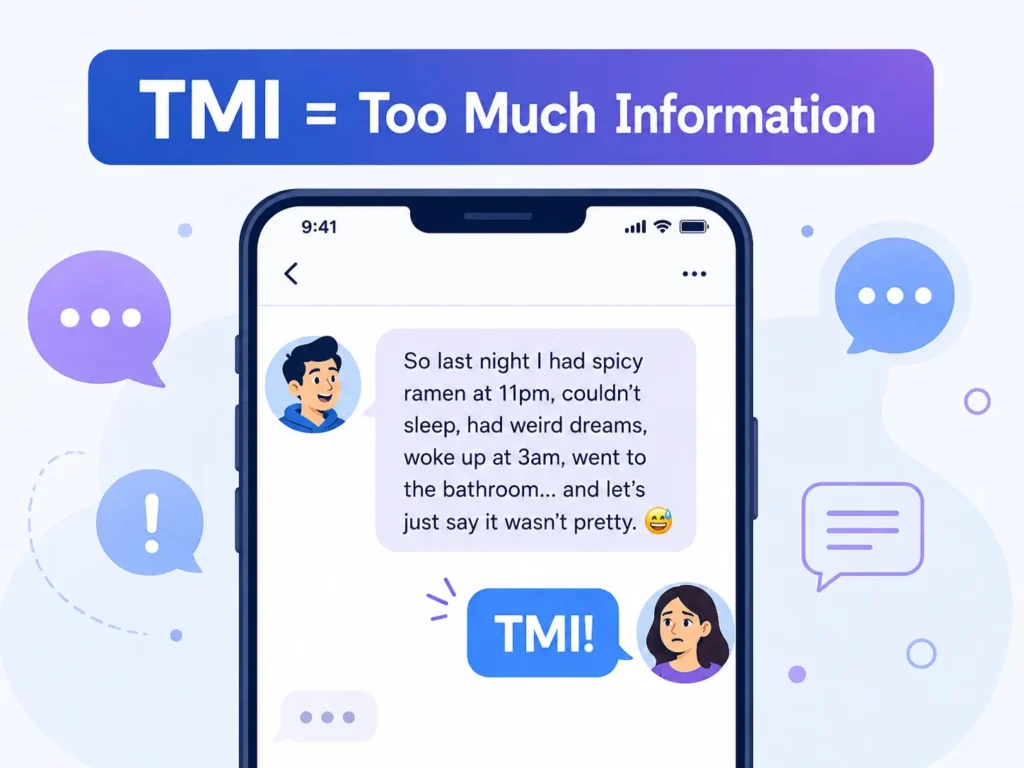
TMI means “Too Much Information.” It is a quick reaction to information that feels excessive or more personal than the listener expected.
For example:
“I had an embarrassing stomach problem this morning.”
“TMI!”
In simple language, TMI often means, “I didn’t need to know that much.”
What Does TMI Stand For?
TMI stands for Too Much Information. It is an abbreviation and, more specifically, an initialism because people usually pronounce the letters separately: “T-M-I.”
TMI Meaning at a Glance
| Meaning | Full Form | Purpose | Tone | Common Context |
| Too much detail | Too Much Information | React to oversharing | Playful to serious | Texts, chats, social media |
What Does TMI Mean in Text Messages?
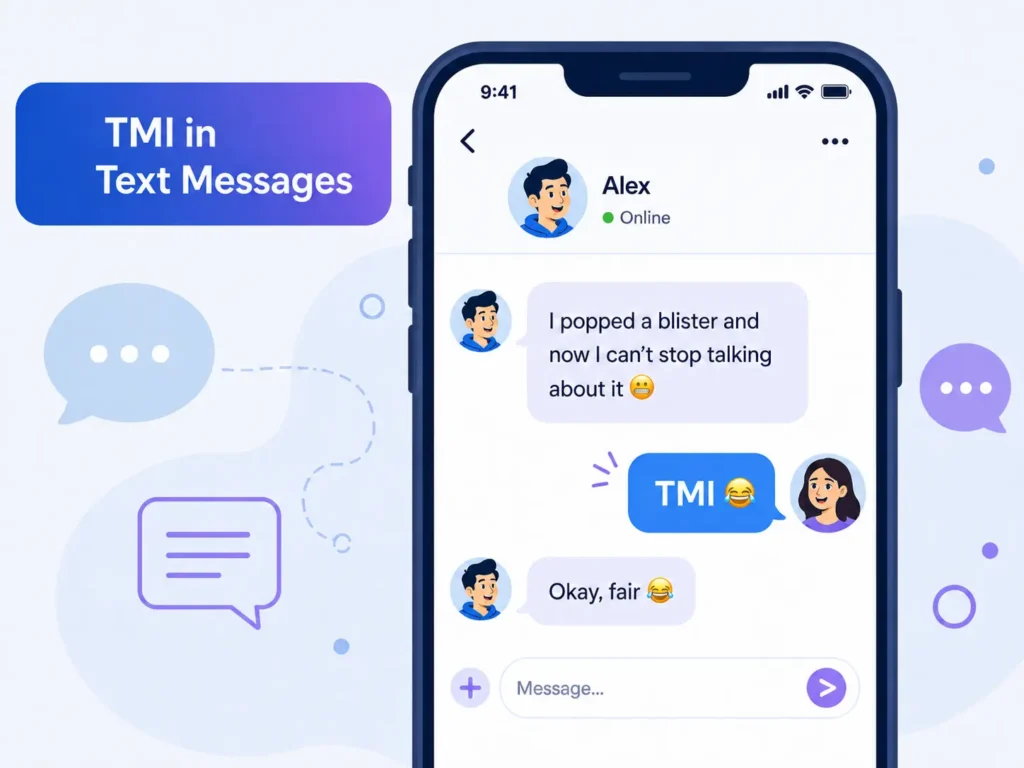
The TMI Meaning in text messages is usually the same: someone thinks the information is too personal, detailed, or awkward.
Friends often use it jokingly:
Friend: “I spent twenty minutes popping a blister.”
You: “TMI 😂”
People can also use TMI about themselves. “This might be TMI, but…” warns the listener that personal information is coming. “Sorry, TMI” works after someone realizes they may have overshared.
In group chats, TMI often appears when a personal story becomes more detailed than expected.
What Does TMI Mean on Social Media?
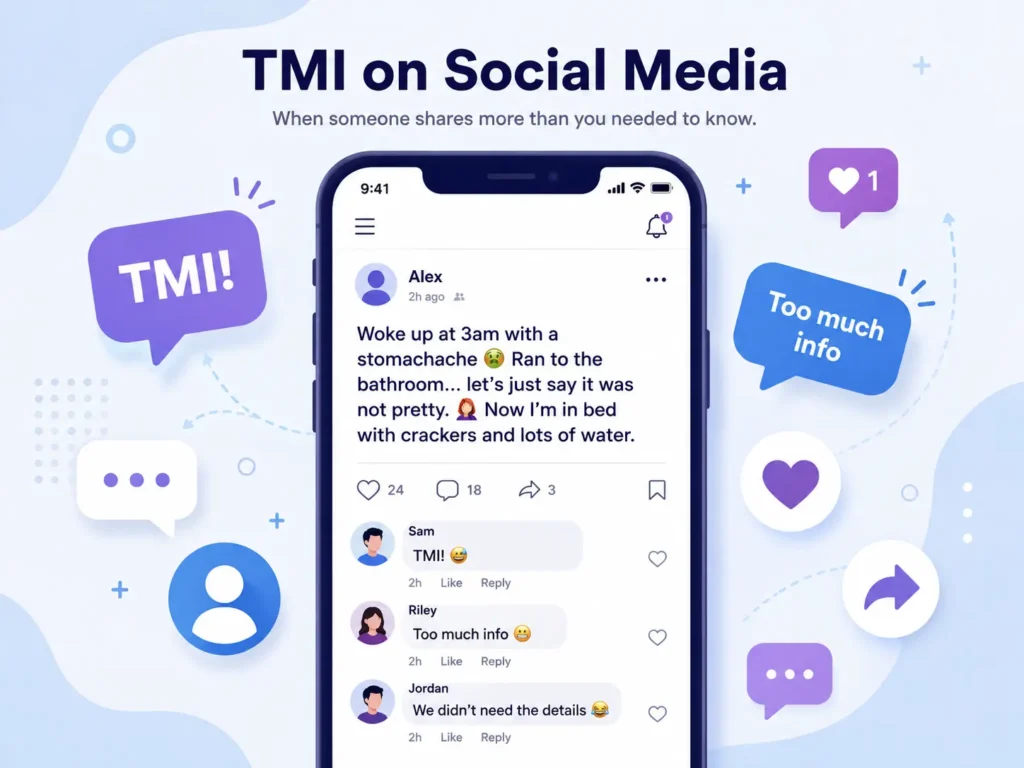
On TikTok, Instagram, Snapchat, Reddit, Discord, and similar platforms, TMI still usually means Too Much Information.
People may comment “TMI” under a storytime video or personal post. The meaning usually stays the same, but tone can change.
Why Do People Say TMI?
People say TMI to signal oversharing, express discomfort, make a joke, or set a conversational boundary.
Sometimes the reaction is lighthearted:
“Want to know how long I spent in the bathroom?”
“Nope. TMI!”
Other times, it means the topic feels too personal for the setting. The phrase quickly tells the speaker that the listener does not want more detail.
What Kind of Information Is Usually Considered TMI?
TMI often involves personal, graphic, embarrassing, or unnecessary details. Examples include intimate relationship stories, body-related details, medical information, private family matters, or personal information shared in an unsuitable setting.
However, personal information is not automatically TMI. A medical detail may be appropriate with a doctor but uncomfortable in a casual group chat. Context, audience, and relationship matter.
How to Tell If Something Is TMI
Before sharing, consider your audience, setting, relationship, and the relevance of the detail.
Ask yourself:
- Does the listener need this information?
- Is it appropriate for the setting?
- Am I sharing someone else’s private information?
- Could this make the other person uncomfortable?
Healthy self-disclosure can build trust. Oversharing happens when details go beyond what the audience wants or needs.
What Tone Does TMI Have?
TMI can carry different tones. “TMI!” may sound surprised. “TMI 😂” usually feels playful. “TMI 😳” can show embarrassment or shock. “TMI…” may suggest discomfort.
Because tone can be hard to read online, punctuation, emojis, and the relationship between people matter.
Is TMI Always Negative?
No. TMI is often used jokingly between friends. Personal sharing can also build trust when both people feel comfortable. Whether it becomes oversharing depends on audience, timing, and context.
How to Respond When Someone Says “TMI”
If the person is joking, you can reply, “Fair enough!” or “Okay, maybe that was too much.”
If you accidentally overshared, say, “Sorry, that was probably TMI.”
If someone else is sharing too much, a polite response is, “I think I get the idea” or “You can spare me the details.”
TMI vs Similar Texting Abbreviations
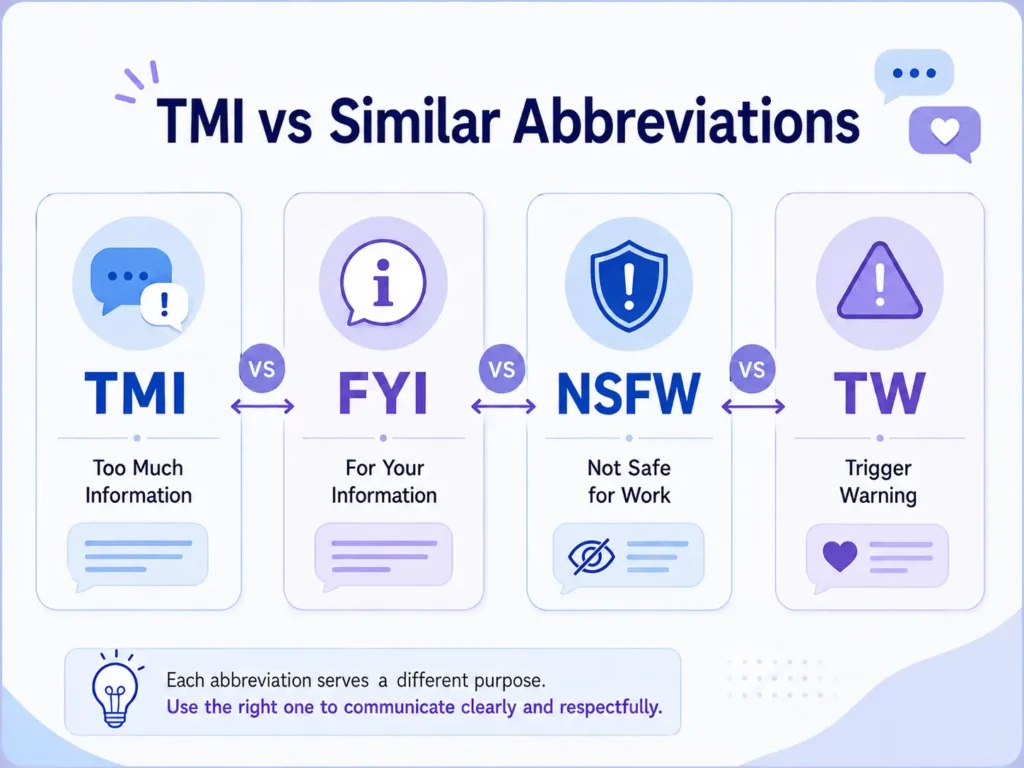
TMI and FYI have different purposes. FYI means “For Your Information” and introduces useful information, while TMI reacts to information that feels excessive or unwanted.
If you often see FYI in messages or emails, our [FYI Meaning] guide explains how it is used in texting, social media, and everyday communication.
NSFW means “Not Safe For Work” and warns that content may be inappropriate in a workplace or public setting. A TW, or trigger warning, prepares people for potentially distressing content.
Is TMI Formal or Informal?
TMI is mainly informal. It fits texts, social media, group chats, and casual conversations.
At work, saying “TMI” directly may sound blunt. A more diplomatic alternative is, “That may be more detail than we need.”
Different Meanings of TMI Depending on Context
The most common TMI Meaning in texting is “Too Much Information,” but the letters can mean other things.
TMI can refer to Three Mile Island in discussions about nuclear power and history. It can also refer to The Mortal Instruments in book and fandom conversations. Context usually makes the intended meaning clear.
Origin and Evolution of TMI
The phrase “too much information” existed before texting and social media. As forums, instant messaging, and text messages became common, TMI developed into convenient internet shorthand.
It remains useful because three letters can communicate humor, surprise, discomfort, or a boundary quickly.
Popular Texting Slang Related to TMI
You may also come across [BTW Meaning], short for “By The Way,” which people use to introduce an extra thought or change the subject naturally in a conversation.
Related abbreviations include FYI, TBH, NGL, IMO, IDK, and BTW.
Another common abbreviation is [IMHO Meaning], which stands for “In My Humble Opinion” and is often used when someone wants to share a personal viewpoint politely.
Final Thoughts
The TMI Meaning is “Too Much Information.” People usually use it when someone shares more personal, awkward, graphic, or unnecessary detail than the audience wants.
TMI can be funny or serious, so context and audience matter.
Frequently Asked Questions About TMI Meaning
What does TMI mean in text?
TMI means “Too Much Information” and usually reacts to oversharing.
Is TMI rude?
Not always. It can be playful, but a blunt “TMI” may embarrass someone.
Is TMI the same as oversharing?
Not exactly. Oversharing is the behavior; TMI is often the reaction.
What does “this might be TMI” mean?
It warns the listener that the speaker is about to share something personal or potentially awkward.
What is the difference between TMI and FYI?
TMI means “Too Much Information,” while FYI means “For Your Information.”