
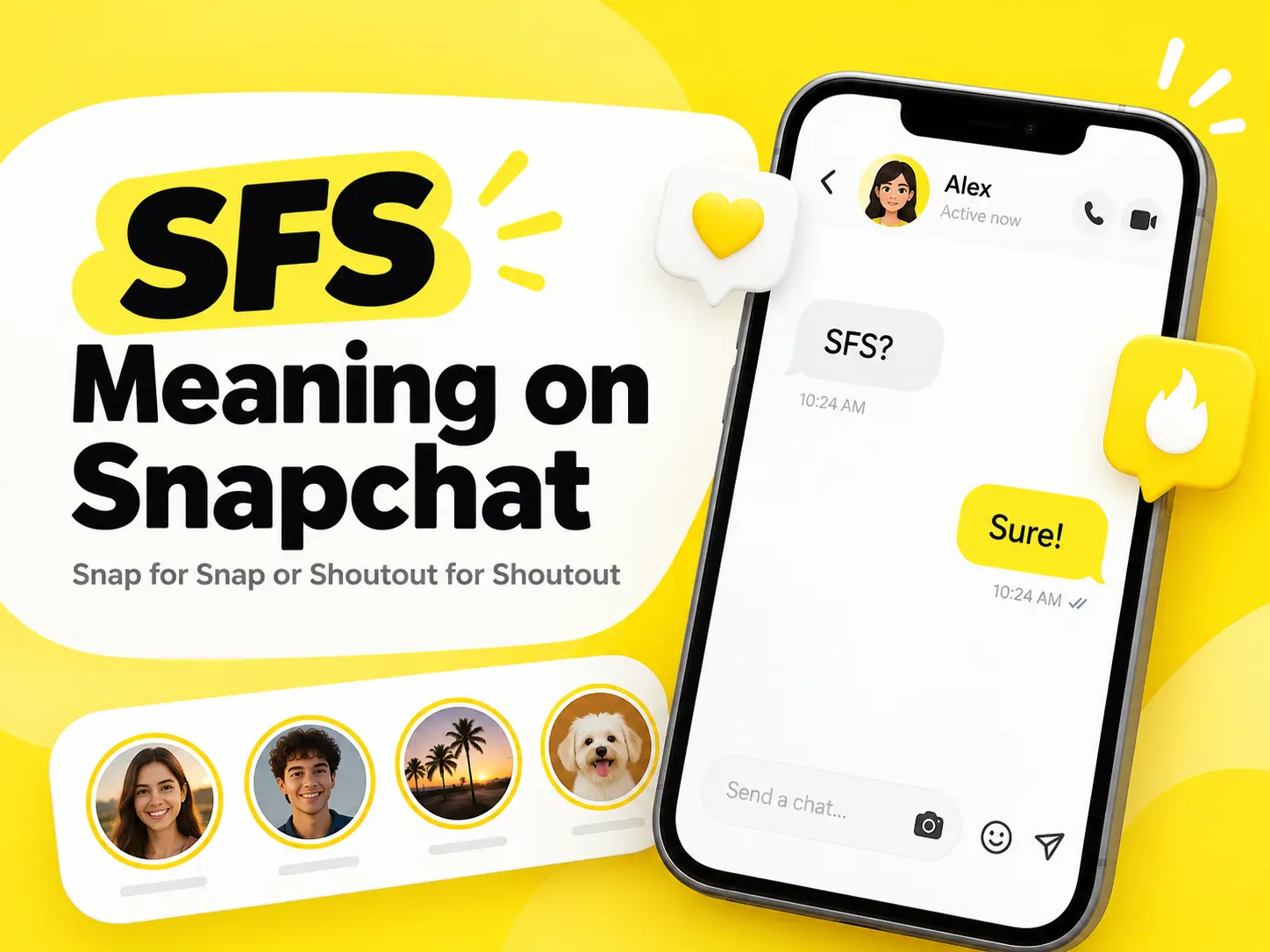
If someone sends you “SFS?” in a Snapchat chat, Snap, caption, or Story, you may wonder what they want. The SFS Meaning on Snapchat is usually “Snap for Snap” or “Shoutout for Shoutout.” The correct meaning depends on the conversation and where the term appears.
In a private chat, SFS often means exchanging Snaps. On a Story, it may mean promoting each other’s Snapchat accounts. Understanding the context makes it easy to know what the sender means and how to reply.
What Does SFS Mean on Snapchat?
Simple Definition of SFS
On Snapchat, SFS commonly means “Snap for Snap.” One person sends a Snap, and the other sends one back.
It can also mean “Shoutout for Shoutout,” where two users promote each other to increase profile visibility or engagement. Less commonly, SFS can mean “Spam for Spam.”
SFS Meaning at a Glance
| Term | Meaning |
| SFS | Snap for Snap / Shoutout for Shoutout |
| Platform | Snapchat |
| Purpose | Exchange Snaps or promote accounts |
| Used in | Chats, Stories, captions, Snaps |
| Tone | Casual and informal |
| Related slang | S4S, F4F, streaks |
The SFS Meaning on Snapchat is therefore not fixed. The surrounding message usually reveals what the sender wants.
What Does “Snap for Snap” Mean?
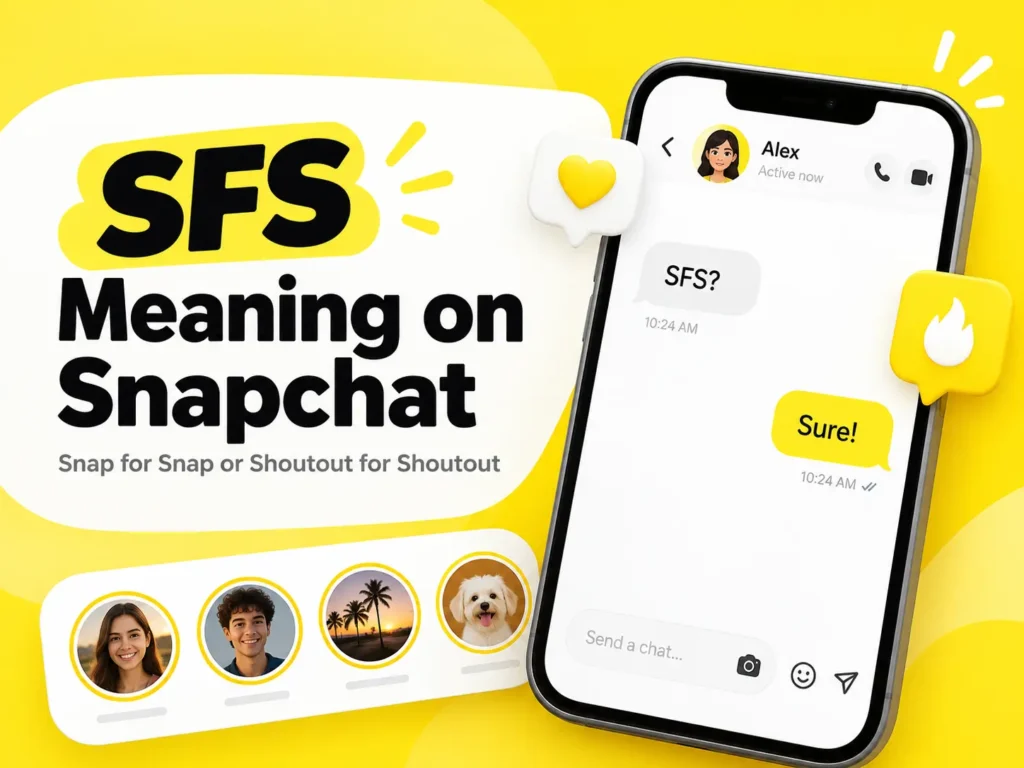
Snap for Snap means two Snapchat users exchange Snaps with each other.
For example:
Alex: “SFS?”
Jordan: “Sure, send first.”
Here, Alex is asking Jordan to send a Snap in return. People may use Snap for Snap to keep a conversation active, increase interaction, meet new Snapchat users, or maintain regular Snap exchanges.
SFS and a Snapchat streak can overlap, but they are not exactly the same. A streak involves exchanging Snaps on consecutive days, while SFS is simply a request for reciprocal interaction.
What Does “Shoutout for Shoutout” Mean on Snapchat?
SFS can also mean Shoutout for Shoutout.
In this situation, two users agree to promote each other. Someone might share another person’s username, profile, or Snap on their Snapchat Story, and the other person does the same in return.
For example:
“SFS? I’ll put your account on my Story if you post mine.”
This form of SFS focuses on mutual promotion, account visibility, profile exposure, and reaching new followers or friends.
Snap for Snap vs. Shoutout for Shoutout
The easiest way to understand SFS is to look at the context.
| Meaning | What Happens | Common Context |
| Snap for Snap | Users exchange Snaps | Private chats |
| Shoutout for Shoutout | Users promote each other | Stories |
| Spam for Spam | Users exchange repeated engagement | Less common |
If someone says “SFS? Send first,” they probably mean Snap for Snap.
If they say “SFS? I’ll post you on my Story,” they mean Shoutout for Shoutout.
This distinction is important because the same slang abbreviation can describe two different types of Snapchat interaction.
How Is SFS Used on Snapchat?
Users may send SFS in a private Snapchat chat, add it to a Story, or include it in a Snap caption.
Examples include:
- “Anyone wanna SFS?”
- “SFS? Send first.”
- “Doing SFS today.”
- “SFS and I’ll post you back.”
A private message often points toward Snap for Snap, while a public Story asking multiple followers for SFS may involve shoutouts or promotion.
How to Respond When Someone Says SFS
Your reply depends on what you want to do.
If you are interested, you can say:
- “Sure, send first.”
- “Yeah, I’m down.”
- “Okay, I’ll post you too.”
If you are not interested, simply reply:
- “Not doing SFS right now.”
- “I’m good, thanks.”
If the meaning is unclear, ask:
“Snap for Snap or Shoutout for Shoutout?”
That is the easiest way to avoid misunderstanding the sender’s intention.
“Like many texting abbreviations, SFS can change in tone depending on context. If you often see short slang terms in chats, you may also want to understand MBN Meaning and how people use it in casual conversations.”
Why Do People Use SFS on Snapchat?
Snapchat users may use SFS to increase interaction, exchange Snaps, get more Story views, promote accounts, or connect with other users.
For creators or users trying to increase account exposure, a shoutout exchange can help introduce their profile to another audience. For friends, SFS may simply be a casual way to exchange Snaps and keep communication active.
Is SFS Safe to Use With Strangers?
SFS itself is not offensive or dangerous, but you should still use normal privacy precautions when interacting with unfamiliar accounts.
Avoid sending private information, passwords, addresses, or sensitive photos to people you do not know. You also do not have to accept an SFS request simply because someone sends one.
“Another Snapchat abbreviation worth knowing is NFS Meaning on Snapchat, because its meaning can also depend heavily on the surrounding message and context.”
SFS vs. Similar Snapchat Slang
SFS is related to several other social media terms.
S4S usually refers to Shoutout for Shoutout, while F4F means Follow for Follow. A streak refers to exchanging Snaps for consecutive days.
These terms all involve interaction, but they describe different actions.
“Snapchat users also use conversational abbreviations such as ICL Meaning, which usually appears when someone wants to express an honest opinion or reaction.”
Frequently Asked Questions About SFS Meaning on Snapchat
What does SFS mean on Snapchat?
SFS usually means Snap for Snap or Shoutout for Shoutout. Context tells you which meaning applies.
Does SFS help with Snapchat streaks?
It can. If two users regularly exchange Snaps after an SFS request, those exchanges may contribute to maintaining a streak.
Is SFS flirting?
Not necessarily. SFS usually refers to exchanging Snaps or shoutouts. The conversation around it determines whether there is any romantic intention.
What does SFS mean from a girl or guy?
The meaning does not change based on gender. It usually means Snap for Snap or Shoutout for Shoutout.
Is SFS the same as S4S?
They can overlap, but S4S is more specifically associated with Shoutout for Shoutout, while SFS can also mean Snap for Snap.
Final Thoughts
The SFS Meaning on Snapchat is usually Snap for Snap, although it can also mean Shoutout for Shoutout. Look at whether the sender is talking about exchanging Snaps, posting a Story, or promoting an account. Once you check the context, understanding and replying to SFS becomes simple.