
If you have ever seen a post that seemed designed to make people angry, you may have encountered rage bait. The rage bait meaning is simple: it is online content created or framed to provoke anger, outrage, or arguments so people are more likely to react.
You can find rage bait on TikTok, Instagram, YouTube, X, Reddit, news feeds, comment sections, and short-form videos. It often uses extreme opinions, misleading headlines, missing context, or staged situations to attract comments, shares, views, and attention.
What Does Rage Bait Mean?
Simple Definition of Rage Bait
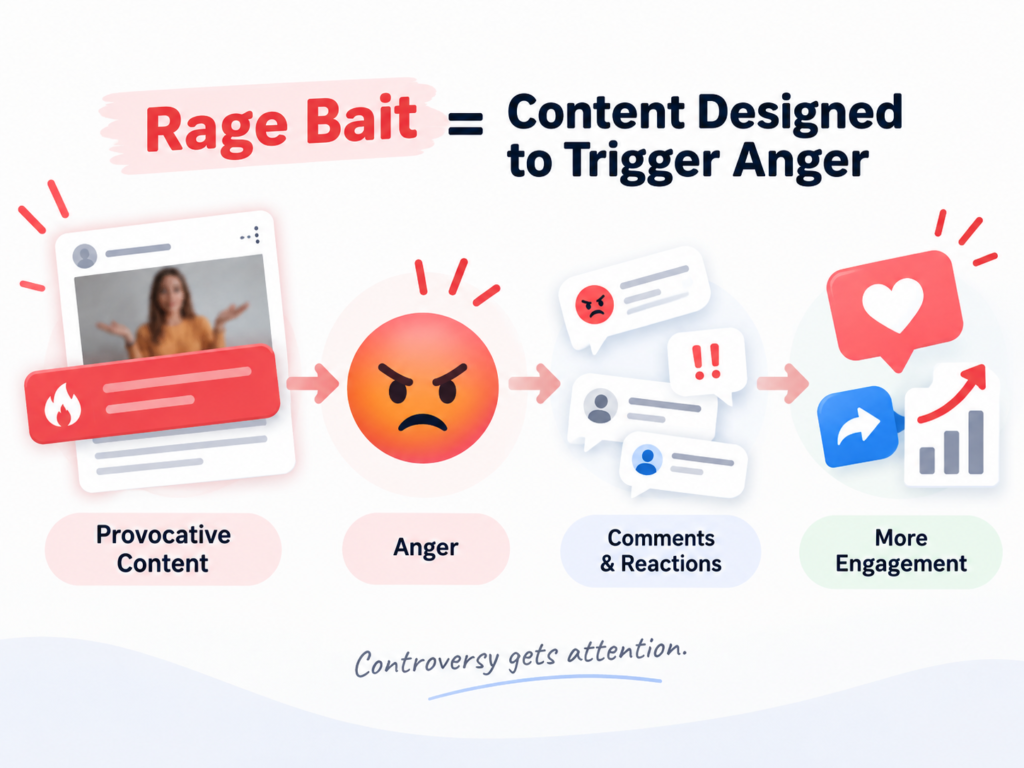
Rage bait is deliberately provocative content designed to trigger anger or outrage and encourage engagement.
Merriam-Webster and Cambridge Dictionary both connect the term with content that intentionally makes people angry to gain attention, interaction, or traffic.
However, not everything that makes people angry is rage bait. A genuine opinion, mistake, or controversial discussion can upset people without being intentionally manipulative. Intent, presentation, and repeated engagement tactics matter.
Rage Bait Meaning at a Glance
| Term | Simple Meaning | Main Goal | Common Places |
| Rage bait | Content designed to provoke anger | Reactions and engagement | TikTok, Instagram, X, Reddit |
| Clickbait | Content designed to make people click | Traffic and clicks | Headlines, videos, websites |
| Trolling | Deliberately provoking people | Reaction or disruption | Comments, forums, social media |
What Does Rage Bait Mean on Social Media?
The rage bait meaning on social media usually refers to content designed to make users react emotionally.
Rage Bait on TikTok
TikTok rage bait may include deliberately bad cooking, extreme relationship advice, staged arguments, controversial takes, or videos where someone performs a simple task in an obviously frustrating way.
The creator may expect viewers to correct them, criticize them, or argue in the comments.
Rage Bait on Instagram and Reels
Instagram Reels may use provocative captions, exaggerated lifestyle opinions, staged clips, or intentionally frustrating behavior.
Some creators also exaggerate confidence, attention-seeking behavior, or dramatic situations for reactions, which connects with trends like [Main Character Meaning Slang] and “main character energy.”
Topics such as dating, parenting, money, fashion, work, and etiquette often attract strong reactions when presented in an extreme way.
Rage Bait on X, Reddit, and Other Platforms
On X and Reddit, rage bait often appears as hot takes, argumentative posts, misleading headlines, out-of-context clips, or inflammatory comments.
These posts may reduce complicated topics to extreme statements that encourage people to choose sides.
How Does Rage Bait Work?
Rage bait often follows a simple engagement cycle.
Step 1 — Choose a Sensitive Topic
A creator starts with a subject people care about, such as food, relationships, work, money, or social behavior.
Step 2 — Frame It to Trigger Anger
The creator may use sensational wording, exaggerated claims, false comparisons, or missing context.
Step 3 — People React
Viewers comment, argue, share the post, or send it to friends.
Step 4 — Engagement Increases Visibility
More activity can help provocative content reach a wider audience through recommendations, reposts, or algorithmic feeds.
This is why rage bait fits the attention economy. Anger becomes a way to attract visibility.
Why Do People Create Rage Bait?
Creators may use rage bait for several reasons.
-
To Increase Engagement
Angry viewers often feel an urge to respond, correct someone, or defend their opinion.
-
To Gain Views and Reach
People sometimes share rage-inducing content simply to criticize it, which can still increase its visibility.
-
To Attract Followers
Some content creators build an online persona around extreme opinions or controversy.
-
To Generate Traffic or Revenue
More clicks, views, and impressions may lead to more website traffic, advertising opportunities, or monetization.
Common Examples of Rage Bait
Understanding examples makes the rage bait meaning much clearer.
-
Controversial Opinion Posts
A post might say, “Anyone who does this is completely wrong,” even when the topic is subjective.
The exaggerated certainty encourages arguments.
Slang can also become part of rage bait when creators use age-related jokes or labels such as [Unc Meaning Slang] to provoke teasing, arguments, or reactions in comment sections.
-
Deliberately Bad Advice
Someone may post obviously questionable advice knowing people will rush to correct it.
-
Staged or Exaggerated Videos
A creator may intentionally behave in a frustrating or unrealistic way to make viewers ask, “Why would anyone do that?”
-
Misleading Headlines
Sensational headlines may remove context or exaggerate an event to create manufactured outrage.
-
Food and Lifestyle Rage Bait
Strange recipes, messy cooking, extreme dating opinions, parenting takes, or workplace advice can become rage bait when creators deliberately frame them to provoke viewers.
How to Spot Rage Bait Online
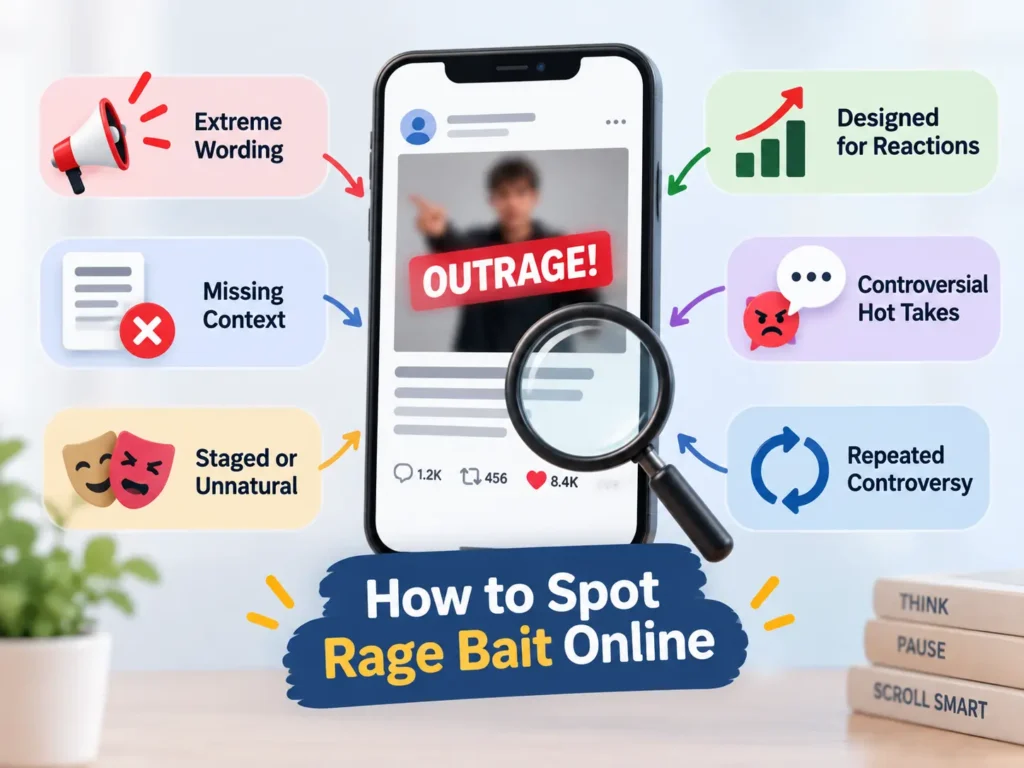
Watch for these common signs:
- The opinion seems unnecessarily extreme.
- The post appears designed to start arguments.
- Important context is missing.
- The account regularly posts inflammatory content.
- The wording encourages “us versus them” reactions.
- Many users are correcting an obvious mistake.
- The post focuses more on reaction than useful discussion.
Before responding, ask whether the claim is genuine, whether context is missing, and whether you can verify it from another source.
Rage Bait vs. Clickbait: What’s the Difference?
Rage bait and clickbait both compete for attention, but they use different triggers.
| Feature | Rage Bait | Clickbait |
| Main emotion | Anger or outrage | Curiosity |
| Main goal | Reaction and engagement | Click |
| Common format | Provocative post or video | Headline or thumbnail |
| Desired action | Comment, argue, share | Open content |
Clickbait makes you curious enough to click. Rage bait tries to make you angry enough to react.
Rage Bait vs. Trolling
Rage bait and trolling can overlap because both may deliberately provoke people.
The difference usually comes down to purpose. Trolling often focuses on irritating or disrupting a person or community. Rage bait more often uses outrage to attract attention, engagement, reach, or traffic.
Online arguments may also include terms like [Glazing Meaning Slang], which people use when they think someone is praising, defending, or supporting another person excessively.
Is Every Controversial Opinion Rage Bait?
No.
A genuine unpopular opinion is not automatically rage bait. Neither is a factual mistake or sincere disagreement.
Look at the wider pattern. Repeated inflammatory wording, exaggerated claims, staged situations, missing context, and obvious engagement tactics may provide stronger clues.
Even then, you cannot always know a creator’s intention with certainty.
Why Did Rage Bait Become So Popular?
Short-form content, rapid sharing, algorithmic feeds, and competition for attention all help explain why rage bait has become more visible.
Creators know that emotional content can generate comments and discussion, while audiences can spread it further by reacting.
Why Was Rage Bait Oxford Word of the Year 2025?
Oxford University Press selected “rage bait” as its Word of the Year for 2025.
The choice reflected the growing importance of online content designed to provoke anger and increase engagement. The term also captures broader concerns about social-media algorithms, attention, polarization, and digital behavior.
What Happens When You Engage With Rage Bait?
Responding to rage bait can increase its reach.
Comments, replies, shares, and reposts may expose the content to more users. This can also spread misinformation, encourage hostile discussions, and give provocative content more attention.
Related Rage Bait Terms
Ragebait: Another spelling of rage bait.
Rage-baiting: Deliberately trying to provoke anger.
Rage baiter: A person or account that creates rage bait.
Rage farming: Repeatedly creating outrage-driven content to attract engagement.
Engagement bait: Content designed mainly to encourage reactions.
Outrage content: Content built around anger, controversy, or emotional reactions.
Frequently Asked Questions About Rage Bait
What does rage bait mean in simple words?
The rage bait meaning is content intentionally designed to make people angry so they comment, share, click, or react.
What does rage bait mean on TikTok?
On TikTok, rage bait usually refers to videos or opinions designed to frustrate viewers and encourage comments, arguments, stitches, or shares.
What is an example of rage bait?
A creator may intentionally post terrible advice or an extreme opinion because they expect people to correct or criticize them.
How can you tell if something is rage bait?
Look for extreme wording, missing context, exaggerated claims, repeated controversy, and obvious attempts to start arguments.
Is rage bait the same as trolling?
Not exactly. Trolling usually focuses on provoking or disrupting people, while rage bait often aims to generate attention and engagement.
When did the term rage bait originate?
Oxford University Press traces an early online use of the phrase to 2002 on Usenet.
Final Takeaway
The rage bait meaning comes down to deliberate provocation. Rage bait uses anger, outrage, controversial opinions, misleading framing, or manufactured outrage to encourage engagement.
You may see it in TikTok videos, Instagram Reels, Reddit threads, X posts, headlines, and comment sections. Not every controversial post qualifies, so consider the creator’s framing, context, and repeated behavior before deciding.
When something online instantly makes you angry, check the source and context before commenting or sharing. Sometimes the reaction is exactly what the content was designed to get.