
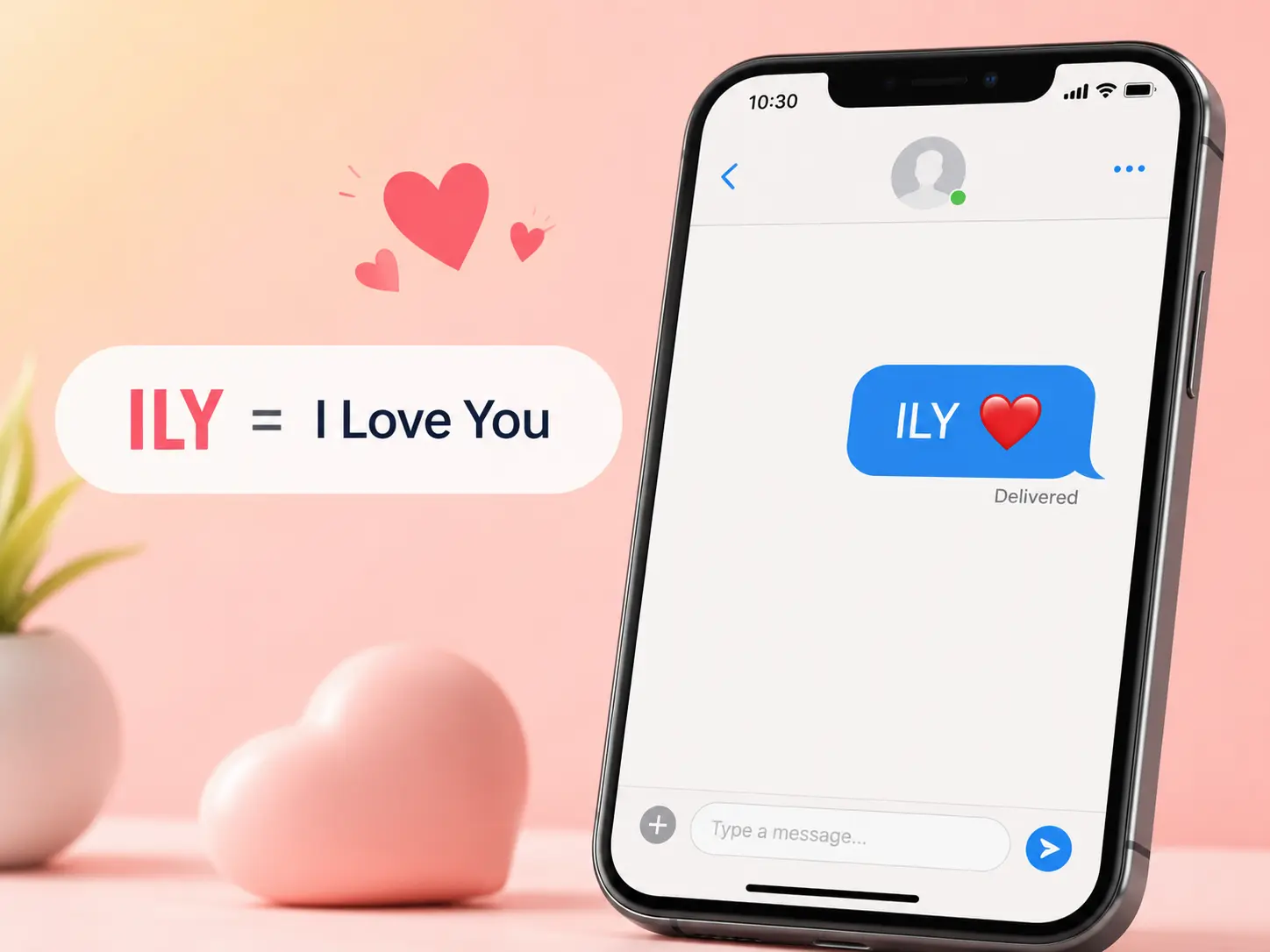
If someone sends you “ILY” in a text, DM, comment, or group chat, you may wonder what they mean. The ILY meaning is usually “I Love You.” People use this short texting abbreviation to express love, affection, appreciation, or emotional support. Depending on the relationship and tone, ILY can sound romantic, friendly, playful, or caring. This guide explains what ILY means in texting and social media, how to read the context, and how to reply naturally.
What Does ILY Mean?
What Does ILY Stand For?
ILY stands for “I Love You.” It is a common texting abbreviation or initialism used in informal digital communication. People type it because it is quicker and more casual than writing the full phrase.
Lowercase ily and mixed-case Ily usually mean the same thing. Capitalization normally reflects texting style rather than a different definition.
ILY Meaning at a Glance
| Category | Meaning |
| Full form | I Love You |
| Type | Texting abbreviation / internet slang |
| Common use | Love, affection, appreciation |
| Tone | Romantic, friendly, playful, caring |
| Used by | Partners, friends, family |
| Common places | Texts, DMs, social media, group chats |
What Does ILY Mean in Texting?
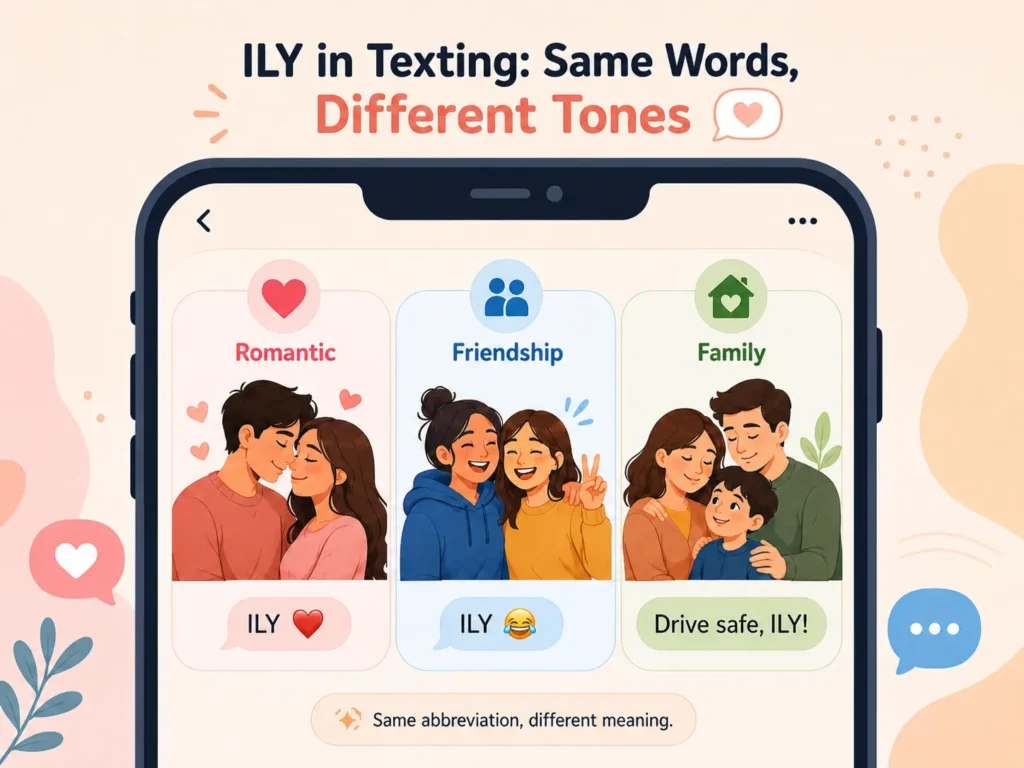
The ILY meaning in texting depends on who sends it and what is happening in the conversation.
ILY in Romantic Texts
Partners, couples, or romantic interests may use ILY sincerely.
Example: “Goodnight, ILY ❤️”
A heart emoji, pet name, or affectionate conversation can make the message feel more romantic.
ILY Between Friends
ILY does not always mean romantic love. Close friends often use it to show appreciation or strong friendship.
Example: “You saved me with those notes, ILY 😂”
Here, the sender is probably expressing gratitude and playful affection.
ILY Between Family Members
Parents, siblings, and relatives may also use ILY in everyday messages.
Example: “Drive safe. ILY!”
In this context, it expresses family affection and care.
Is ILY Always Romantic?
No. ILY can be romantic, platonic, familial, or playful.
To understand the intended meaning, look at the relationship between the sender and recipient. Also consider the conversation, emojis, and usual communication style.
If your partner sends “ILY ❤️,” it probably carries romantic meaning. If your best friend says “ILY 😂” after you help them, it is more likely friendly or playful.
Ask yourself:
- Who sent the message?
- What were you talking about?
- Which emojis were included?
- Are you friends, family, dating, or flirting?
- Is this person usually affectionate in texts?
Context matters more than the three letters alone.
ILY Meaning on Social Media
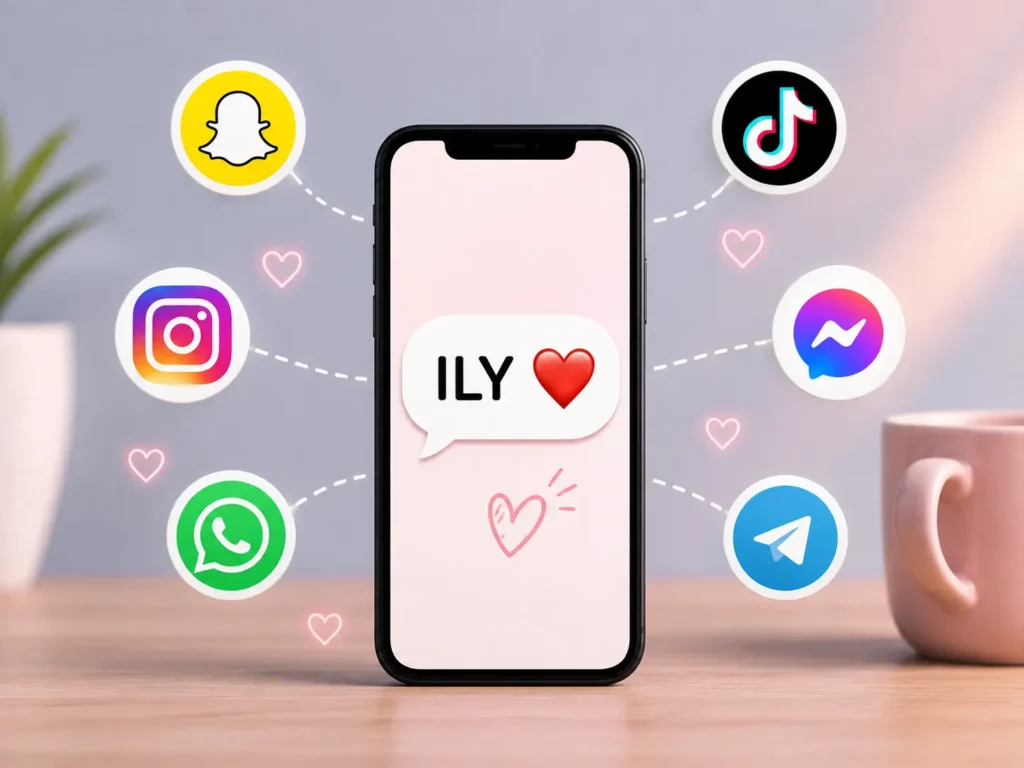
ILY keeps the same basic definition across most platforms, but its tone can change.
What Does ILY Mean on Snapchat?
On Snapchat, ILY usually means “I love you.” It may appear in snaps, private chats, captions, or replies between partners, friends, or family.
What Does ILY Mean on Instagram?
On Instagram, people use ILY in DMs, comments, Stories, and captions. A friend may write “ilyyy” under a post to show affection or support.
What Does ILY Mean on TikTok?
On TikTok, ILY can show affection, appreciation, or support. Users may write it to friends, creators, or people whose content they enjoy. In humorous comments, it can also sound playful.
What Does ILY Mean on WhatsApp and Messenger?
On WhatsApp and Messenger, ILY works much like it does in regular texting. Relationship context determines whether it sounds romantic, friendly, or familial.
Real Examples of ILY in Conversations
Romantic:
Person A: “I miss you already.”
Person B: “ILY ❤️”
Friendship:
Friend: “I got your favorite snack.”
You: “ILY 😭”
Family:
Mom: “Good luck on your exam!”
You: “Thanks, ILY ❤️”
Playful:
Friend: “I finished the boring part of the project.”
You: “OMG ILY 😂”
These examples show why tone and relationship context matter.
“In playful chats, people may also use abbreviations like JK Meaning in Text to show that a message was meant as a joke rather than something serious.”
How to Reply When Someone Says ILY
Your response should match your relationship and comfort level.
If you feel the same, you can reply:
- “ILY too ❤️”
- “Love you too!”
- “ILY more.”
If a friend says it casually, try:
- “ILY bestie!”
- “Love you too 😂”
- “You’re the best.”
If you are not ready to say “I love you,” you do not need to copy the sender’s words. A respectful reply such as “That means a lot to me” or “You’re really important to me” acknowledges the message without saying something you do not mean.
ILY vs Similar Texting Abbreviations
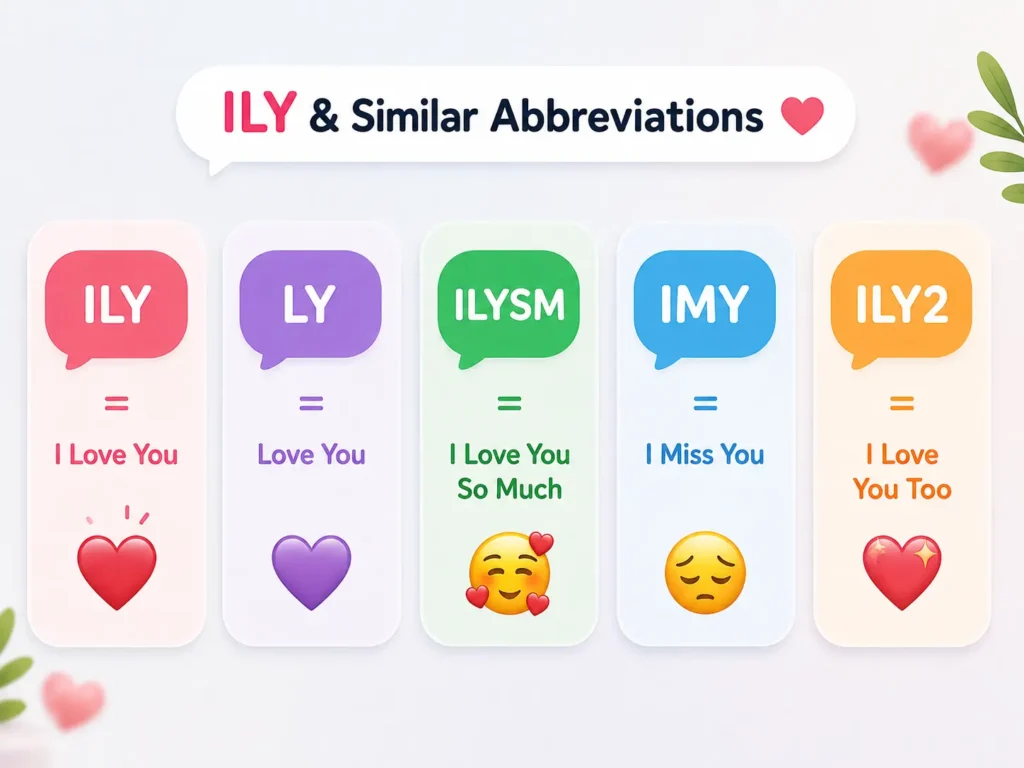
Several related abbreviations appear in text messages and social media:
- ILY vs ILU: Both can mean “I love you.”
- ILY vs LY: ILY means “I love you,” while LY usually means “love you.”
- ILY vs ILYSM: ILYSM means “I love you so much.”
- ILY vs IMY: IMY means “I miss you.”
- ILY2: Usually means “I love you too.”
Knowing these related forms can make online conversations easier to understand.
“Some slang terms can have several definitions depending on context. For example, NFS Meaning may refer to ‘Not For Sale,’ ‘No Funny Stuff,’ or other meanings depending on the conversation.”
Does Capitalization or an Emoji Change ILY?
ILY, ily, and Ily usually have the same definition. Emojis, however, can influence emotional tone.
- ILY ❤️ — affectionate or romantic
- ILY 😂 — playful or joking
- ILY 🥹 — emotional or appreciative
- ILY 😘 — often flirty or romantic
An emoji does not create a fixed meaning, so context still matters.
When Should You Use ILY?
ILY works best in informal communication with a partner, family member, close friend, or another person you care about. It also appears casually in social media comments and DMs.
Avoid using it in formal emails, business communication, or professional conversations. You may also want to avoid it when the other person could misunderstand your romantic intentions.
Common Misunderstandings About ILY
A common mistake is assuming that ILY always signals romantic love. Friends and family use it too.
Lowercase “ily” also does not normally have a different definition. Capitalization changes the style more than the meaning.
“Context is important with many texting abbreviations. ATP Meaning, for example, usually stands for ‘At This Point’ in casual messages, but its meaning should still be understood from the surrounding conversation.”
Someone saying ILY does not automatically mean they want a romantic relationship. The sender’s tone, your relationship, and the surrounding conversation provide the strongest clues.
Frequently Asked Questions About ILY
What does ILY mean in a text?
ILY usually means “I Love You.” It is an informal abbreviation used to express affection, appreciation, or care.
What does ILY mean from a girl?
It usually means “I love you,” but the emotional intent depends on the relationship and context. It may be romantic, friendly, or playful.
What does ILY mean from a guy?
The same rule applies. Gender does not determine the definition; relationship and tone matter more.
Is ILY romantic?
It can be romantic, but it can also be platonic or familial.
What does ILY2 mean?
ILY2 usually means “I Love You Too.”
Is ILY the same as ILYSM?
No. ILY means “I Love You,” while ILYSM means “I Love You So Much.”
Final Thoughts
The ILY meaning is usually “I Love You.” People use this texting abbreviation in messages, DMs, comments, and social media conversations to express love, affection, appreciation, or support. Its emotional tone can be romantic, friendly, familial, or playful. Consider the sender, relationship, emojis, and conversation before deciding what a particular ILY message means.
1 thought on “ILY Meaning: What Does ILY Mean in Texting & Social Media?”
Comments are closed.