
If you keep seeing “cap,” “no cap,” or “capping” in texts, TikTok comments, or everyday conversations, the cap meaning is simple: cap usually means a lie, exaggeration, or unbelievable claim.
“That’s cap” means “that’s not true,” “no cap” means “honestly” or “for real,” and “capping” means lying or exaggerating.
What Does Cap Mean?
Simple Definition of Cap
In slang, cap means a lie, exaggeration, or questionable claim.
“I can beat anyone in this game.”
“Cap.”
Cap Meaning at a Glance
| Expression | Meaning | Typical Use |
| Cap | Lie or exaggeration | Doubting a claim |
| That’s cap | That is not true | Calling something false |
| No cap | Honestly or for real | Showing sincerity |
| Capping | Lying or exaggerating | Describing the action |
| Stop capping | Stop lying | Calling someone out |
| 🧢 | Cap or lie | Emoji reaction |
What Does “That’s Cap” Mean?
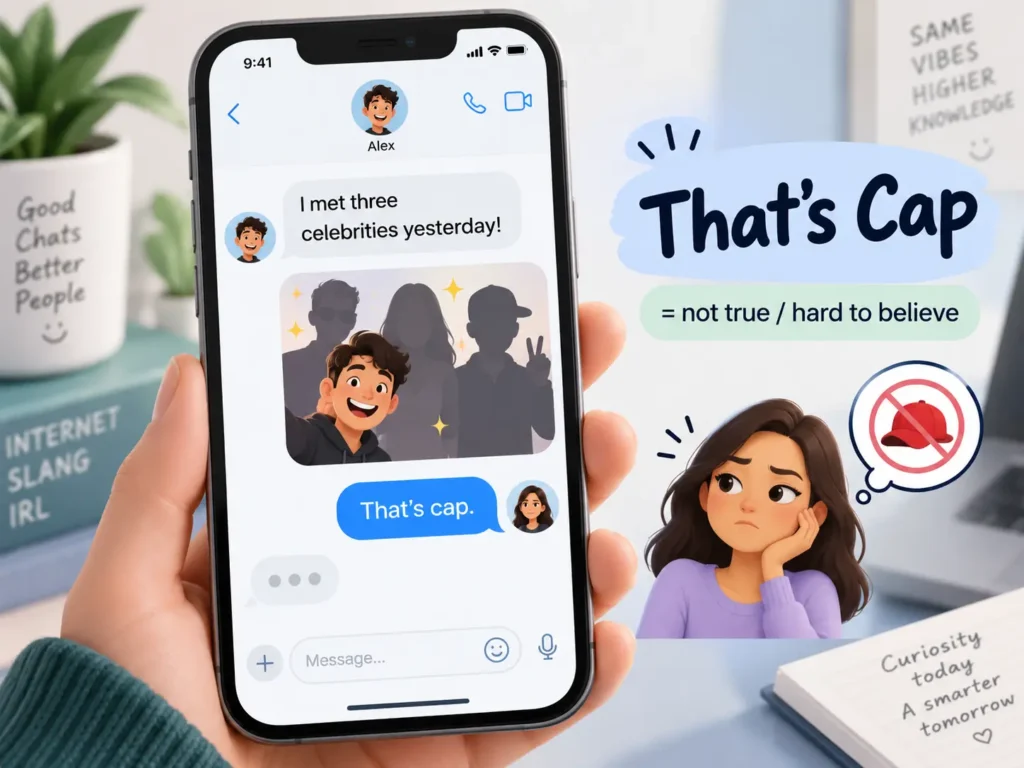
“That’s cap” usually means “that’s a lie,” “that isn’t true,” or “I don’t believe that.”
If someone says, “I met three celebrities yesterday,” a friend might reply, “That’s cap.”
Cap does not always accuse someone of deliberately lying. It can also show disagreement. If someone calls a restaurant “the best in the world,” replying “cap” may simply mean you strongly disagree.
What Does No Cap Mean?
“No cap” means “no lie,” “honestly,” “for real,” or “I genuinely mean this.” People use it to emphasize sincerity.
The phrase does not prove something is objectively true. It only shows that the speaker is sincere.
What Does Capping Mean?
Capping means lying, exaggerating, boasting, or making something sound more impressive than it is.
What Does “You’re Capping” Mean?
“You’re capping” means “you’re lying,” “you’re exaggerating,” or “I don’t believe you.”
What Does “Stop Capping” Mean?
“Stop capping” tells someone to stop lying or exaggerating.
What Does “Cappin’” Mean?
“Cappin’” is an informal spelling of “capping” and has the same slang meaning.
Cap vs No Cap vs Capping
| Term | Basic Meaning | Use |
| Cap | Lie or exaggeration | Questioning a claim |
| No cap | Honestly or for real | Showing sincerity |
| Capping | Lying or exaggerating | Describing an action |
| That’s cap | That is untrue | Challenging someone |
| Stop capping | Stop lying | Asking for honesty |
What Does Cap Mean in Texting?
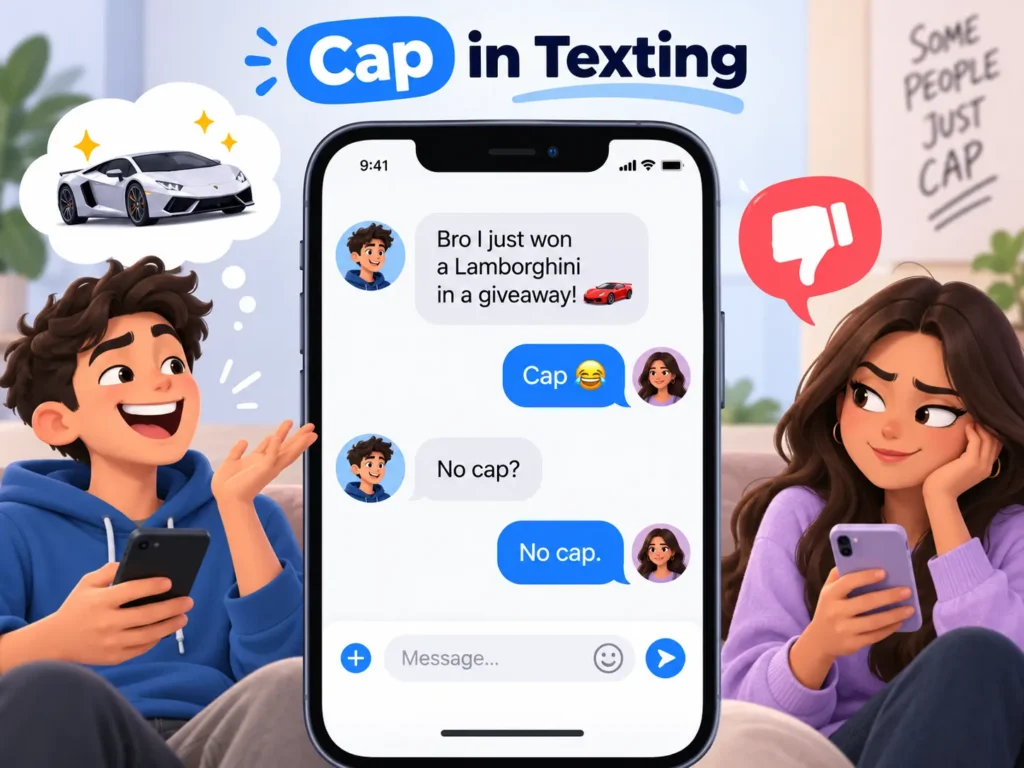
The cap meaning in texting is usually the same as in spoken slang. People use it to doubt a story, tease a friend, or call out exaggeration.
Friend: “I didn’t study and still got 100%.”
You: “Cap 😂”
Friend: “I actually met him yesterday.”
You: “No cap?”
Friend: “No cap.”
Text conversations also use affectionate abbreviations alongside slang terms; for example, ILYSM Meaning explains the abbreviation “I Love You So Much.”
What Does Cap Mean on Social Media?
On TikTok, cap often appears under bold claims, reaction videos, or “cap or no cap?” posts. On Snapchat and Instagram, people use it in DMs, story replies, captions, and comments.
Like other popular internet slang, such as Sus Meaning, “cap” often appears in comments, DMs, memes, and reaction posts.
What Does the 🧢 Emoji Mean?
When the conversation is not about clothing, the 🧢 emoji can mean “cap,” “that’s a lie,” or “I don’t believe you.” A reply containing only 🧢 often signals disbelief.
“No 🧢” works like “no cap” and means “no lie” or “for real.”
How to Use Cap Naturally
Use “cap” to challenge a claim: “You ran five miles in ten minutes? Cap.”
Use “capping” for the action: “He’s capping about his score.”
Use “no cap” for sincerity: “No cap, this place is excellent.”
Is Saying “Cap” Rude?
It depends on tone and context. Between friends, a cap can be playful, especially with humor or emojis. In serious conversation, it may sound confrontational because it suggests someone is lying.
Avoid it in formal emails, academic writing, job applications, reports, or sensitive disputes. Use alternatives such as “I’m not sure that’s accurate” or “That sounds exaggerated.”
Where Did Cap Slang Come From?
Modern cap slang did not begin with TikTok or Gen Z. Its history is associated with Black American English and older uses involving boasting, exaggeration, and false claims. Hip-hop later helped popularize “cap” and “no cap.”
Future and Young Thug released “No Cap” in 2017 on their collaborative project Super Slimey. The slang existed before that release, but hip-hop and internet culture helped bring it to wider audiences.
Is Cap Gen Z Slang?
Cap is widely used by Gen Z and is also familiar in Gen Alpha internet culture. However, the expression predates both generations. Social media helped make it more visible to younger audiences.
Cap vs Similar Slang Terms
“Lie” is standard English, while “cap” is informal and can also express exaggeration or disbelief.
“No cap” overlaps with “for real” or “FR,” but often emphasizes sincerity.
Some slang terms describe a person’s mindset rather than whether a claim is true. For example, Delulu Meaning explains how “delulu” refers to unrealistic or overly hopeful thinking.
“Fake” can describe people, products, behavior, or objects. “Cap” usually challenges a statement, story, claim, or boast.
Other Meanings of Cap
| Context | Meaning |
| Clothing | Hat or head covering |
| Bottle | Lid or cover |
| Budget | Maximum limit |
| Salary | Maximum allowed amount |
| Gaming | Limit, level cap, or capture |
| Slang | Lie or exaggeration |
Common Mistakes When Using Cap
Cap is not normally an acronym in this slang sense, and “no cap” does not mean “no limit” in casual conversation.
TikTok did not invent the expression. It helped spread it, but the slang is older.
Cap also does not always mean a deliberate lie. It can express skepticism, exaggeration, playful disagreement, or disbelief.
Real-Life Examples of Cap, No Cap and Capping
Friends: “I can eat ten burgers.” “Cap.”
School: “I finished the assignment in five minutes.” “You’re capping.”
Social media: “This is the best phone ever, no cap.”
Gaming: “I beat the boss on my first try.” “Cap.”
Frequently Asked Questions About Cap Meaning
What does cap mean in slang?
Cap means a lie, exaggeration, or claim someone does not believe.
What does cap mean in texting?
In texting, cap usually shows disbelief or calls out exaggeration.
What does “that’s cap” mean?
It means “that isn’t true” or “I don’t believe that.”
What does no cap mean?
No cap means “honestly,” “for real,” or “no lie.”
What does capping mean?
Capping means lying, exaggerating, or boasting.
What does “stop capping” mean?
It means “stop lying” or “stop exaggerating.”
What does 🧢 mean in text?
The cap emoji can represent a lie, exaggeration, or disbelief.
Is cap a bad word?
No. It is informal slang, but it can sound rude in serious situations.
Is cap Gen Z or Gen Alpha slang?
Both groups use it, but the slang predates them.
Final Thoughts
The cap meaning is easy once you know the related phrases. “Cap” means a lie or exaggeration; “that’s cap” shows disbelief; “capping” means lying or exaggerating; and “no cap” means honestly or for real.
Context is essential. Among friends, the slang may sound playful. In serious situations, it can sound accusatory. Understanding the tone and conversation helps you use cap naturally and correctly.
3 thoughts on “Cap Meaning: What Does Cap, No Cap & Capping Mean in Slang?”
Comments are closed.