
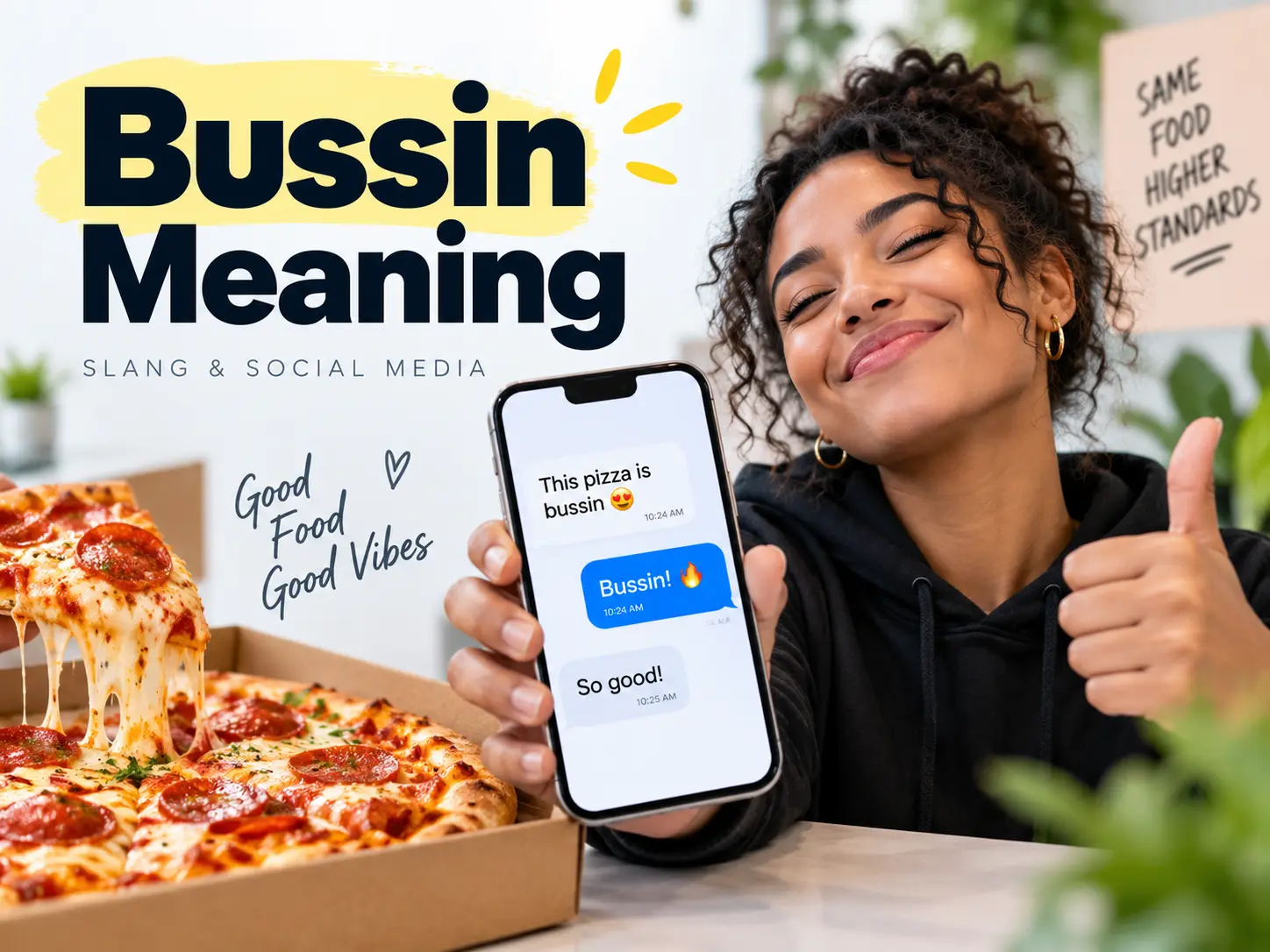
If you keep seeing “bussin” in texts, TikTok comments, food videos, or everyday conversations, you may wonder what it actually means. The bussin meaning is simple: it describes something that is extremely good, enjoyable, impressive, or delicious. People often use it for food, but it can also describe music, clothes, events, and experiences.
What Does Bussin Mean?
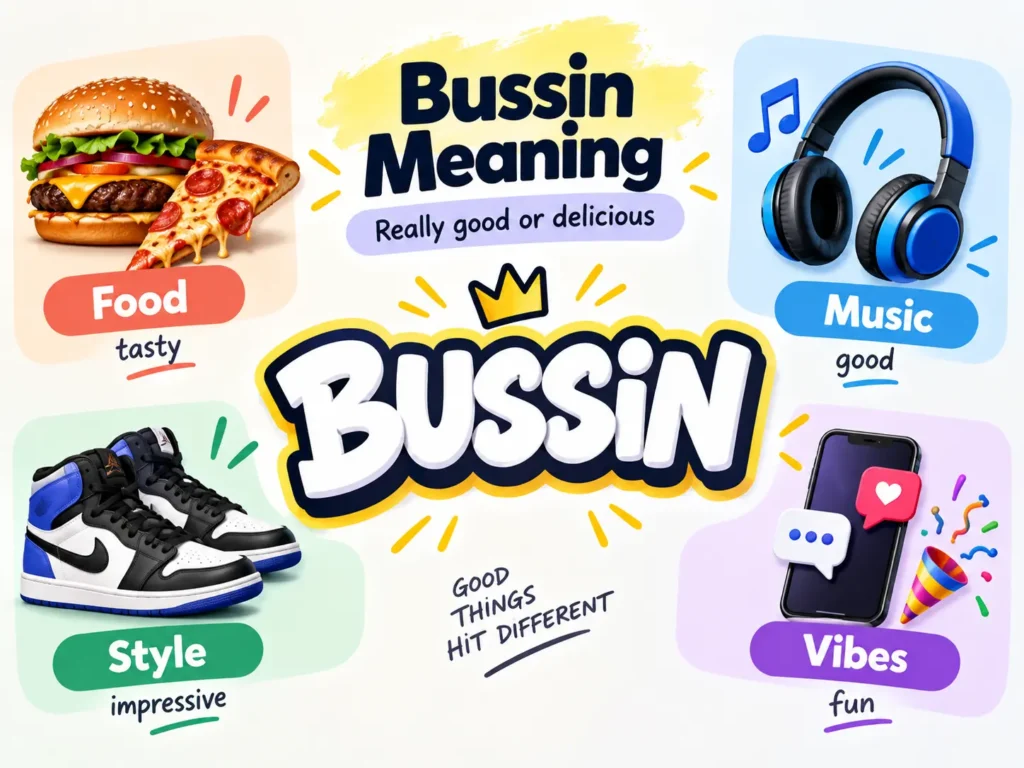
“Bussin” is a slang word people use to show strong approval. If someone says, “This pizza is bussin,” they mean the pizza tastes really good. If they say, “That party was bussin,” they mean the event was exciting or enjoyable.
The term is stronger than simply saying something is “good.” It adds enthusiasm. Depending on context, similar words might include awesome, amazing, fantastic, delicious, outstanding, or next-level.
Bussin Meaning at a Glance
| Context | Meaning |
| Food | Very tasty or delicious |
| Music | Really good or enjoyable |
| Clothing | Stylish or impressive |
| Event | Fun, exciting, or energetic |
| Texting | Strong approval or enthusiasm |
| Social media | Praise for something impressive |
What Does Bussin Mean in Texting?
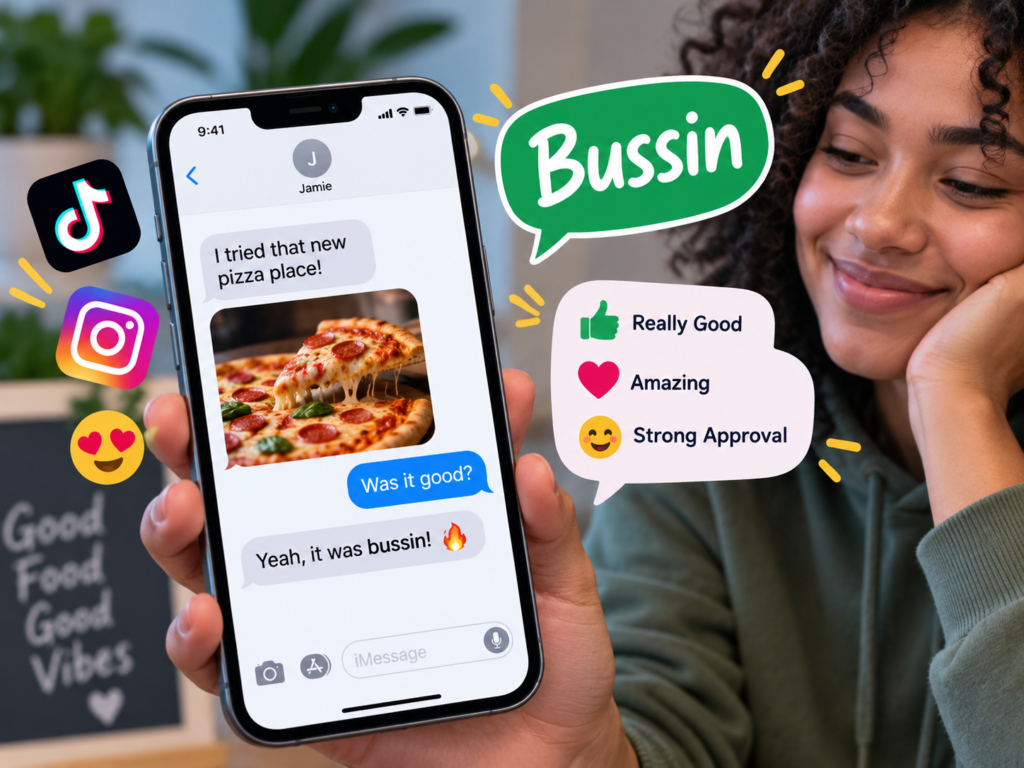
In texting, “bussin” usually means “really good,” “amazing,” or “I strongly approve.” Friends may use it when talking about food, a new song, an outfit, or something fun they just experienced.
Person 1: “I tried that new burger place.”
Person 2: “Was it good?”
Person 1: “Yeah, it was bussin.”
The word is casual, so it fits texts, DMs, group chats, and social media better than formal communication.
“You may also see expressions like [No Cap Meaning] in casual messages, where ‘no cap’ is used to show that someone is being serious or truthful.”
What Does “That’s Bussin” Mean?
“That’s bussin” is a simple expression of enthusiastic approval. It can mean “that’s excellent,” “that tastes amazing,” or “that’s really impressive.”
For example:
- “That pasta is bussin.”
- “Your new shoes are bussin.”
- “This track is bussin.”
The exact interpretation depends on what the speaker is describing.
Why Is Bussin Often Used for Food?
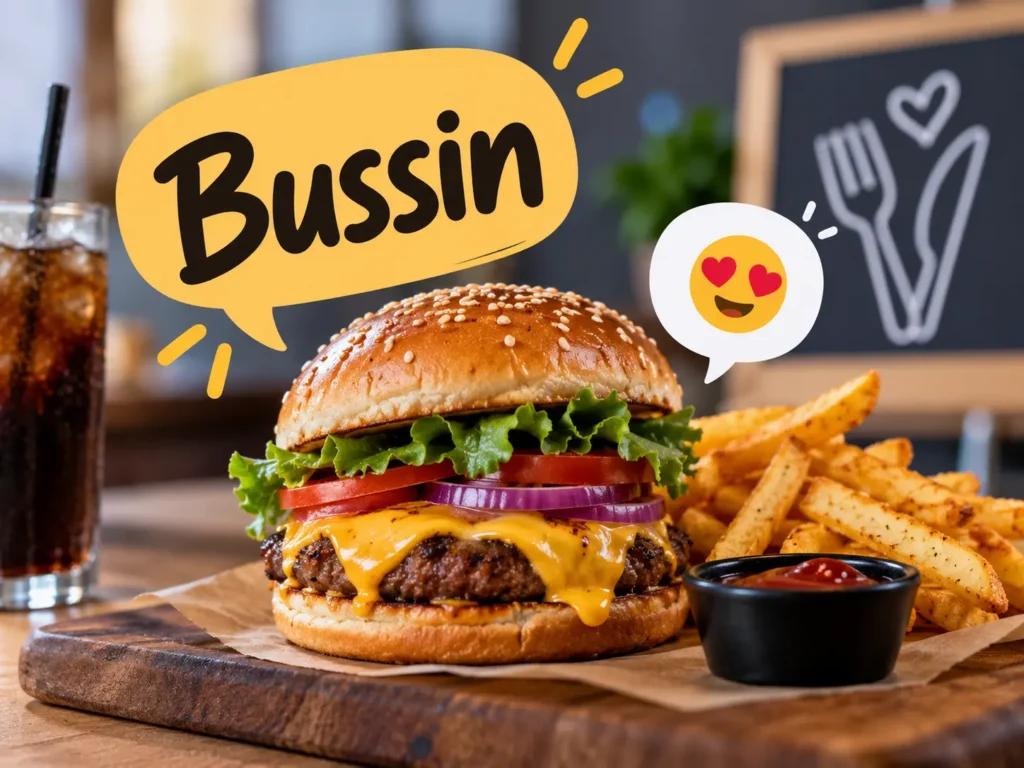
Food is one of the most common contexts for the word. Someone may use “bussin” after tasting a meal that is especially flavorful or satisfying.
“This chicken is bussin” means the speaker really enjoys the food.
You may hear it at restaurants, at home, in cafeterias, or in food videos on social media. However, the bussin meaning is not limited to food. The same slang can describe music, fashion, sports, parties, and other enjoyable experiences.
What Does Bussin Mean on Social Media?
On TikTok, Instagram, Snapchat, and other platforms, “bussin” works as a quick reaction to something people like.
You might see comments such as:
- “That recipe looks bussin.”
- “Those sneakers are bussin.”
- “This song is bussin.”
- “The vibes here are bussin.”
In these examples, the word communicates excitement, approval, or admiration. Social media helped spread the term to wider audiences, especially among teens and younger users.
Where Did Bussin Come From?
The term is strongly associated with African American Vernacular English (AAVE). Its use existed before it became widely labeled as Gen Z or Gen Alpha slang.
That cultural context matters. Many popular slang expressions used online have roots in Black language and culture before they move into mainstream youth vocabulary.
The African American Dictionary has also recognized “bussin” among terms connected with African American language. Variations such as “bussin’” or “bussing” may appear depending on spelling and context.
How Did Bussin Become Popular?
The word became more visible through online culture, music, social media, food content, and everyday teen conversations. As more users adopted it, “bussin” moved from specific cultural and social contexts into broader pop culture.
Today, you may hear it in music, fashion conversations, sports discussions, school settings, restaurants, and social gatherings. That spread explains why parents and older adults may now hear the word from teens even if they did not grow up using it.
Is Bussin Gen Z Slang?
It is popular among Gen Z, but describing it only as Gen Z slang leaves out its cultural history. The term is connected with AAVE and Black cultural usage, while younger generations helped increase its visibility online.
So, the better way to understand it is this: Gen Z helped popularize the term in mainstream internet culture, but did not simply invent it.
How to Use Bussin in a Sentence
Bussin for Food
“These tacos are bussin.”
This means the tacos taste exceptionally good.
Bussin for Music
“That new track is bussin.”
This means the song is very enjoyable or impressive.
Bussin for Clothing
“Those Jordans are bussin.”
This expresses strong approval of the shoes.
Bussin for Events
“The party last night was bussin.”
This means the event was exciting, fun, or full of energy.
Bussin on Social Media
“That recipe looks bussin!”
Here, the speaker thinks the food looks delicious.
These examples show how flexible the word can be. In every case, the speaker is showing strong approval.
Bussin vs. Similar Slang Words
| Slang | General Meaning |
| Bussin | Extremely good, especially tasty or enjoyable |
| Fire | Excellent or impressive |
| Lit | Exciting or fun |
| Smacks | Very good, often used for food or music |
| Dope | Cool or impressive |
| Sick | Surprisingly good or impressive |
| Next-level | Better than expected |
These words overlap, but they are not always interchangeable. “Bussin” has a particularly strong connection with food and enthusiastic enjoyment.
“If you want to understand more modern slang used for praise or reactions, you can also read our guide to [Slay Meaning Slang], which explains how ‘slay’ is used to compliment someone’s look, performance, or confidence.”
Is Bussin Positive or Negative?
Bussin is usually positive. It signals that the speaker likes something a lot.
If someone says, “This meal is bussin,” that is a compliment.
As with most slang, tone can sometimes make it playful or sarcastic, but the standard meaning is positive approval.
“Unlike [Mid Meaning Slang], which usually describes something as average or underwhelming, ‘bussin’ expresses strong positive approval.”
When Should You Use Bussin?
Use it in casual situations such as:
- Talking with friends
- Texting or group chats
- Commenting on social media
- Describing food
- Talking about music or fashion
- Reacting to events or experiences
Avoid it in formal emails, academic writing, job applications, or professional documents unless you are specifically discussing slang or language.
Frequently Asked Questions About Bussin Meaning
What does bussin mean in slang?
Bussin means something is extremely good, enjoyable, impressive, or delicious. It is often used as enthusiastic praise.
What does bussin mean in food?
When used for food, bussin means the meal tastes especially good or delicious.
What does “that’s bussin” mean?
“That’s bussin” means “that’s really good,” “that’s amazing,” or “I strongly approve.”
What does bussin mean on TikTok?
On TikTok, it usually expresses strong approval of food, music, fashion, videos, or other content.
Is bussin a compliment?
Yes. In most situations, it is a positive compliment or expression of approval.
Is bussin AAVE?
The term is strongly associated with African American Vernacular English and Black cultural usage.
Is bussin only used by teenagers?
No. Teens and younger social media users helped make it more visible, but people of different ages may use or understand the term.
Can bussin describe something besides food?
Yes. It can describe music, clothes, events, parties, sports experiences, or anything someone finds especially good or enjoyable.
Final Takeaway
The bussin meaning is “extremely good,” “delicious,” or “highly enjoyable.” Although people often use it for food, it can also describe music, fashion, events, and social experiences. The word is common in texting and social media, and its cultural roots connect with AAVE and Black language traditions. Understanding both its meaning and background helps you use the slang more accurately and naturally.