
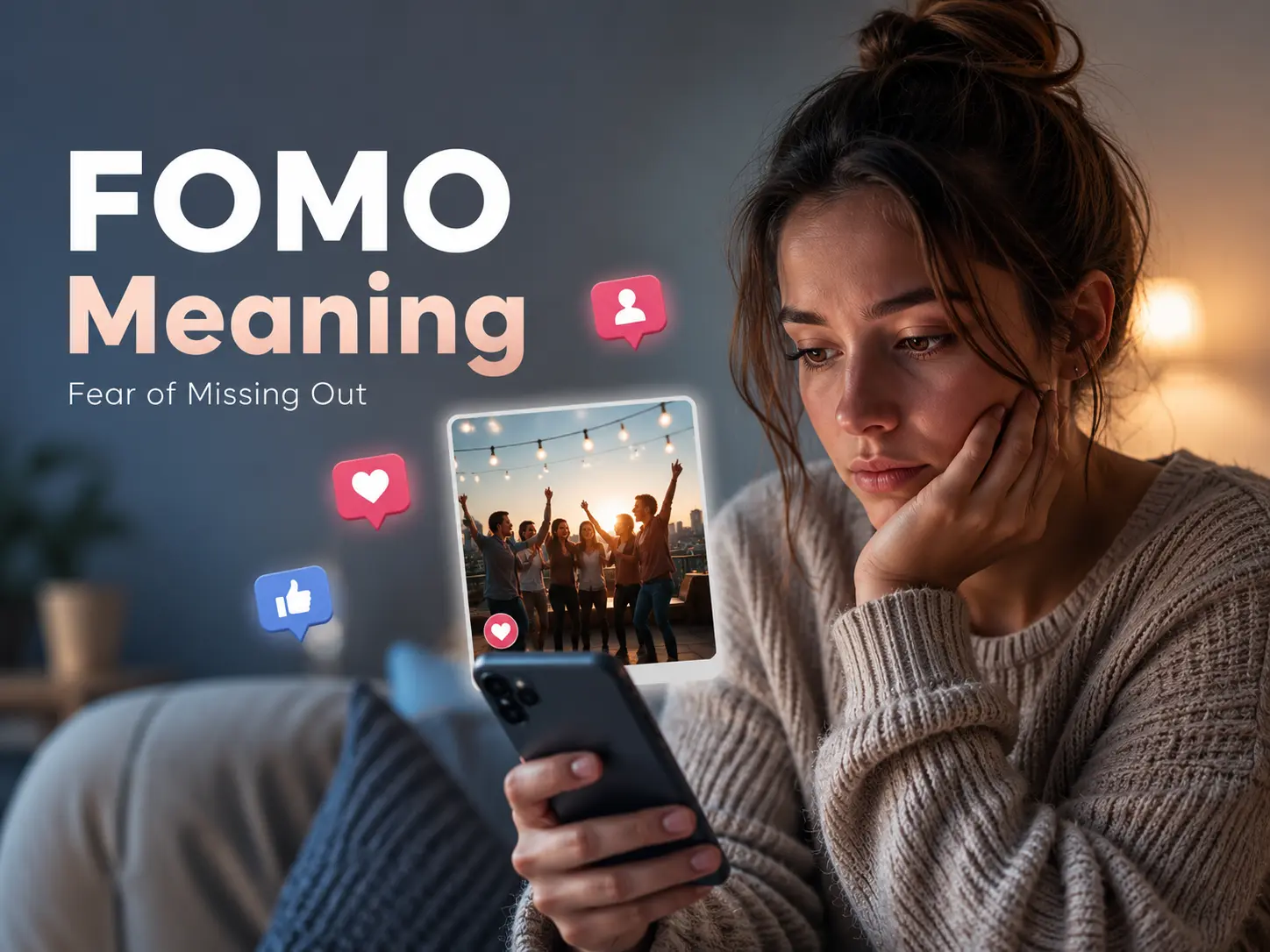
If you keep seeing “FOMO” in texts, TikTok comments, Instagram posts, or group chats, you may wonder what it means. The FOMO meaning is “Fear of Missing Out.” It describes the uneasy feeling that something exciting or important is happening without you and that you may regret missing it.
People can use FOMO seriously or jokingly. It may describe feeling left out of a party, missing a trend, or wishing you had joined an experience.
What Does FOMO Mean?
What Does FOMO Stand For?
FOMO stands for “Fear of Missing Out.” It is an acronym and common internet slang used in texting, social media, and everyday conversations.
For example:
“Everyone is going to the concert, and now I have FOMO.”
Here, the person worries that skipping the concert could mean missing a fun experience.
Simple Definition of FOMO
FOMO is the feeling that other people may be enjoying a better experience, opportunity, event, or social connection without you. It can involve curiosity, regret, social comparison, anxiety, or pressure to participate.
People commonly pronounce FOMO as “FOH-moh.”
FOMO Meaning at a Glance
| Category | Meaning |
| FOMO full form | Fear of Missing Out |
| Simple meaning | Worry about missing something others are enjoying |
| Type | Acronym / slang |
| Tone | Casual, humorous, anxious, or self-aware |
| Common places | Texts, TikTok, Instagram, Snapchat, group chats |
| Opposite | JOMO |
What Does FOMO Mean in Texting?
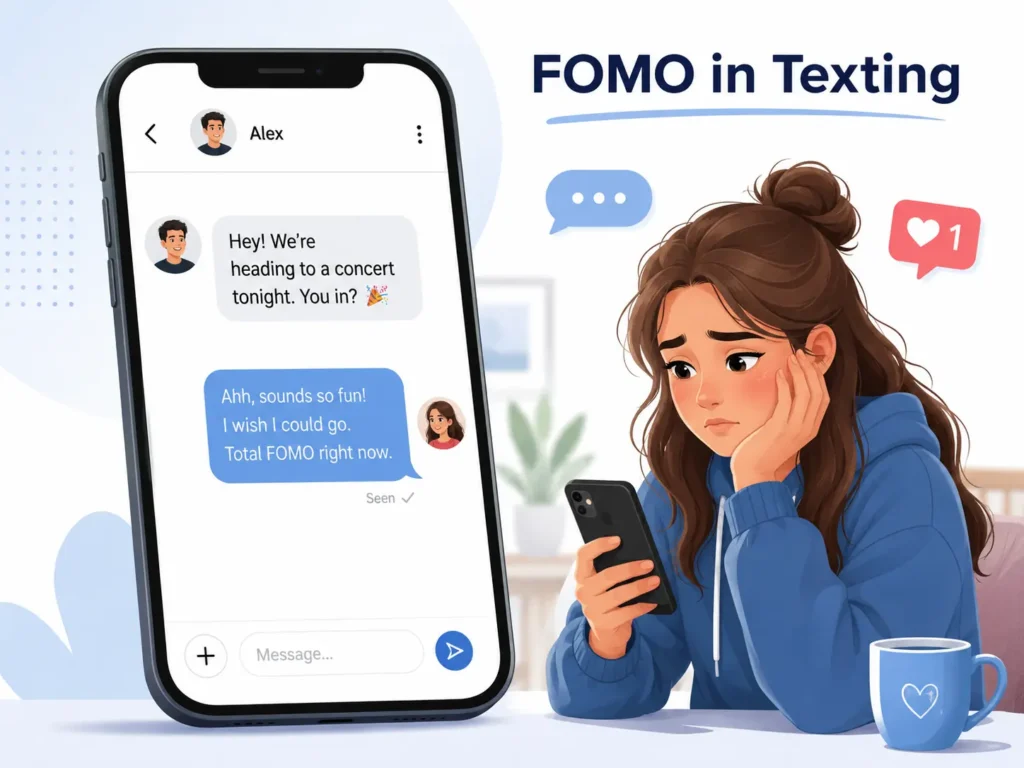
In texting, FOMO usually means someone feels left out or worries that they are missing something worth experiencing.
Common examples include:
- “I have FOMO.”
- “Major FOMO right now.”
- “That is giving me FOMO.”
- “I only bought tickets because of FOMO.”
For example:
Friend: “Everyone’s going tonight.”
Reply: “I wasn’t planning to, but now I have FOMO.”
The reply means the person is reconsidering because they do not want to miss the experience.
FOMO can also be humorous. “Everyone got pizza without me. The FOMO is real” usually sounds playful rather than seriously anxious.
FOMO is common in casual digital conversations, just like other popular abbreviations and slang terms. If you often see unfamiliar expressions in messages, you may also want to learn the STG Meaning, which explains how “STG” is commonly used to emphasize honesty or strong feelings in texts and chats.
What Does FOMO Mean on Social Media?
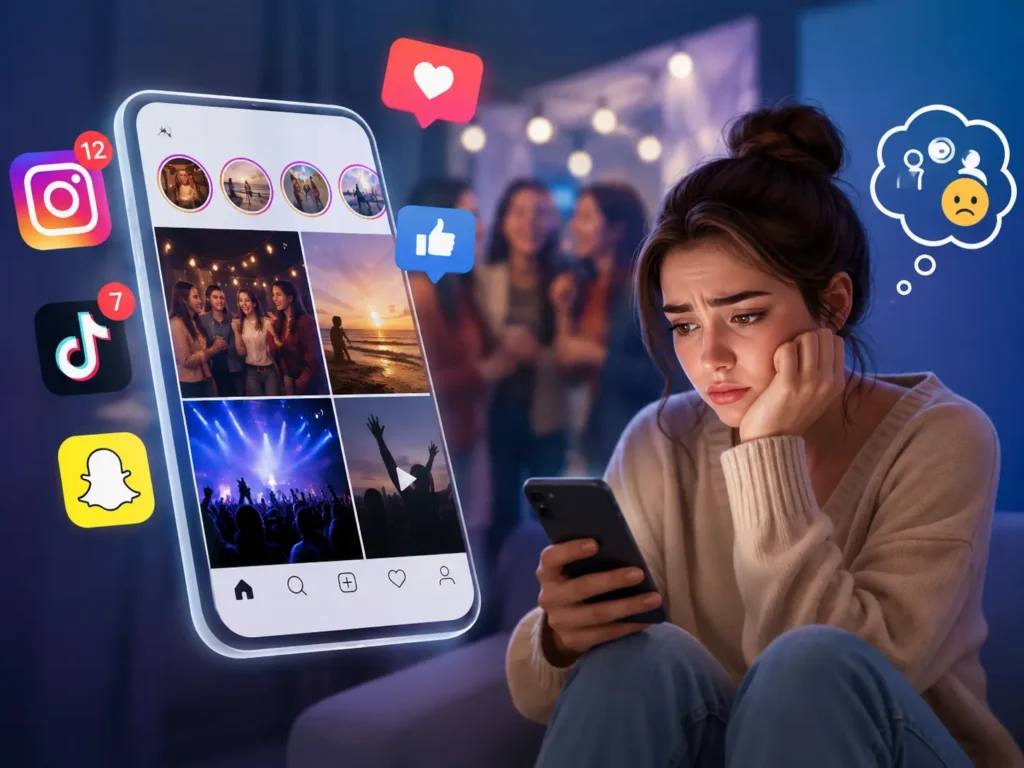
The basic FOMO meaning does not change from platform to platform. What changes is what someone fears missing.
On TikTok, FOMO may relate to viral trends, products, challenges, or popular experiences. On Instagram, vacation photos, parties, lifestyle posts, and friends hanging out can create the same feeling.
On Snapchat, real-time Stories may make someone feel excluded. In Discord, Reddit, and group chats, FOMO can come from missing conversations, gaming sessions, plans, inside jokes, or community events.
Notifications, trending content, and constant updates can also create pressure to stay connected.
On Snapchat, real-time Stories may make someone feel excluded. In Discord, Reddit, and group chats, FOMO can come from missing conversations, gaming sessions, plans, inside jokes, or community events. Location-based slang also appears frequently in these conversations, so understanding the WYA Meaning can help when someone asks “Where You At?” while making plans or checking where friends are.
What Does FOMO Feel Like?
FOMO can include feeling left out, curiosity, regret, jealousy, urgency, insecurity, and anxiety. It is often connected with the human desire for belonging and with comparing your experiences to those of friends or peers.
FOMO is different from simply wanting something.
Wanting to attend a concert is normal. FOMO adds the worry that missing the concert could leave you behind or make you regret your decision.
How FOMO Is Used in Different Situations
FOMO can appear in many everyday situations.
Someone may experience event FOMO about a party, travel FOMO after seeing vacation pictures, or entertainment FOMO about a trending show, concert, viral video, or new game.
Shopping FOMO can happen when a popular product is selling out or a limited-time offer creates urgency.
At work or school, people may fear missing opportunities, events, projects, networking, or group activities.
Context tells you whether someone is joking, genuinely disappointed, or being persuaded to participate.
Is FOMO Rude, Negative, or Flirty?
FOMO is usually not rude because it describes a feeling rather than insulting another person.
It can feel negative when it involves stress, social exclusion, or unhealthy comparison. However, people frequently use it humorously.
FOMO is not naturally flirty, although it can appear in playful romantic conversations.
For example:
“You’re all going out without me? FOMO 😏”
The surrounding conversation determines whether the message is actually flirty.
How to Respond When Someone Says “FOMO”
Your response should match the person’s tone.
For a friendly response, you could say:
“Come with us!”
“We’ll invite you next time.”
For a playful response:
“The FOMO is real 😂”
“Should’ve come!”
If someone genuinely feels excluded, reassure them and consider including them in future plans.
Your response should match the person’s tone. In casual chats, people often use short expressions to keep conversations moving. For example, WBU Meaning explains how “WBU” means “What About You?” and is commonly used to return a question or invite someone else to share their opinion.
FOMO vs JOMO: What’s the Difference?
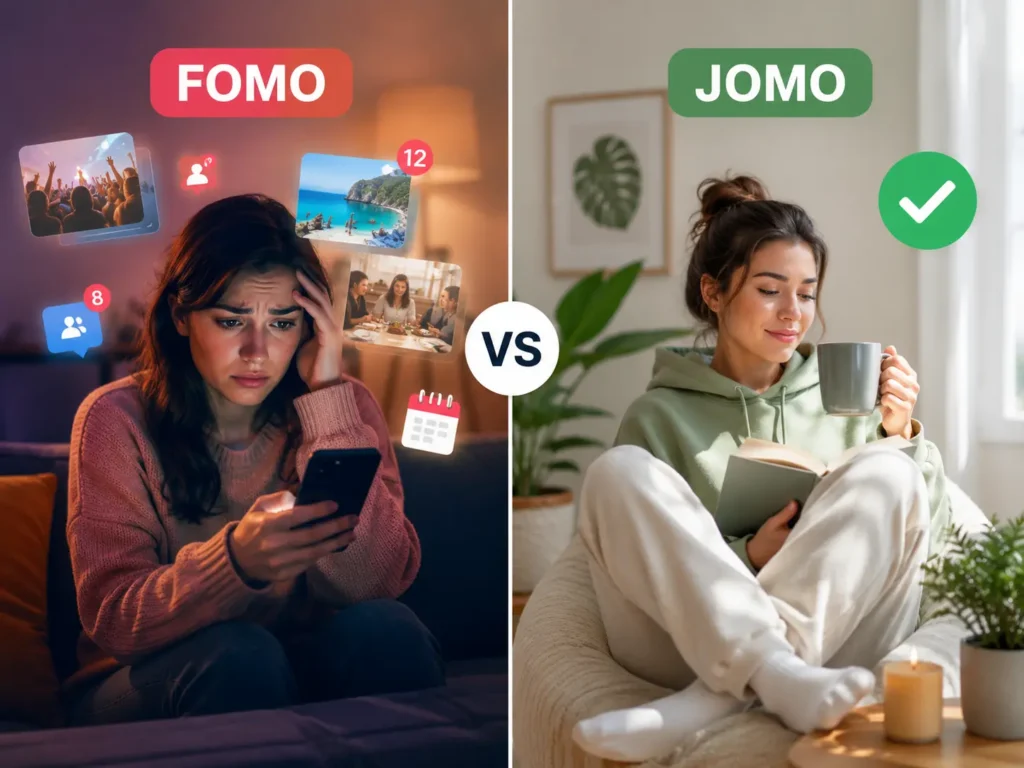
JOMO means “Joy of Missing Out.” It describes feeling comfortable or happy about choosing not to participate.
FOMO says:
“Maybe I should go. I might miss something.”
JOMO says:
“I’m happy where I am.”
FOMO focuses more on fear, comparison, and regret. JOMO focuses on choice, comfort, and enjoying the present moment.
Where Did the Term FOMO Come From?
Patrick McGinnis is credited with coining FOMO while at Harvard Business School. He used the term in a 2004 article in The Harbus.
The concept became especially relevant as social media made other people’s activities constantly visible through posts, photos, videos, and updates.
Is FOMO Bad for You?
Occasional FOMO is common. Feeling curious or disappointed about missing an event does not automatically mean something is wrong.
However, repeated FOMO may contribute to stress, compulsive checking, distraction, unhealthy social comparison, impulsive decisions, and difficulty enjoying the present.
Simple ways to reduce it include limiting unnecessary notifications, taking occasional social-media breaks, practicing gratitude, using phone-free time, and focusing on your own plans rather than comparing your life with curated social-media posts.
Common Misunderstandings About FOMO
FOMO does not always mean serious anxiety. People often use it as casual texting slang.
It also does not have a different definition on every social platform. TikTok, Instagram, Snapchat, Discord, and Reddit provide different situations, but the core meaning remains Fear of Missing Out.
FOMO is also not exactly the same as jealousy. Jealousy may accompany the feeling, but FOMO specifically centers on missing an experience, opportunity, or connection.
Frequently Asked Questions About FOMO Meaning
What does FOMO stand for?
FOMO stands for Fear of Missing Out.
What does FOMO mean in a text?
It usually means someone feels left out or worries that they may miss an enjoyable experience, event, or opportunity.
What does “giving me FOMO” mean?
It means something you see or hear is making you wish you were involved in the experience.
What does “the FOMO is real” mean?
It is a casual expression meaning the feeling of missing out is particularly strong.
What is the opposite of FOMO?
The opposite is JOMO, which stands for Joy of Missing Out.
Is FOMO slang?
Yes. FOMO is an acronym that also functions as common internet and texting slang.
Final Thoughts on FOMO Meaning
The FOMO meaning is “Fear of Missing Out.” People use it in texts, social media, group chats, and everyday conversations when they worry about missing an experience, opportunity, trend, or social connection.
Sometimes FOMO describes genuine anxiety or regret, while other times people use it as a joke. The surrounding context and tone usually reveal exactly what the person means.